How Much Does an ADU Build Cost? Complete Pricing Guide
Accessory Dwelling Units, or ADUs, convert underused backyard space into income-generating or family-friendly living areas. Professional ADU construction typically costs between $160,000 and $350,000, with most homeowners paying around $240,000 for a standard detached unit. These figures include permits, site preparation, and finish work for a fully livable structure.
Three main factors determine total cost: size and layout, construction type and materials, and site-specific conditions such as access or utility connections. In higher-cost urban areas, pricing can exceed $400,000 due to land grading, permitting fees, or premium finishes. Data from the National Association of Home Builders indicates that a properly designed ADU increases property value by 20 to 30 percent and generates consistent rental income that offsets the initial investment.
Whether the goal is a rental suite, a private office, or a family cottage, understanding the true cost of an ADU build enables confident planning, budgeting, and builder selection. Homeowners who research early and compare bids report savings of up to 15 percent on total project expenses.
Detailed Cost Breakdown
ADU pricing follows a per-square-foot model that varies based on build type, materials, and complexity. Across the country, ADUs cost between $300 and $600 per square foot, averaging around $420 per square foot for a turnkey project. Minimum service charges for small builds or conversions typically start around $80,000, even for compact designs.
At the 25th percentile, basic garage conversions or studio units cost about $160,000. The 50th percentile represents mid-range detached units at $240,000, while premium, multi-room ADUs at the 75th percentile reach $350,000 or more. These costs include design fees, permits, and general contractor labor.
Size and Scope Factor
Size directly influences cost, with typical ADUs ranging from 400 to 1,200 square feet. Each additional 100 square feet adds roughly $10,000 to $25,000, depending on finish quality. For example, a 500-square-foot studio may cost $175,000, while an 800-square-foot one-bedroom unit with a full kitchen averages $260,000.
Industry analysts from BuildZoom report that every 10 percent increase in floor area raises total project cost by about 8 percent, largely due to extended labor and materials. Homeowners often underestimate the cumulative impact of small design upgrades, especially when adding bathrooms, laundry areas, or vaulted ceilings.
Material and Quality Tiers
Entry-Level Builds: These use basic framing materials, stock cabinetry, laminate flooring, and fiberglass insulation. Expect costs between $300 and $350 per square foot. Products from brands like Glacier Bay or Hampton Bay are common in this tier, offering functional value but shorter lifespans averaging 10 to 15 years.
Mid-Range Builds: These feature semi-custom finishes, quartz countertops, and energy-efficient windows from brands such as Milgard or Andersen. Pricing ranges from $400 to $500 per square foot, but the improved durability and aesthetic appeal yield better rental attractiveness and reduced maintenance costs.
Premium Builds: High-end ADUs prioritize architectural design, smart home systems, and luxury finishes from Kohler, Bosch, and Marvin. Costs exceed $550 per square foot, yet resale studies show these units command 15 to 20 percent higher property valuations. Builders typically include extended warranties and energy certifications, improving long-term ROI.
Complexity Variables
Site accessibility, slope, and existing utilities can dramatically affect project cost. If heavy equipment access is limited, excavation and delivery costs rise by 5 to 10 percent. Homes in older neighborhoods may require electrical or plumbing upgrades to meet modern code, adding another $10,000 to $20,000.
Geography also plays a major role. Coastal or high-demand metro regions often experience 20 to 40 percent higher labor rates due to contractor shortages. Permitting timelines influence total cost as well, with extended approval processes increasing carrying expenses. Contractor data from platforms like Houzz Pro indicates that complex builds often require 10 to 15 percent additional budget contingency.
Service Types and Comprehensive Pricing
Basic or Standard ADU Package
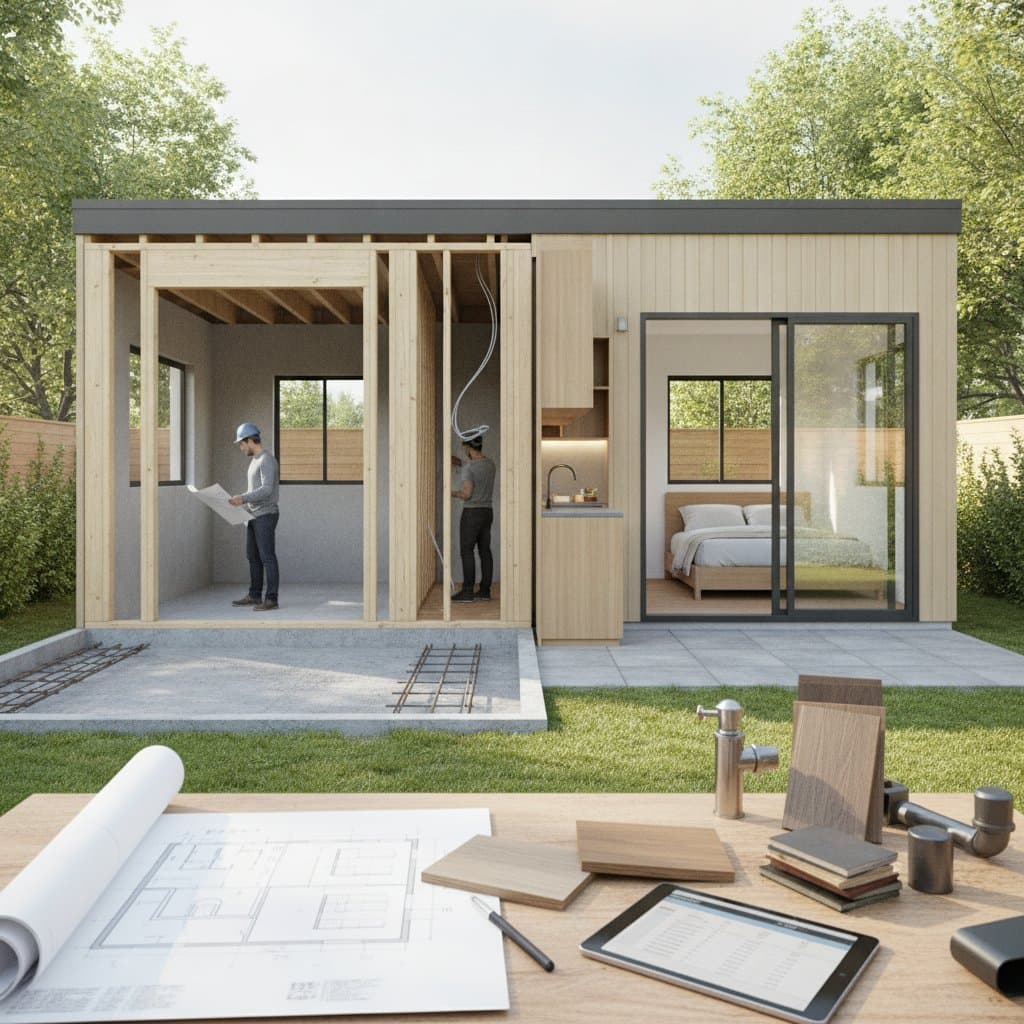
A standard ADU package covers design consultation, structural framing, rough plumbing and electrical, drywall, basic kitchen and bath installation, flooring, and final inspections. Labor typically spans three to six months, representing roughly 40 to 50 percent of total cost.
Typical pricing for these projects ranges from $160,000 to $230,000, with tight budgets favoring garage or basement conversions. These units suit homeowners seeking supplemental living space for relatives or part-time rental income. Cost confidence intervals hover around ±10 percent depending on finish selections and permit complexity.
Premium or Comprehensive ADU Package
Comprehensive ADU projects include architectural design, custom cabinetry, upgraded insulation, solar integration, and full landscaping. Total investment ranges from $300,000 to $400,000, reflecting a 25 to 35 percent premium over standard builds.
Homeowners choosing this tier often target long-term ROI through short-term rental platforms, generating annual returns between 6 and 9 percent. Added energy efficiency and modern design raise appraised property value while reducing operational costs. The payback period averages 7 to 10 years depending on local rental rates and financing terms.
Add-On Services Matrix
| Add-On Service | Average Cost | Typical Savings When Bundled |
|---|---|---|
| Solar panel integration | $15,000 | 10% utility savings annually |
| Landscaping and exterior lighting | $8,000 | 5% value increase |
| Smart home automation | $5,000 | 12% higher rental appeal |
| Rainwater management system | $3,500 | Reduces maintenance costs by 8% |
Bundling complementary services during construction can save 10 to 15 percent compared to separate installations later. Homeowners who coordinate timing with their contractor avoid rework and benefit from unified warranties.
Professional vs. DIY Analysis
DIY Cost Breakdown
Homeowners with construction experience sometimes attempt partial ADU builds to save money. Basic materials for a small 400-square-foot unit, including lumber, drywall, fixtures, and roofing, total around $80,000 to $100,000. Brands like Owens Corning for insulation and Moen for plumbing fixtures dominate DIY supply lists.
Tool purchases or rentals add another $3,000 to $5,000. Expect 600 to 1,000 hours of labor, translating to substantial opportunity cost. Learning curves for structural framing, electrical work, and code compliance can add months of delay. Hidden costs like permit resubmissions or utility trenching often erase expected savings. The realistic DIY range, when accounting for mistakes and rework, lands between $120,000 and $150,000.
Professional Advantages
Hiring a licensed contractor provides measurable benefits including guaranteed code compliance, insured labor, and access to specialized equipment. Professionals complete the average ADU build 40 to 50 percent faster than DIY efforts. Their negotiated supplier rates can reduce material costs by 10 percent, offsetting part of their fee.
Warranty protection alone can represent a $10,000 to $15,000 value over the life of the structure. Professional teams also manage city inspections, structural engineering, and load calculations that non-experts often overlook. Break-even analysis shows that professional builds produce higher-quality results that retain 20 percent more appraised value compared to DIY equivalents. For most homeowners, the long-term benefits of durability and compliance justify the added upfront cost.
Decision Framework
Choose professional construction if the site requires new foundations, complex utility hookups, or structural modifications. DIY makes sense only for experienced builders working on simple conversions with easy access and minimal permitting. The cost of corrections after code violations can exceed initial savings, making professional oversight the safer choice for lasting value.
Actionable Cost-Saving Strategies
Timing Optimization
Schedule the ADU build during slower construction periods to cut costs by 5 to 10 percent. Contractors often offer off-peak discounts for projects starting in mild weather months. Booking midweek site work rather than weekend sessions may reduce labor premiums as well.
Smart Shopping Tactics
Collect at least three competitive bids to gain stronger negotiation leverage. Homeowners who compare quotes through platforms like Angi or Thumbtack save an average of $12,000. Pay suppliers directly for certain materials to eliminate markup, and negotiate milestone-based payments to improve cash flow. Source surplus building materials or reclaimed finishes from local suppliers to reduce material costs by up to 20 percent without compromising quality.
Preparation Actions
Before construction begins, clear vegetation, mark utility lines, and ensure driveway access for trucks. Simple preparation tasks can trim $2,000 to $5,000 in labor hours. Communicate with the builder early about design priorities and non-negotiables to prevent change orders, which often add 5 to 15 percent to final cost.
Market Dynamics and Considerations
Geographic Variations
ADU builds in large metro areas cost 20 to 40 percent more than rural communities due to higher labor and permit expenses. For instance, units in Los Angeles or Seattle average around $500 per square foot, while suburban or inland markets may average $350 to $400 per square foot. Material transport fees also influence regional pricing, especially in remote zones where supply chains are limited.
Market Timing
Construction material inflation has moderated but remains volatile. Lumber, concrete, and electrical components fluctuate based on supply chain pressure and fuel costs. Labor shortages in skilled trades continue to influence final pricing structures, particularly in high-demand housing markets where ADU incentives attract more applicants than builders can accommodate.
Value Indicators
Homeowners report average returns of 6 to 8 percent annually when renting out completed ADUs. Energy-efficient designs can lower monthly utility bills by 25 percent, while low-maintenance exterior materials reduce upkeep expenses. Over a decade, a well-built ADU can offset its cost through both appreciation and steady rental income, making it one of the most financially resilient home investments available.
Related Services Ecosystem
Several complementary home improvement services align naturally with ADU construction:
- Garage Conversion: Costs between $80,000 and $150,000, providing synergy with ADU permitting and infrastructure. Conversions can share foundation and utility work for combined savings.
- Home Addition: Ranges from $150,000 to $300,000, offering expanded primary residence space that coordinates well with new ADU design for consistent aesthetics.
Steps to Secure Strong Returns from Your ADU
Start by assessing site feasibility with a professional survey to identify potential cost drivers early. Select materials that balance upfront expense with long-term efficiency, such as energy-star rated appliances that qualify for rebates. Track local rental market trends to ensure the design aligns with tenant preferences, maximizing occupancy and income potential. With thoughtful execution, an ADU not only enhances living options but also builds lasting financial equity.