Three Warranties That Protect Your Solar Investment
Understanding Solar Warranty Coverage
Solar warranties serve as essential safeguards for your investment, ensuring reliable performance and minimizing unexpected expenses over the system's lifespan. Homeowners often overlook the specifics of these protections, including their duration and the actions needed to maintain validity. This guide provides a detailed examination of key warranty types, associated costs, and practical strategies for handling issues effectively.
The focus remains on empowering informed decisions. Readers will gain insights into performing basic maintenance independently, recognizing when professional intervention is necessary, and preserving warranty benefits to maximize energy savings.
Core Components of Solar Warranties
Solar installations typically include three primary warranty categories, each addressing distinct aspects of the system. Understanding these helps in anticipating coverage and preparing for potential claims.
-
Performance Warranty. This assurance guarantees that solar panels will maintain at least 80 to 85 percent of their initial power output after 25 years or more. Manufacturers base this on rigorous testing, but actual results depend on environmental factors like temperature and shading.
-
Product Warranty. Manufacturers provide this for defects in panels, inverters, and other components, often spanning 10 to 25 years. It covers material failures but excludes normal wear from exposure to elements.
-
Workmanship Warranty. Installers offer this protection against errors in labor, such as faulty wiring or improper mounting, typically lasting 5 to 10 years. Coverage varies by contractor and local regulations, emphasizing the importance of selecting reputable professionals.
Claims under any warranty require following specific procedures, such as submitting serial numbers and photos. Exclusions often apply to damage from extreme weather, neglect, or unauthorized alterations, underscoring the need for diligent care.
Benefits, Limitations, and Ideal Applications
Solar warranties offer significant advantages but come with certain constraints that influence their overall value.
Key Benefits
- Mitigates financial risks from premature failures, securing consistent energy production.
- Enhances property value during resale, as transferable warranties appeal to future buyers.
- Supports long-term savings by covering major repairs without out-of-pocket expenses.
Potential Drawbacks
- Labor for diagnostics or panel removal may receive limited or no coverage beyond the initial period.
- Processing claims demands thorough documentation, which can delay resolutions if records are incomplete.
- Certain components, such as power optimizers or specific inverters, might fall outside standard protections.
Optimal Scenarios
- Long-term homeowners committed to routine upkeep.
- Installations by NABCEP-certified contractors with comprehensive documentation.
- Areas featuring reliable grid connections and regular municipal inspections.
Analyzing Costs and Influencing Factors
Warranties integrate into the initial system cost, yet ongoing maintenance and repairs introduce additional expenses. Budgeting requires considering both routine and unexpected outlays.
| Item | Material Cost Range | Labor Cost Range | Total Cost Range | Influencing Factors |
|---|---|---|---|---|
| Single Panel Replacement | $150–$400 | $200–$600 | $350–$1,000 | Roof height, pitch, and accessibility determine labor intensity. |
| Inverter Replacement | $800–$1,500 | $400–$900 | $1,200–$2,400 | System scale and wiring configuration impact time required. |
| Annual Professional Inspection | $0–$100 (tools) | $150–$300 | $150–$400 | Mandatory in some warranties; frequency rises in high-dust regions. |
| Panel Cleaning and Performance Testing | $0–$100 (supplies) | $200–$400 | $200–$500 | Essential in polluted or coastal environments to prevent efficiency loss. |
Three primary elements drive these expenses:
- Component Quality. Premium, high-efficiency panels or advanced microinverters elevate replacement prices due to specialized materials.
- Installation Complexity. Steeper roofs, intricate conduit paths, and larger arrays extend labor duration and require skilled technicians.
- Site-Specific Challenges. Elevated structures or restricted access necessitate additional equipment like scaffolding, increasing safety and logistical costs.
Conducting Safe and Effective Maintenance
Regular maintenance extends system longevity and upholds warranty conditions. Approach tasks methodically to ensure safety and thoroughness.
Prior to starting, equip yourself with protective gloves, stable footwear, and eye protection. Consult the manufacturer's guidelines to safely disconnect the inverter and isolate circuits, preventing electrical hazards.
- Perform Visual Checks. Inspect panels for fractures, fading, unsecured brackets, or signs of moisture ingress around edges.
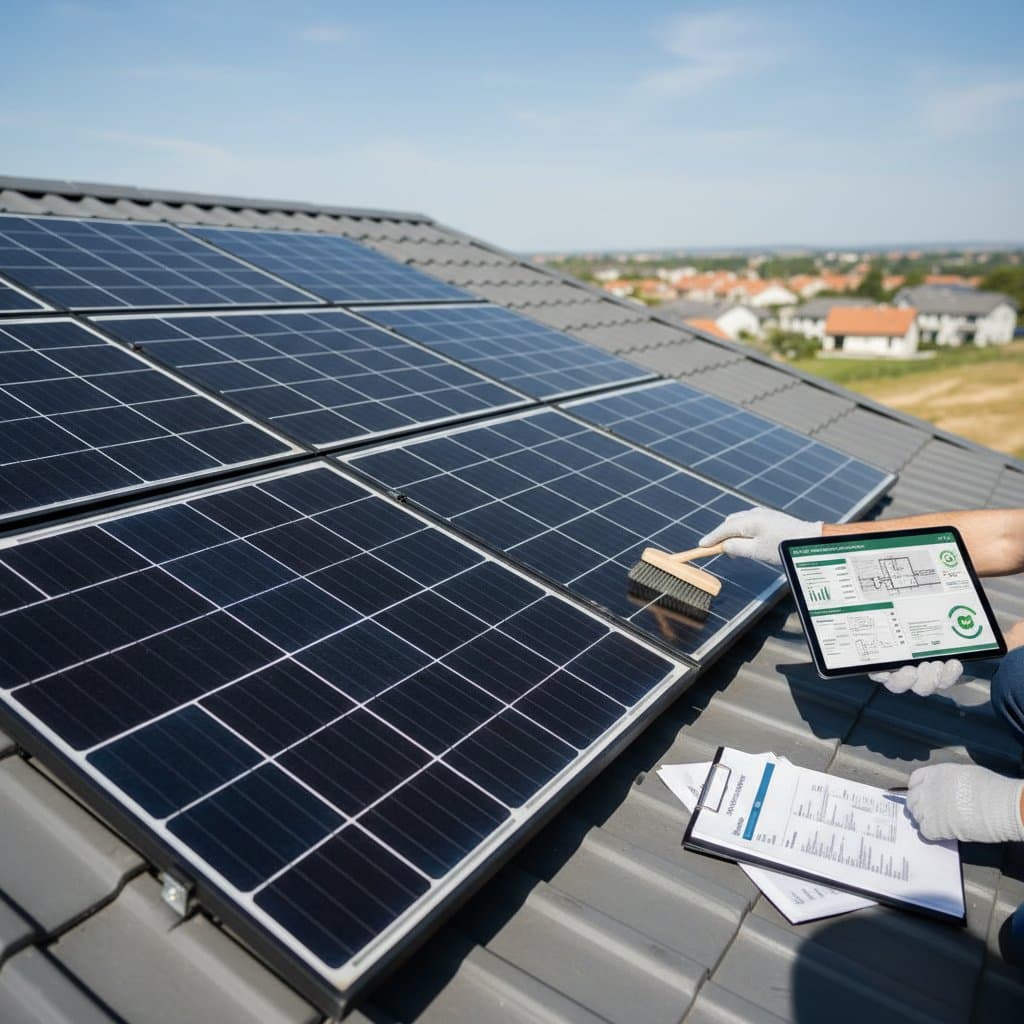
- Clean Panels Gently. Apply deionized water with a soft-bristle brush, rinsing thoroughly. Reserve pressure washing or chemical cleaners for professional use unless explicitly permitted.
- Examine Connections. Identify rust on terminals or loosened fittings in conduits and cables.
- Monitor Output Levels. Cross-reference current production against historical inverter data or expected yields; investigate drops exceeding 10 percent.
- Record Observations. Capture dated photographs and measurements to build a reliable audit trail for potential claims.
Delegate intricate tasks, such as inverter diagnostics or racking repairs, to certified solar specialists to avoid compromising safety or coverage.
Prioritizing Safety, Compliance, and Structural Integrity
Integration with home electrical systems demands strict adherence to safety protocols and regulatory standards.
- Power Isolation Procedures. De-energize and lock out the system prior to any physical contact.
- Proper Grounding Practices. Ensure all panels and frames connect to a unified ground to eliminate shock dangers.
- Protective Devices. Install ground-fault circuit interrupters (GFCIs) and arc-fault circuit interrupters (AFCIs) as mandated by code.
- Regulatory Approvals. Obtain permits for modifications affecting structure or electricity, followed by official inspections.
- Roof Compatibility. Secure roofer consent before disturbing mounts to prevent invalidating separate roofing guarantees.
Warranty enforcement often hinges on compliance with the National Electrical Code and jurisdiction-specific building requirements, verifiable through inspection certificates.
Avoiding Pitfalls That Invalidate Warranties
Certain oversights can jeopardize coverage, leading to denied claims and heightened costs.
- Neglecting installer-mandated yearly evaluations.
- Employing harsh abrasives or excessive water pressure during cleaning.
- Substituting components with unverified alternatives.
- Delaying notification of visible damage.
- Permitting unlicensed individuals to perform electrical modifications.
Maintain meticulous records, including digital backups of service invoices and maintenance entries. Absent documentation or improper initial permitting frequently results in claim rejections.
Developing a Comprehensive Maintenance Schedule
Solar arrays endure for 20 to 30 years with consistent attention, far outlasting many household appliances.
Recommended Schedule
- Post-Installation Phase. Verify all connections and validate inverter functionality within the first month.
- Seasonal Routines. Clear debris and address shading issues before peak seasons; perform light cleaning as needed.
- Yearly Professional Review. Conduct insulation resistance tests and balance current across strings to detect subtle degradation.
- Long-Term Monitoring. Replace underperforming elements when output falls below guaranteed levels, typically after 20 years.
Diligent practices not only sustain efficiency but also align with warranty expectations for optimal performance.
Deciding Between DIY and Professional Services
Assess personal capabilities against task demands to choose the right approach.
| Consideration | Suitable for DIY | Best for Professionals |
|---|---|---|
| Experience Level | Comfort with ladders and simple voltage checks using a multimeter | Uncertainty around de-energizing high-voltage components |
| Hazard Potential | Ground-level or gently sloped, single-story access | Elevated or steeply pitched roofs with string inverters |
| Equipment Needs | Access to insulated tools and basic cleaning supplies | Specialized gear like cherry pickers or advanced diagnostic devices |
Missteps carry severe consequences, including electrical faults or structural damage. Always verify with the warranty provider that proposed actions preserve coverage; err on the side of caution for covered systems.
Evaluating Contractor Proposals
Secure detailed bids to compare service quality and pricing transparently.
| Service Element | Detailed Scope | Provider A Quote | Provider B Quote | Provider C Quote | Key Differences |
|---|---|---|---|---|---|
| Annual Inspection | Cleaning, performance verification, detailed report | $275 | $320 | $260 | Budget options might omit comprehensive analytics |
| Inverter Exchange | 5 kW unit, matching original specifications | $2,200 | $2,400 | $1,950 | Verify inclusion of warranty transfer and disposal fees |
| Mounting Seal Inspection | Reapplication of sealant, torque verification on fasteners | $180 | $220 | $175 | Ensure materials meet UV and weather resistance standards |
Demand evidence of current licensing, bonding, and insurance. Inquire about distinct warranties for labor versus materials to gauge long-term reliability.
Resolving Frequent Warranty Challenges
Prompt identification and structured responses streamline issue resolution.
Reduced Energy Production. Review inverter records against performance benchmarks; initiate a claim with supporting metrics if deficits persist.
Panel Damage Such as Cracks or Layer Separation. Cease all handling, document extensively, and notify the manufacturer immediately for guidance.
Inverter Malfunctions. Leverage serial numbers for streamlined claims; engage the original installer to manage submissions.
Mounting-Related Leaks. Address through the installer's workmanship guarantee; provide evidence of installation details.
Organize all communications and reference numbers systematically. Persist with follow-ups to expedite outcomes.
Securing Long-Term System Reliability
Effective stewardship transforms a solar investment into a dependable asset. Establish a centralized repository for warranties, reports, and logs, whether physical or cloud-based. Commit to annual expert visits alongside quarterly self-assessments to sustain peak operation and warranty integrity.