Introduction to Standby Generators
Standby generators offer essential backup power for homes facing frequent outages. These systems detect power loss and start automatically within seconds to supply electricity to critical appliances and systems. Homeowners invest in them to preserve refrigeration, heating, and lighting during storms or grid failures.
Selecting the right generator involves understanding capacity needs and installation requirements. Costs vary based on several factors, but most whole-home units fall between $8,000 and $20,000 when fully installed. This range accounts for the equipment, labor, and necessary permits.
Breaking Down the Costs
The base price of a standby generator typically starts at $5,000 for smaller models capable of powering essentials like lights and a refrigerator. Larger units that support an entire home, including air conditioning, can reach $15,000 or more for the equipment alone. Installation adds $3,000 to $5,000, depending on site preparation and electrical work.
Fuel type significantly impacts the total. Natural gas models connect to existing utility lines and cost less upfront, around $6,000 to $12,000 installed. Propane systems require a tank, increasing expenses to $8,000 to $15,000. Diesel options, though efficient for larger homes, often exceed $15,000 due to robust components.
Permits and inspections contribute $500 to $2,000. Local building codes mandate these to ensure safe integration with home wiring. Electrical upgrades, such as a new transfer switch, may add another $1,000 if the existing setup cannot handle the load.
Factors Influencing Pricing
Sizing determines much of the expense. A professional load calculation assesses your home's electrical demands. For a 2,000-square-foot house, a 10- to 20-kilowatt generator suffices, costing $8,000 to $12,000 installed. Larger estates might require 30 kilowatts or more, pushing prices toward $20,000.
Location plays a role in costs. Urban areas with accessible sites keep labor low, while rural installations involving trenching for fuel lines can add $2,000. Brand reputation affects pricing; established manufacturers like Generac or Kohler offer warranties that justify higher initial investments.
Fuel availability influences choices. Natural gas provides unlimited supply but depends on utility reliability. Propane offers independence with tank refills, though storage space is needed. Consider long-term fuel costs: natural gas runs about $0.10 per kilowatt-hour, compared to $0.20 for propane.
Permits and Local Codes
Before installation, obtain permits from local authorities. These ensure the generator meets safety standards for noise, emissions, and electrical integration. The process takes 1 to 4 weeks, depending on jurisdiction.
Building departments review plans for placement, often requiring setbacks from property lines. Environmental regulations may limit diesel use in sensitive areas. Hire a licensed electrician familiar with codes to handle paperwork and avoid delays or fines.
Inspections occur post-installation. Inspectors verify grounding, ventilation, and automatic transfer switch functionality. Compliance prevents insurance issues and ensures the system operates legally during emergencies.
Installation Process and Timelines
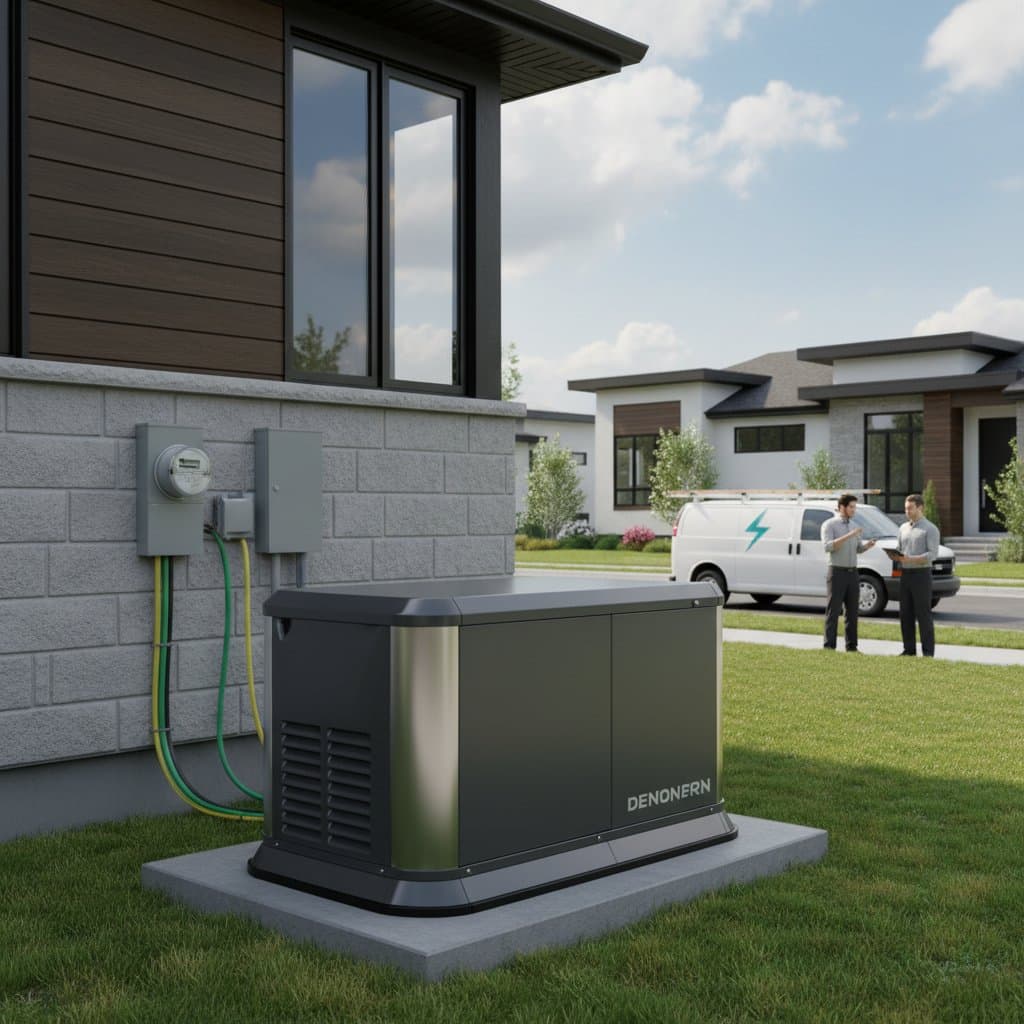
Professional installation spans 1 to 3 days for most homes. First, technicians site the unit on a concrete pad, typically 5 feet from the house for ventilation. They then connect fuel lines and integrate the transfer switch into the main panel.
Testing follows to confirm seamless startup. The system simulates outages to verify it powers on and off without manual intervention. Complex jobs, like underground wiring, extend timelines to a week.
Choose certified installers to maintain warranties. They handle zoning compliance and provide documentation for future reference. Post-installation, schedule a walkthrough to understand operation and emergency protocols.
Step-by-Step Installation Guide
- Conduct a site survey to evaluate space and electrical needs.
- Secure permits and order equipment.
- Prepare the foundation and run fuel and electrical lines.
- Mount the generator and connect components.
- Test the system and obtain final inspection approval.
Maintenance for Long-Term Reliability
Regular upkeep extends generator life to 20 years or more. Perform weekly visual checks for leaks or damage. Monthly, run the unit under load for 30 minutes to exercise the engine and battery.
Annual professional servicing includes oil changes, filter replacements, and spark plug inspections. Costs range from $200 to $500 per visit. Monitor fuel quality to prevent contamination, especially for propane or diesel.
Battery replacement every 2 to 3 years ensures quick starts. Keep records of maintenance to support warranty claims. These steps minimize downtime and repair expenses, which can reach $1,000 for neglected systems.
Planning Your Backup Power Solution
Assess outage frequency in your area to justify the investment. Pair the generator with energy-efficient appliances to optimize sizing and fuel use. Consult multiple quotes to compare options and financing plans.
Whole-home generators deliver peace of mind by safeguarding valuables and health during disruptions. With proper planning, the system integrates seamlessly, providing dependable power for years.