How Much Does Solar Integration Cost in 2026
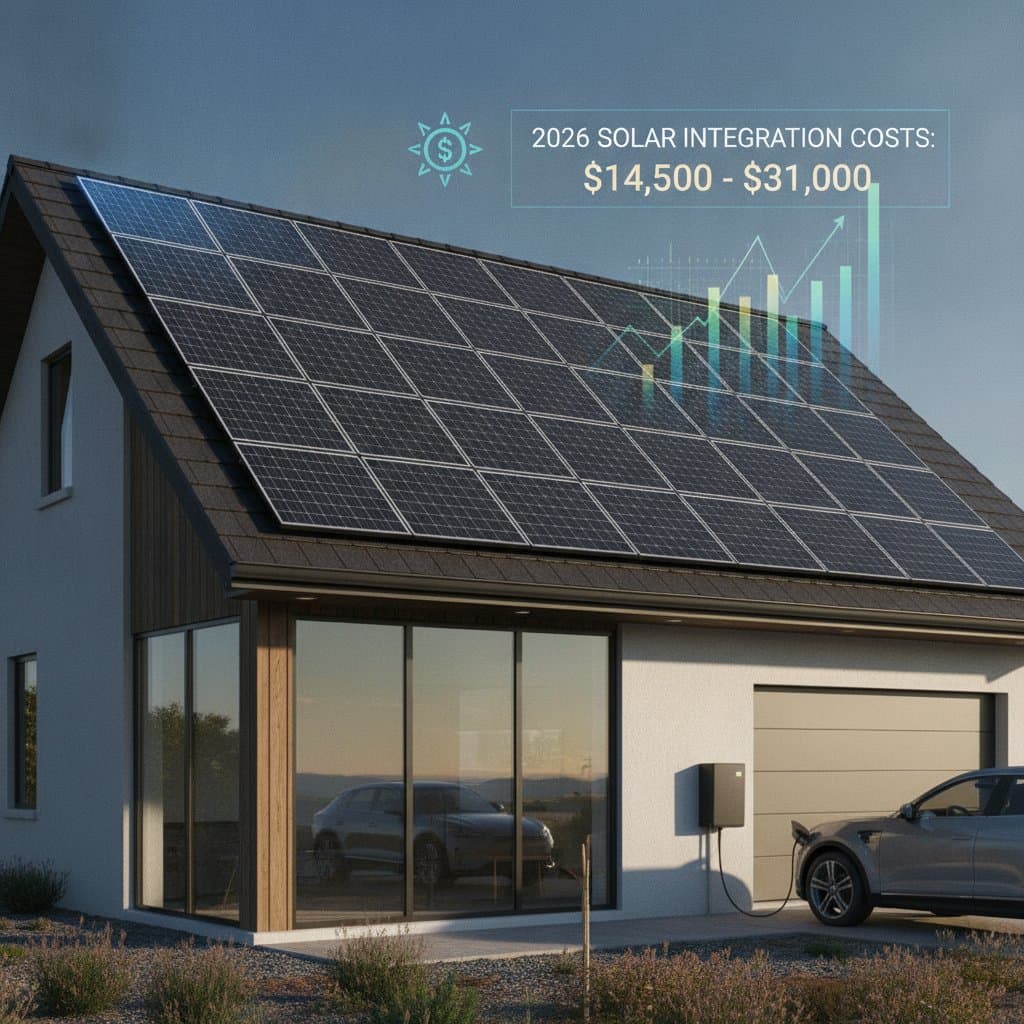
Solar integration converts homes into power generating systems that lower utility bills and support property values. Professional installation of a complete rooftop system with panels, inverters, and monitoring typically ranges from $14,500 to $31,000. Most homeowners pay about $22,800 for this setup.
System size, equipment quality, and installation complexity determine the final price. Regional utility rates and available incentives further adjust costs. A properly integrated system can cut household electricity use by up to 70 percent while adding roughly 4 percent to resale value.
Service Packages and Pricing Details
Standard Integration Package
A standard package covers site assessment, system design, panel mounting, inverter connection, and grid tie in. Installation usually requires two to three days for a small crew.
Typical costs fall between $18,000 and $25,000. This option suits homeowners who want reliable grid tied performance with moderate savings. Coverage includes a 10 to 12 year equipment warranty and basic app based monitoring.
Premium Integration Package
Premium packages include higher efficiency panels, extended warranties, battery storage, smart inverters, and whole home monitoring. Total costs range from $26,000 to $35,000, about 25 percent above standard pricing.
Payback occurs in 8 to 12 years depending on local rates. Extended coverage can reduce future maintenance expenses by $2,000 to $5,000.
Add On Services
Homeowners often bundle extra services for convenience and savings.
- Battery storage of 10 kWh adds $8,000 to $12,000 but provides backup power.
- Roof replacement coordination costs $5,000 to $8,000 and extends system life.
- Smart monitoring runs $500 to $1,200 and improves usage patterns.
- EV charger integration ranges from $1,200 to $2,000 for unified management.
Combining solar work with roof projects reduces labor overlap by 10 to 15 percent.
Professional Installation Compared with DIY
DIY Approach
A 5 kW DIY kit with panels and hybrid inverter costs $7,000 to $9,500. Mounting hardware, wiring, permits, and tools add another $2,000 to $2,800. Labor time averages 40 to 60 hours.
Total outlay can reach $13,000 once code compliance and inspection issues are addressed. Hidden repair costs from roof damage or wiring errors sometimes exceed $5,000.
Professional Approach
Certified installers supply workmanship warranties valued at $2,000 to $3,000 and handle utility approvals. They also manage incentive paperwork, saving 10 to 15 hours of administrative effort.
Professional installation is recommended when roofs are complex or electrical systems need updates. Manufacturers often require certified work to keep full warranty protection.
Cost Reduction Steps
Book projects in late winter or early spring for 5 to 8 percent lower labor rates. Midweek scheduling trims another 3 percent. Obtain three detailed quotes from licensed contractors to cut overall expense by up to 12 percent.
Clear roof obstacles and trim trees before crews arrive to save $100 to $300 per task. Direct material purchases through verified suppliers can reduce panel costs by 5 to 7 percent.
Regional and Market Factors
Metro areas average $3.60 per watt, 12 percent above the national mean. Rural markets average $3.10 per watt but may have fewer experienced crews. Material prices for silicon and copper remain stable, though labor shortages can extend lead times during peak seasons.
Homeowners recover 80 to 100 percent of installation costs through energy savings and added property value. Annual electricity reductions typically reach $1,200 to $1,800.
Long Term Investment Protection
Selecting equipment with strong warranty terms and professional installation safeguards performance for decades. Consistent monitoring and timely maintenance keep output high and repair needs low. These choices deliver reliable savings and steady home value growth over the system lifetime.