How Much Does a Solar Battery Cost? 2026 Backup Installation Pricing Guide
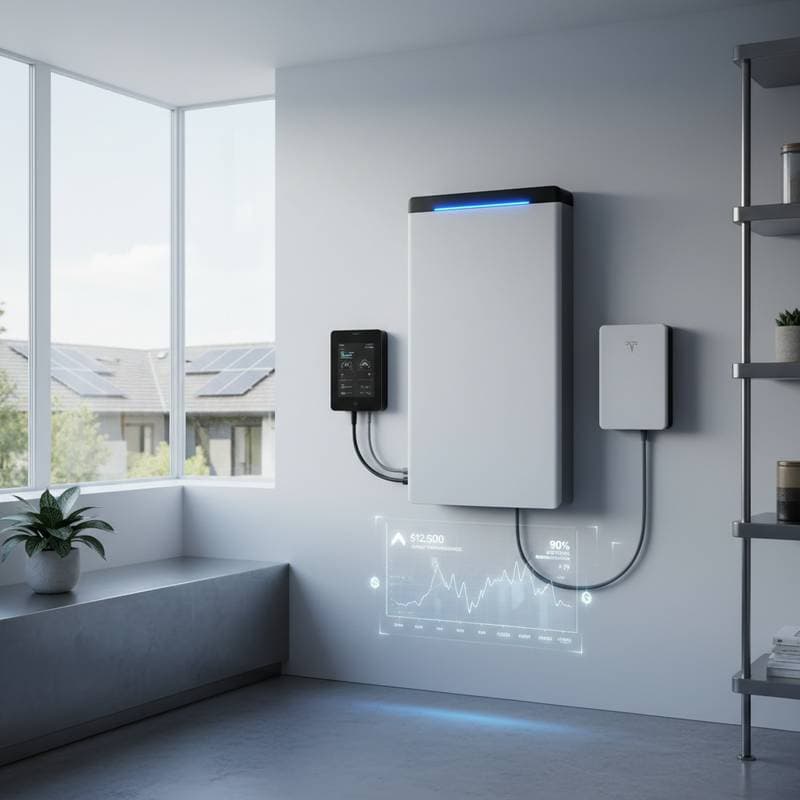
Reliable energy storage changes how homes utilize solar power. These systems store excess energy for use during outages or nighttime hours. Professional solar battery installation ranges from $8,000 to $18,000, with most homeowners selecting a mid-range system at approximately $12,500.
Entry-level units begin near $6,000, while premium whole-home setups exceed $25,000 based on capacity and brand. Three key factors shape the final price: battery capacity, brand and technology, and installation complexity. Regional labor rates and local incentives also play a role.
Data from EnergySage and solar industry contractors indicate that a properly sized solar battery boosts energy independence by up to 90 percent in homes with reliable sunlight. Homeowners who add backup storage experience notable energy savings and greater resilience against grid failures. Selecting the appropriate system involves weighing capacity, warranty durability, and return on investment. A thorough cost breakdown ensures alignment with energy objectives and financial constraints.
Detailed Cost Breakdown
Solar battery prices align with energy capacity and system type. Installers generally quote based on usable kilowatt-hour (kWh) capacity, which falls between $900 and $1,400 per kWh for installed systems.
Smaller systems often incur a minimum service fee, with installation costs seldom below $2,000 due to electrical modifications and permitting. National data reveals that 25 percent of installations cost under $10,000, half center around $12,500, and 75 percent surpass $15,000, particularly when integrated with new solar arrays.
Size and Capacity Factors
Battery size influences cost directly. A 5 kWh unit for basic backup expenses $5,000 to $7,000. A 10 kWh system, sufficient for powering critical circuits over longer periods, costs $9,000 to $13,000.
Each additional 5 kWh increases the project by $4,000 to $5,000. For instance, a California resident installed a Tesla Powerwall 2 with 13.5 kWh capacity for $14,800, covering the battery, installation, and permits. In contrast, a 9 kWh Generac PWRcell M3 in the Midwest totaled $10,200.
These examples match Solar Energy Industries Association findings, which highlight improved cost efficiency per kWh in larger systems.
Material and Quality Tiers
Entry-level systems employ lithium iron phosphate (LFP) chemistry from brands such as EG4 or SimpliPhi. A 10 kWh version costs $7,000 to $9,000 installed, offering solid performance, a lifespan of about ten years, and warranties of five years.
Mid-range choices like the Enphase IQ Battery or Tesla Powerwall 2 range from $10,000 to $14,000. These include monitoring software, enhanced safety protocols, and ten-year warranties guaranteeing 70 percent capacity retention. Such options provide optimal balance for typical homeowners.
Premium models, including SonnenCore Plus or LG Chem RESU Prime, cost $16,000 to $25,000 for 13 to 16 kWh. They feature high efficiency, extensive discharge capabilities, and seamless home automation compatibility. Clean Energy Reviews notes that premium batteries attain 96 percent round-trip efficiency, enhancing overall installation value.
Installation Complexity
Installation challenges depend on home layout and electrical setup. Retrofitting into existing solar systems adds $1,500 to $3,000 for labor and compatibility adjustments. Confined areas, panel shifts, or legacy wiring elevate expenses further.
Location impacts pricing as well. Coastal areas with elevated labor and rigorous permits incur 10 to 20 percent higher costs. Rural settings may face travel fees and contractor scarcity. EnergySage advises securing quotes from multiple sources to evaluate efficiency and availability.
Service Types and Comprehensive Pricing
Basic Solar Battery Package
A standard installation encompasses:
- One 10 kWh lithium-based battery
- Compatible inverter and monitoring setup
- Electrical panel integration and testing
- Initial software configuration and user training
This package demands 8 to 12 labor hours and totals $9,000 to $13,000, varying by brand and location. It supports essential appliances like lights, refrigerators, and routers during blackouts.
Premium Whole-Home Package
Advanced packages incorporate larger or multiple batteries, superior monitoring, and smart home linkages. Options may include load management panels, extended warranties, and remote diagnostics.
These configurations range from $16,000 to $25,000, representing 40 percent above standard pricing. They prove worthwhile for full off-grid needs or areas prone to outages. Combined with net metering and time-of-use rates, returns reach 8 to 10 percent yearly.
Add-On Services and Bundles
Bundling extras streamlines costs:
| Add-On Service | Typical Cost | Bundle Savings |
|---|---|---|
| Electrical panel upgrade | $1,200 - $2,000 | Save 10% when bundled |
| Solar inverter replacement | $1,000 - $1,800 | Save 8% when combined |
| Smart home integration | $500 - $900 | Save 5% when included |
Pairing with a new solar array cuts overall expenses by 10 to 15 percent. Off-peak scheduling yields further reductions.
Professional vs. DIY Analysis
DIY Cost Breakdown
Self-installation demands electrical knowledge and code compliance. For a 10 kWh system, components include:
- Battery unit: $7,000
- Hybrid inverter: $1,500
- Mounting and wiring: $400
- Tools and safety gear: $350, or $100 daily rental
Total DIY outlay hits $8,000 to $9,000, yet permits, inspections, and violation risks offset gains. Effort spans 15 to 25 hours, plus troubleshooting. Novices encounter hazards from high-voltage elements.
Professional Installation Advantages
Certified professionals deliver assured quality, full warranties, and secure grid ties. They handle documentation, rebates, and verifications. Labor contributes 15 percent to costs but yields:
- Warranties valued at $1,000 to $2,000 over time
- Up to 5 percent less performance degradation
- Access to $2,500-plus in specialized tools
Professionals achieve break-even versus DIY within five years through safety, efficiency, and protection. They enhance reliability and property appeal.
Actionable Cost-Saving Strategies
Timing Optimization
Prices shift with demand cycles. Winter installations secure 5 to 10 percent discounts amid lower activity. Midweek bookings trim 3 percent via reduced rates. Tax credits and incentives amplify savings, especially with solar pairings.
Smart Shopping Tactics
Quotes from three certified installers lower costs by 8 to 12 percent. Itemized breakdowns reveal negotiation points. Payment plans or financing ease initial burdens. Certified refurbished units save 10 percent while preserving warranties.
Preparation Actions
Pre-installation steps minimize labor:
- Clear the site ahead of assessment (saves $150)
- Supply current electrical schematics (saves $100)
- Verify panel and inverter details upfront
Strong contractor dialogue avoids surprises and refines estimates.
Market Dynamics and Considerations
Geographic Variations
Costs differ by area due to labor and incentives. Urban centers like Los Angeles or New York apply a 15 percent premium. Suburban or rural zones offer cheaper labor but may add travel charges from limited providers.
Emerging Market Trends
Advancements in battery tech drive gradual price drops, with lithium-ion efficiencies improving annually. Supply chain stability and policy shifts, such as expanded federal credits, influence 2026 projections. Monitoring industry reports helps anticipate optimal purchase windows.
Assessing System Value
Evaluate value through efficiency ratings, warranty terms, and integration ease. Systems with high round-trip efficiency and robust software maximize savings. Long-term metrics, including energy bill reductions and outage protection, outweigh initial costs for resilient setups.
Securing Energy Independence Through Informed Choices
Solar batteries represent a strategic step toward self-reliant power. Grasping influences on pricing—from capacity to regional factors—empowers precise decisions. Partnering with trusted professionals, leveraging incentives, and preparing thoroughly yield savings and enduring performance. This approach not only cuts expenses but fortifies homes against energy uncertainties, fostering sustainable independence.