Does Your Home Warranty Cover Solar and Battery Systems?
Most home warranties exclude solar panels, inverters, and battery storage. Homeowners typically pay an average of 700 dollars for repairs that range from 300 to 1500 dollars. This overview clarifies actual coverage limits, outlines realistic repair costs, and presents practical steps to protect a renewable energy investment.
Average Repair Costs
Repair expenses vary by component. Solar panel replacement ranges from 200 to 400 dollars per panel plus labor. Inverter replacement commonly costs between 1000 and 2500 dollars. Battery module repairs fall between 500 and 1200 dollars per module. Wiring and connector work adds 60 to 240 dollars. Licensed labor runs 75 to 150 dollars per hour for three to six hours. Permits and inspections add 50 to 150 dollars. Disposal fees reach 50 to 100 dollars when components are replaced.
A moderate repair that includes parts and labor usually totals around 700 dollars.
Tasks Homeowners Can Handle
Homeowners can clean panel surfaces with water and mild detergent using a soft brush. They can inspect visible wiring for loose conduit or signs of animal damage. They can also restart an inverter according to manufacturer instructions when a simple fault code appears. Battery charge levels can be tracked through the system app or display.
Work That Requires Licensed Professionals
Licensed electricians must replace inverters or rewire inside the main electrical panel. Battery enclosures require professional service. Rooftop wiring and mounting hardware adjustments need trained crews. Insulation resistance and voltage tests belong to qualified technicians.
Solar arrays produce high voltage even after the main power is shut off. Batteries hold substantial energy that can release heat or gas if mishandled. Always use isolation switches before any inspection and stop work immediately if arcing, smoke, or swelling appears.
Unauthorized repairs or nonapproved parts can void manufacturer warranties. Retain all service records and confirm that only approved components are installed.
Coverage Provided by Standard Home Warranties
Standard policies cover HVAC systems, plumbing, water heaters, and built-in appliances. Solar arrays, inverters, battery storage, and associated wiring appear as excluded items in nearly every contract.
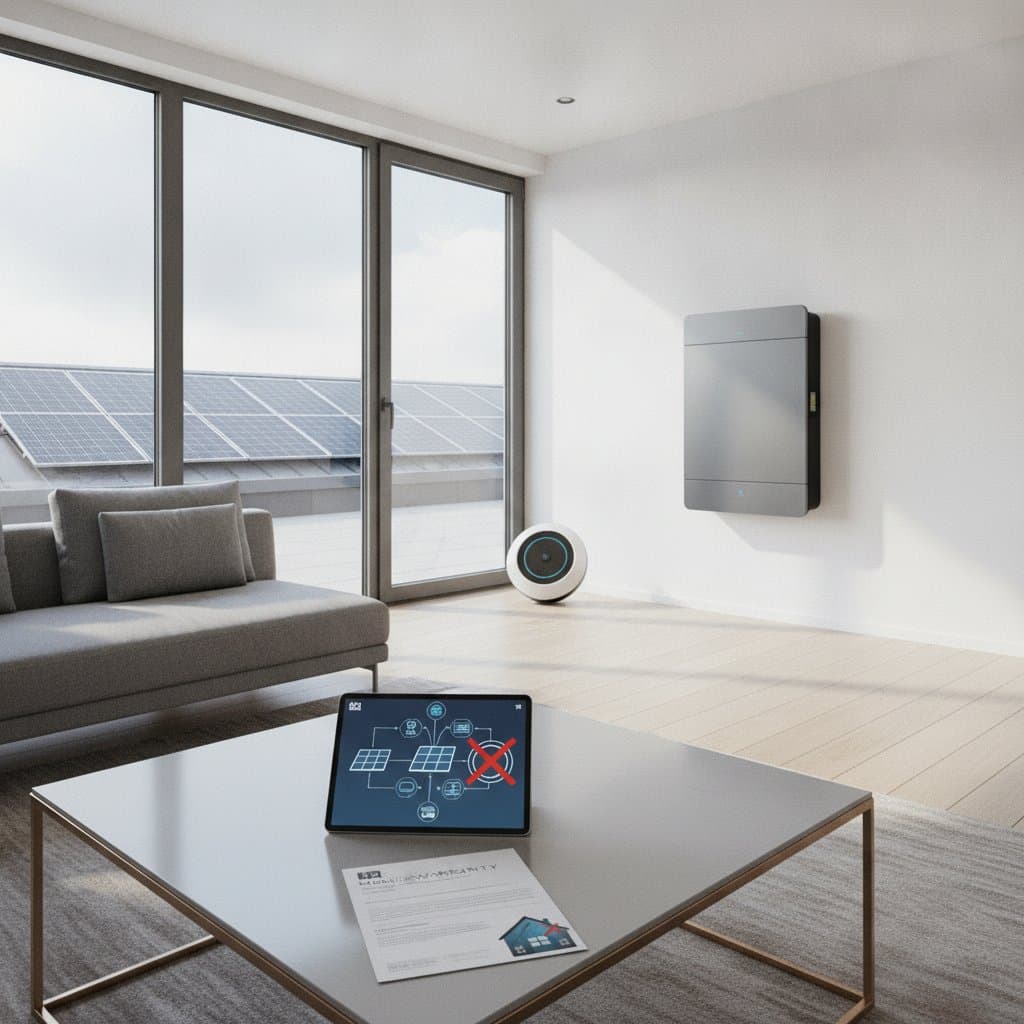
A small number of providers sell optional renewable energy riders. These add 20 to 40 dollars per month and cover only selected parts. One rider might address inverter failure while leaving panel damage and battery defects uncovered. Confirm whether any rider reimburses both parts and labor or caps reimbursement at the part cost alone.
Weather damage, hail, wind, roof leaks around mounting points, software updates, installation errors, and cosmetic fading remain excluded in most plans.
Separate Protection Options
When a home warranty excludes solar equipment, owners can purchase dedicated solar service contracts. These plans cost 300 to 700 dollars annually and activate after manufacturer warranties expire. Typical benefits include annual inspections, remote monitoring, inverter or battery repairs up to a stated limit, and roof penetration checks after storms.
Homeowners insurance riders address storm damage or theft rather than mechanical failure. Properties in hail or high wind zones benefit from this added layer.
Scheduling and Lead Times
Inverters usually ship within three to five business days. Battery modules may require several weeks when backordered. An inverter swap takes one day on site. Battery module replacement needs two days. Inspections occur after major component changes. Schedule work during dry weather to maintain safe roof access.
Regional Considerations
Coverage rules and labor rates differ by climate and local utility requirements. Coastal areas often face stricter wind load standards. Desert regions encounter higher dust related maintenance needs. Check interconnection agreements and permit rules before any service visit.