Understanding Multigenerational Renovation Costs in 2026
Designing a residence that accommodates multiple generations demands meticulous planning, precise budgeting, and realistic timelines. Expenses for multigenerational renovations fluctuate significantly, depending on whether the project involves a modest in-law suite or a comprehensive accessory dwelling unit. Once project parameters emerge, financial implications become more foreseeable.
Defining Multigenerational Renovations
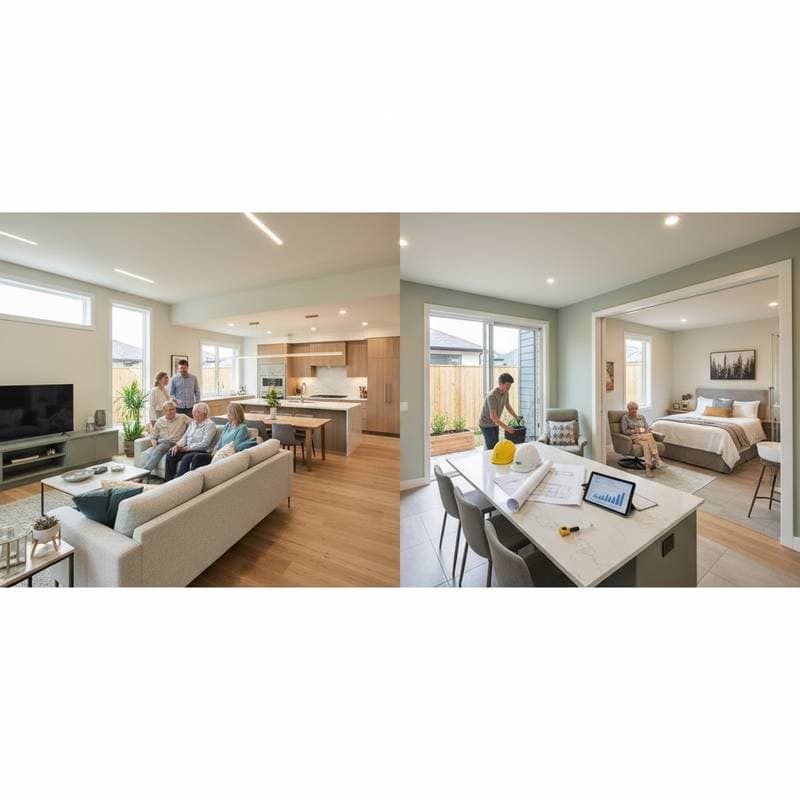
A multigenerational renovation alters an existing home to facilitate coexistence among two or more adult generations. Common elements include an in-law suite, granny flat, or accessory dwelling unit (ADU), each providing distinct areas for sleeping, cooking, and bathing while maintaining shared access to communal zones. This approach promotes independence alongside familial proximity.
Indicators for Pursuing a Multigenerational Renovation
Consider initiating such a project under these circumstances:
- A parent or adult child intends permanent residency.
- Existing bedrooms or bathrooms fall short of household needs.
- Mobility challenges render stairs or confined hallways hazardous.
- Rental potential appeals for supplementary income generation.
Identifying these factors early shapes the project scope and minimizes expensive alterations during construction.
Breakdown of Costs and Influencing Elements
Averages across the nation reveal substantial differences based on project magnitude and material quality.
| Line Item | Typical Range | Notes and Variables |
|---|---|---|
| Design and permits | $5,000–$15,000 | Encompasses fees, site assessments, and engineering evaluations |
| Demolition and framing | $20,000–$60,000 | Varies with extent of wall modifications and structural configurations |
| Plumbing and electrical | $15,000–$45,000 | Escalates with additions like new bathrooms or kitchens |
| HVAC and insulation | $8,000–$20,000 | Involves independent systems for optimal zoning and comfort |
| Interior finishes | $25,000–$80,000 | Covers cabinets, flooring, lighting, and paint selections |
| Accessibility upgrades | $5,000–$25,000 | Includes wider doorways, grab bars, and ramp installations |
| Exterior work | $10,000–$30,000 | Addresses entries, siding, roofing, and window replacements |
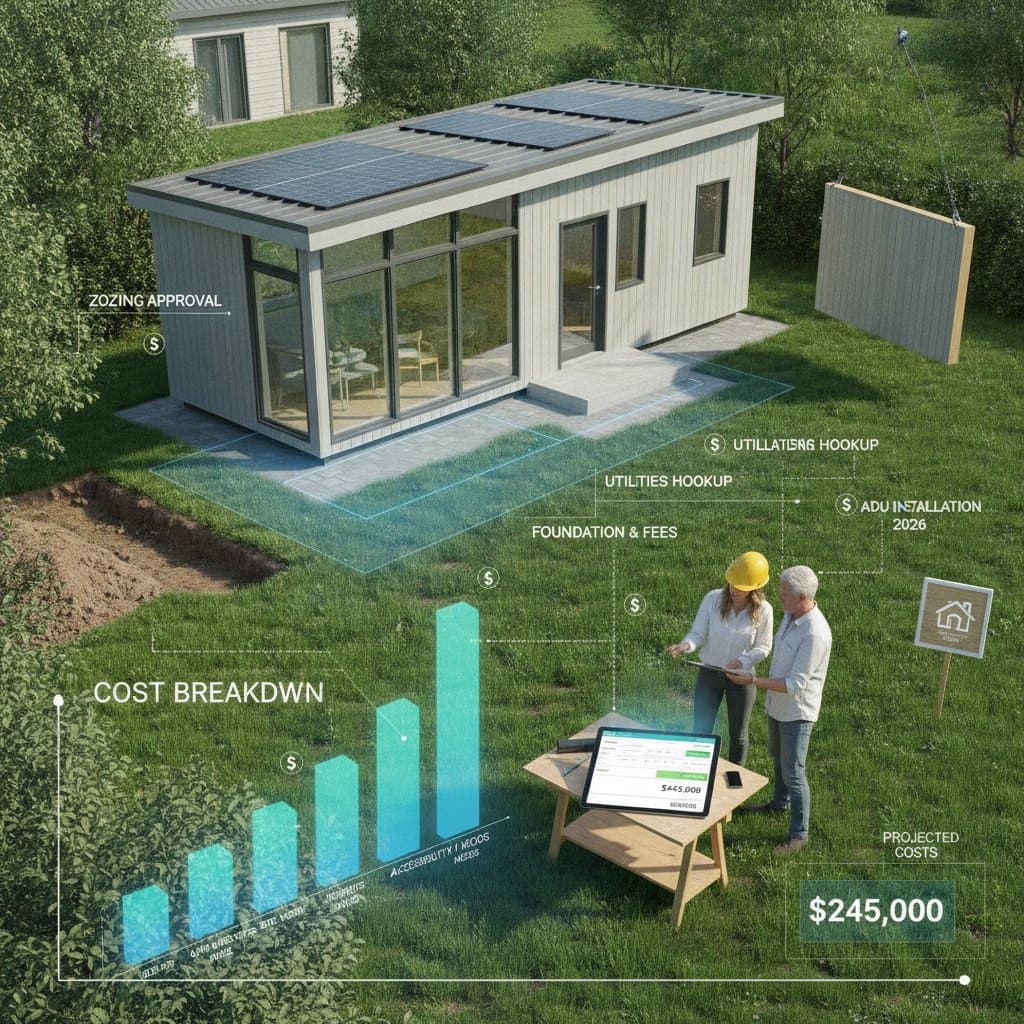
In a basic scenario, converting a basement with straightforward finishes may amount to $80,000. At the upper end, constructing a detached ADU complete with a full kitchen and bathroom could exceed $350,000. A typical mid-range project, such as a moderate addition or garage conversion, hovers around $180,000.
Essential Safety and Building Code Considerations
Compliance ensures occupant protection and project viability.
- Electrical systems: Require GFCI protection for circuits in kitchens and bathrooms to mitigate shock risks.
- Plumbing installations: Demand appropriate venting and slope in drain lines to avoid obstructions.
- Fire prevention: Mandate interconnected smoke and carbon monoxide alarms throughout each living unit.
- Accessibility features: Specify doorways of at least 32 inches in width; limit shower curbs to half an inch in height.
- Emergency egress: Equip every bedroom with a sufficiently sized window or door for safe evacuation.
Consult local authorities to verify code standards prior to commencement. Unauthorized modifications may halt operations upon inspection.
Regional Influences on Renovation Projects
Local conditions shape both expenses and design choices.
Climate Adaptations
- In colder areas, incorporate enhanced insulation and triple-pane windows to combat frost and moisture buildup.
- For hot and humid environments, integrate dehumidification units and mold-resistant drywall materials.
- Arid regions benefit from light-reflective roofing and exterior surfaces to minimize heat absorption.
- Coastal locations necessitate corrosion-resistant elements, such as stainless steel hardware and sealed siding.
Permitting and Zoning Details
Certain municipalities impose restrictions on ADU dimensions or mandate off-street parking provisions. Early verification of zoning regulations prevents redesign expenses.
Material and Sourcing Strategies
Select regionally abundant materials to curb transportation fees; local lumber and tiles frequently reduce costs by up to 15 percent.
Seasonal Planning
Schedule groundwork like excavation during drier periods. Once the structure seals, interior tasks such as framing and finishing proceed regardless of weather.
Key Terminology Guide
- Accessory Dwelling Unit (ADU): A standalone secondary residence on the primary property.
- In-law suite: A dedicated space within the home for family members, typically featuring a compact kitchen and bathroom.
- Granny flat: Synonymous with an ADU or attached secondary unit, often positioned separately or above a garage.
- Grab bar: A secure rail installed adjacent to showers or toilets for stability.
- Egress window: An oversized opening permitting emergency exit from sleeping areas.
- GFCI outlet: A safety device that interrupts power flow to avert electrical hazards in damp zones.
- Load-bearing wall: A structural element supporting overhead loads.
- Permit: Formal authorization from building officials to proceed with alterations.
- Curbless shower: A level-entry design where the floor gradients toward the drain.
- Zoning: Regulations governing land use, building scale, and occupancy limits.
- Carbon monoxide alarm: An alert system detecting hazardous gas accumulation.
Steps to Plan and Execute Your Multigenerational Renovation
Embark on this endeavor with structured preparation to maximize benefits.
- Assess family requirements through discussions to outline spatial and functional needs.
- Engage architects or designers familiar with multigenerational layouts for initial sketches.
- Obtain multiple contractor bids, prioritizing those experienced in ADUs and accessibility.
- Secure financing options, including home equity loans or grants for aging-in-place modifications.
- Schedule phased work to minimize disruption, starting with foundational elements.
- Monitor progress with regular site visits and adjust budgets as necessary.
This methodical approach not only controls costs but also cultivates a home that nurtures intergenerational harmony and appreciates over time.