R-454B: Key HVAC Changes Homeowners Face in 2025
Quick summary:
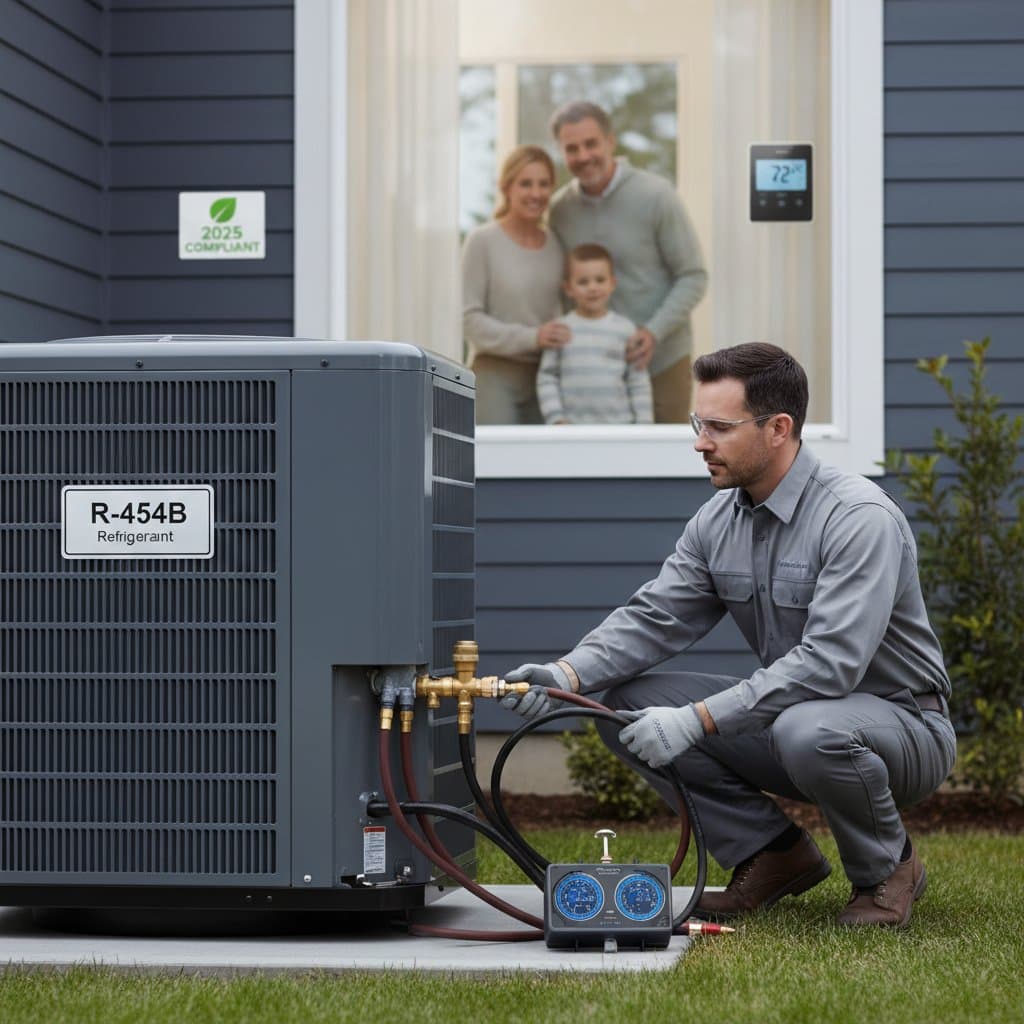
R-454B replaces R-410A in new air conditioning and heat pump systems. Environmental regulations drive this shift by restricting refrigerants with high global warming potential. Homeowners encounter new equipment designs, revised servicing protocols, and potential cost adjustments for installation and maintenance.
At a glance:
- Estimated cost: $7,500 to $13,000 for a new central air or heat pump system using R-454B
- Typical project time: 1 to 2 days for installation
- Difficulty: Moderate for professionals; refrigerant work requires certified expertise and prohibits DIY attempts
- Key risks: Compatibility mismatches, price volatility, and initial supply constraints
Quick Answer for Homeowners
R-454B alters HVAC options significantly. Existing R-410A systems require no immediate replacement, yet all new units adopt R-454B. Homeowners prepare for elevated equipment expenses and reduced availability of legacy refrigerant models.
Comparing Your Options
| Option | Pros | Cons |
|---|---|---|
| Keep your R-410A system | Avoids immediate expenses; replacement parts remain accessible for years; delivers familiar performance levels | R-410A costs increase as production declines; future supply dwindles; contributes greater environmental harm |
| Replace with R-454B system | Reduces environmental impact; extends compliance duration; incorporates advanced technology | Elevates initial investment; may delay access to components or certified technicians |
| Switch to alternative refrigerant systems (CO2, propane, or other blends) | Achieves minimal environmental effects in select models | Restricts residential availability; demands premium pricing; necessitates specialized servicing |
Timeline and Order of Operations
- Evaluate your current system. Assess performance metrics like efficiency and age; delay replacement if the unit operates reliably until the standard 10-15 year lifespan concludes.
- Get quotes early. Inquire with multiple contractors about their certification and tools for R-454B handling; compare at least three estimates to identify competitive pricing.
- Schedule installation during mild weather. Target off-peak seasons, such as spring or fall, to minimize delays and secure prompt technician availability.
- Register your warranty. Review manufacturer policies, as new refrigerant systems often include extended coverage for components like compressors and coils.
- Keep documentation. Maintain detailed records of service history, including refrigerant type, serial numbers, and installation dates, to streamline future repairs.
Professional installation spans one to two days after equipment delivery. Factor in additional time for contractors acquiring specialized tools or completing required training programs.
Materials and Tools Checklist
For professionals installing R-454B systems:
- A2L-rated recovery machine and compatible cylinders for safe refrigerant handling
- Pressure gauges calibrated specifically for R-454B properties
- Leak detector designed for mildly flammable A2L refrigerants
- Nitrogen supply and vacuum pump for thorough line evacuation
- Torque wrench calibrated for secure flare fittings
- Personal protective equipment: gloves, safety glasses, and flame-resistant clothing
- Ventilation fans to ensure air circulation in enclosed work areas
For homeowners maintaining systems:
- Replacement air filters rated MERV 8 to 11 for optimal airflow
- Coil cleaning solution to remove debris and maintain efficiency
- Drain pan treatments, such as tablets or diluted vinegar, to prevent algae buildup
- Garden hose equipped with an adjustable spray nozzle for routine exterior cleaning
Regional and Climate Considerations
Regions with hot, humid conditions accelerate R-454B adoption due to intense cooling needs and potential energy savings from enhanced system designs. Colder climates experience gradual integration as manufacturers refine heat pump configurations for low-temperature performance.
Trained technicians prove scarce in rural locales during initial rollout years. Residents beyond major urban centers verify local HVAC firms hold A2L refrigerant certifications prior to scheduling work.
Common Questions
Can my current R-410A system use R-454B?
No. Differences in lubricating oils, operating pressures, and flammability classifications prevent safe retrofitting. Professional assessment confirms incompatibility.
Will refrigerant costs rise?
Yes. R-410A expenses escalate with phased-out production, while R-454B prices normalize following widespread market entry.
Is R-454B safe?
Yes, under proper protocols. Its mild flammability prompts technicians to implement ventilation measures and ignition safeguards during service.
Do I need new ductwork?
Not always. Well-sized, intact ducts accommodate R-454B systems without modification; inspections reveal any necessary sealing or insulation upgrades.
Will switching improve efficiency?
Most R-454B units achieve superior efficiency through modern components and stringent design criteria, often yielding 5-10% better SEER ratings than prior models.
Preparing for a Seamless Upgrade
Homeowners with aging HVAC units benefit from soliciting quotes immediately. Probe contractors on R-454B expertise, including hands-on training and equipment readiness, alongside comprehensive warranty details.
Sustain current system upkeep to avert unexpected failures during transition planning. Collaborate with A2L-certified installers to guarantee compliance with efficiency benchmarks and safety regulations.
This refrigerant evolution demands adaptation yet unlocks pathways to sustainable, high-performance home climate control. Strategic foresight safeguards investments and ensures enduring reliability.