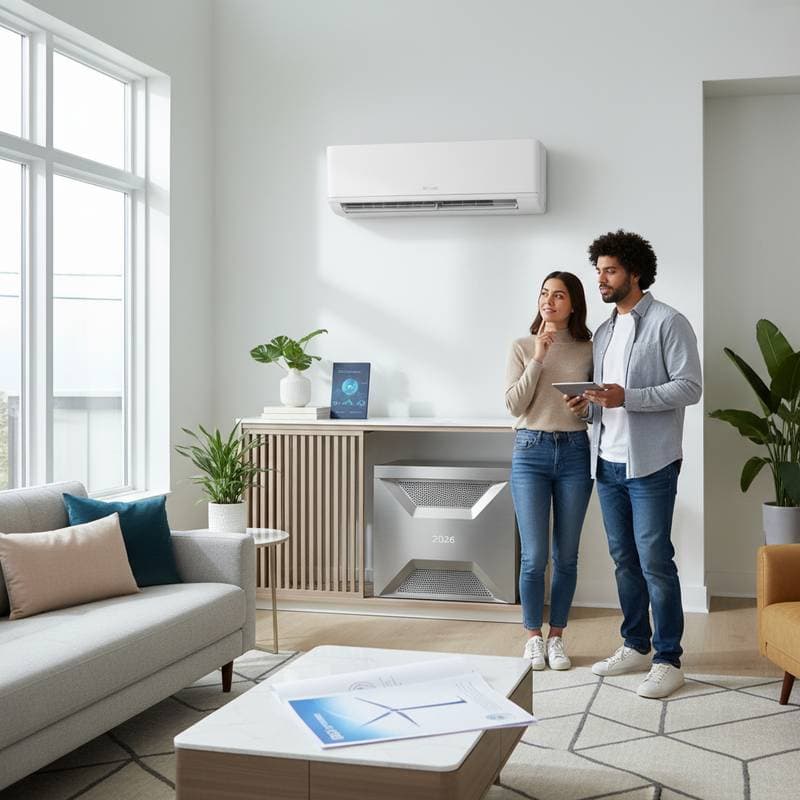
Homeowners encounter growing demands to sustain efficient heating and cooling systems. The 2026 HVAC efficiency standards mark a significant evolution in residential equipment evaluation, sales, and installation. These regulations target reduced energy use and lessened environmental effects, yet they present fresh financial and operational hurdles. A clear examination of the rules, equipment types, and upgrade economics proves vital for informed decisions.
Overview of the 2026 HVAC Efficiency Standards
The updated framework establishes elevated minimum efficiency levels for air conditioners, heat pumps, and associated parts. Central metrics include the Seasonal Energy Efficiency Ratio (SEER) for cooling and the Heating Seasonal Performance Factor (HSPF) for heating. These measures quantify energy conversion into usable output. Regulations cover all newly produced and installed units, requiring full adherence post-enforcement.
Revised testing protocols simulate actual usage conditions more accurately. Manufacturers adapt designs accordingly, while contractors adjust performance disclosures. Homeowners must familiarize themselves with updated EnergyGuide labels and recalibrated ratings to select suitable systems.
Primary Impacts on Home Systems and Owners
These standards reshape system performance expectations. Non-compliant installations become prohibited after the effective date, potentially affecting even replacement parts in certain areas. Homeowners with aging units face urgency to act within a narrowing timeframe to evade fines or warranty issues.
Environmental goals drive the changes, yet practical effects include higher equipment prices and installation demands. Regions with severe climates may see amplified benefits from efficient models that handle variable loads better. Overall, the shift promotes sustainability while challenging budgets.
Breaking Down Upgrade Costs and Savings
High-efficiency HVAC systems carry premium prices, typically 15 to 30 percent above basic models. Factors influencing totals encompass unit type, regional labor rates, and home specifics like ductwork condition.
Key expense elements consist of:
- Base equipment: $5,000 to $9,500 for central systems, varying by capacity.
- Installation adjustments: Electrical upgrades or refrigerant handling add $1,000 to $3,000.
- Labor and permits: Expect $2,000 to $4,000, higher for complex retrofits.
- Ongoing maintenance: Specialized servicing runs $200 to $300 annually.
Long-term analysis reveals advantages. Efficient units cut energy bills by 20 to 30 percent, with payback periods of 4 to 7 years based on local utility costs and usage. For instance, in a moderate climate, a $8,000 high-efficiency heat pump might save $500 yearly on heating and cooling.
| System Type | Initial Cost Range | Annual Energy Savings | Maintenance Cost | Lifespan | Payback Period |
|---|---|---|---|---|---|
| Standard Efficiency | $5,000–$7,000 | Baseline | $150–$250 | 12–15 years | N/A |
| High Efficiency | $6,500–$9,500 | 20–30% reduction | $200–$300 | 15–18 years | 4–7 years |
Step-by-Step Upgrade Process
Navigating an HVAC replacement demands structured steps to ensure compliance and performance.
- Assessment: Engage a certified contractor to inspect existing setup, including insulation, ducts, and energy load.
- Selection: Review compliant models matching home size and efficiency needs; prioritize SEER2 or HSPF2 ratings.
- Permitting: Submit plans to local authorities for energy code approval, addressing any zoning variances.
- Installation: Remove old components, integrate new ones, and optimize controls for peak efficiency.
- Testing: Verify operations through airflow checks, temperature balances, and refrigerant calibration.
- Documentation: Secure efficiency certifications, warranties, and rebate applications for records.
Delays at permitting or testing stages can escalate costs by 10 to 20 percent, underscoring the value of experienced professionals.
Service Contracts and Warranty Considerations
Home warranties and service plans frequently limit coverage for regulatory upgrades. Exclusions often target replacements driven by new codes rather than breakdowns, or modifications like duct sealing.
Review policies for:
- Regulatory compliance add-ons, which may raise premiums by $10 to $20 monthly.
- Exclusions on efficiency enhancements or non-failure-related changes.
- Transferability to future owners, preserving value.
Opt for plans that include annual inspections to maintain warranty validity under stricter standards.
Timing Strategies: Upgrade Now or Later?
Postponing action risks supply shortages and price surges as non-compliant stock depletes. Installed non-compliant systems after enforcement invite penalties up to $500 per violation in some jurisdictions.
Early upgrades yield:
- Inventory access to preferred models before phase-out.
- Contractor discounts, potentially 10 to 15 percent off pre-deadline installs.
- Incentive programs, such as federal tax credits up to $2,000 or utility rebates covering 20 percent of costs.
Assess current system age and condition first. Units over 10 years old warrant priority replacement, while newer ones may wait if operational.
Selecting Reliable Contractors
Provider quality determines upgrade success. Prioritize firms with NATE certification for efficiency expertise and refrigerant management.
Evaluation criteria include:
- Itemized quotes detailing parts, labor, and compliance fees.
- Warranty support from both installer and manufacturer.
- Follow-up services like tune-ups and performance monitoring.
Obtain three bids to benchmark fair pricing; avoid low-ball offers that signal cut corners.
Safeguarding Against Common Risks
Misrepresented efficiencies or shoddy work pose frequent threats. Contractors might exaggerate savings to upsell, while rushed installs lead to failures.
Protective measures:
- Demand model-specific efficiency data and third-party verifications.
- Include detailed specs in contracts, such as exact SEER ratings.
- Verify local codes exceed national minimums where applicable.
- Secure multiple inspections to catch issues like improper sealing.
These steps minimize disputes and ensure systems deliver promised performance.
Sustaining Efficiency Through Maintenance
New standards presume diligent care to achieve rated outputs. Neglect accelerates wear, inflating costs and risking non-compliance.
Essential routines:
- Swap filters quarterly in high-use homes to sustain airflow.
- Clear coils seasonally to prevent efficiency drops of up to 15 percent.
- Calibrate thermostats annually for accurate control.
- Monitor refrigerant annually to avoid compressor damage.
Document maintenance to uphold warranties, which often mandate professional service logs.
Securing Warranties and Contracts
Fine print governs protection scopes. Manufacturers typically cover parts for 10 years but labor for 1 to 5 years, conditional on verified upkeep.
Clarify before commitment:
- Coverage durations for core components versus smart features.
- Voiding triggers, like DIY repairs.
- Claim processes, including required inspections.
- Options for extended plans on variable-speed tech.
Thorough review aligns expectations with realities.
Strategic Planning for Future-Proofing
Integrate HVAC decisions into overall home strategies. Forecast replacements every 12 to 18 years, aligning with renovations to distribute expenses.
For investors, compliance bolsters property appeal and avoids tenant complaints. Budget reserves covering 1 percent of property value annually accommodate rising standards.
Achieving Compliance and Maximizing Benefits
Mastering 2026 HVAC standards empowers homeowners to balance costs with gains. Conduct thorough assessments of ratings, budgets, and timelines to select optimal paths.
Proactive steps secure rebates, enhance comfort, and lower environmental footprints. Consult certified experts early to tailor solutions that fit individual needs and deliver enduring value.