Creating Budget-Savvy Multigenerational Home Layouts
Multigenerational living offers families a way to share resources and support one another. However, designing a home that accommodates multiple generations requires careful planning to maintain privacy and reduce costs. This approach focuses on zoning spaces effectively, reusing existing areas, and incorporating affordable upgrades.
Quick Take
- Establish flexible zones that separate private and shared areas for better harmony.
- Optimize current square footage before considering expansions.
- Implement targeted upgrades to minimize expenses over full-scale renovations.
- Integrate accessibility features from the outset to prevent expensive modifications later.
Benefits and Challenges
Benefits
- Pooling resources in shared housing lowers overall living expenses for all residents.
- Facilitate caregiving responsibilities for elderly relatives and young children alike.
- Distribute utility and maintenance costs across the household to ease financial burdens.
- Foster deeper family relationships through regular interactions and mutual support.
Challenges
- Poorly defined zones can lead to privacy invasions and interpersonal tensions.
- Increased occupancy accelerates wear on essential systems such as plumbing and heating.
- Local regulations may complicate the addition of accessory dwelling units.
- Undefined responsibilities for chores or noise management can spark conflicts.
Step-by-Step Guide to Planning Your Layout
Essential Tools and Materials
- Tape measure, graph paper, or floor planning software for accurate mapping.
- Level, stud finder, and light meter to evaluate existing spaces.
- Sketching tools or digital design applications.
- Local zoning maps and permit requirements checklists.
Estimated Time: Two to four weekends dedicated to planning and initial research.
Skill Level: Moderate, assuming familiarity with basic layouts and building codes.
Step 1: Identify Household Needs
Compile a comprehensive list of all residents, including pets, occasional guests, and caregivers. Detail specific requirements for sleeping arrangements, personal storage, and dedicated workspaces for each individual.
Step 2: Document the Existing Space
Measure every room precisely and diagram traffic patterns throughout the home. Note sources of natural light, electrical outlets, and plumbing locations. Highlight underutilized spaces, such as formal dining areas or basements, for potential repurposing.
Step 3: Divide into Functional Zones
Categorize the home into distinct areas:
- Private zones dedicated to bedrooms, home offices, or self-contained suites.
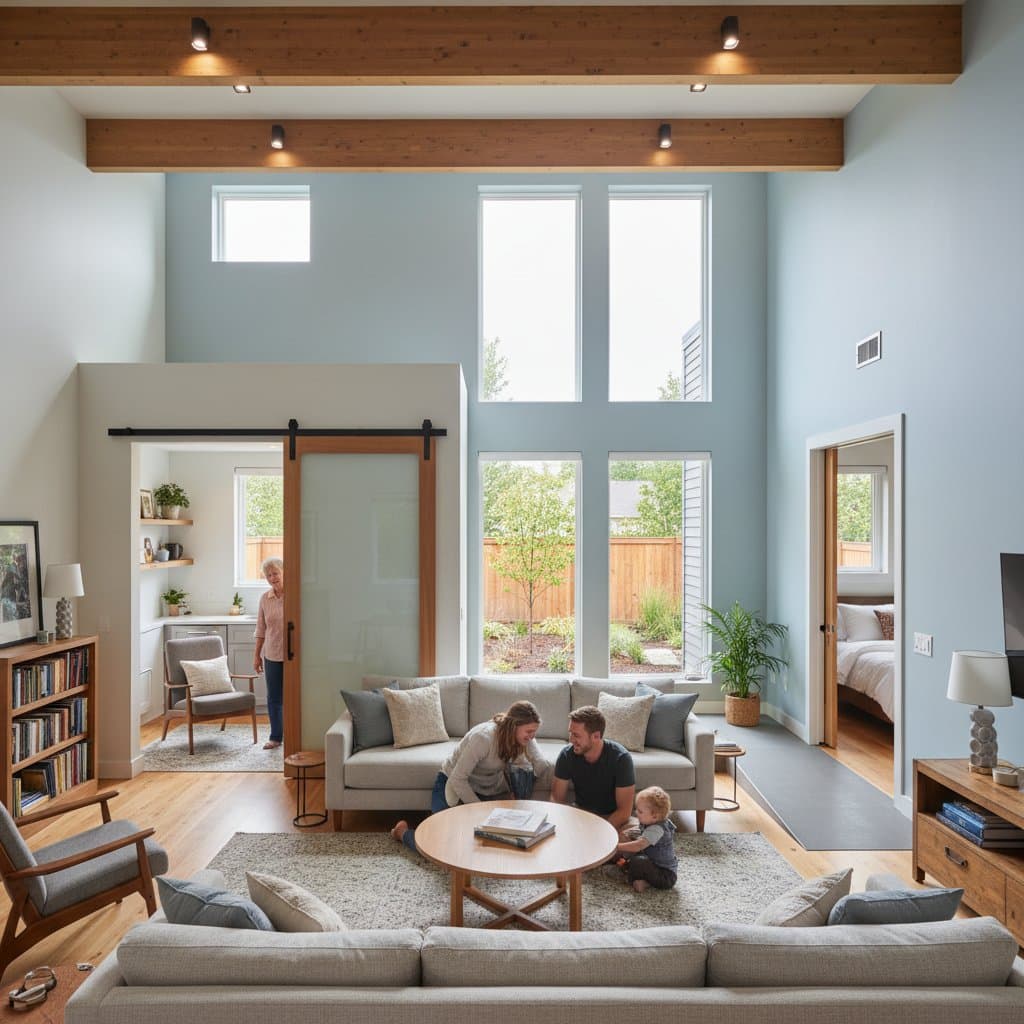
- Shared zones encompassing kitchens, living areas, and outdoor patios.
- Transition zones like hallways and entryways that link private and communal spaces seamlessly.
Step 4: Prototype Layout Configurations
Employ painter's tape or removable partitions to outline proposed walls and door placements. Invite family members to navigate the simulated setup, assessing privacy levels and movement efficiency prior to any permanent changes.
Step 5: Incorporate Accessibility and Safety Measures
Install wide doorways, lever-style handles, and non-slip flooring materials. Ensure pathways measure at least 36 inches in width. Designate a ground-level bedroom and complete bathroom to support aging residents.
Step 6: Develop a Feasible Budget
Classify expenses into essential, desirable, and discretionary categories. Allocate funds first to core finishes and fixtures, deferring secondary enhancements until additional resources become available.
Step 7: Review Regulations and Permits
Verify municipal guidelines for secondary suites or accessory dwelling units. Determine if features like a kitchenette or independent entrance necessitate additional approvals.
Step 8: Sequence the Implementation
Prioritize modifications that benefit multiple areas, such as enhanced insulation, improved lighting, or plumbing adjustments. Postpone aesthetic elements until foundational work concludes.
Step 9: Obtain Quotes and Cost Projections
Secure estimates from at least three professionals for significant structural or systems work. Evaluate labor costs against material expenses. For do-it-yourself projects, account for tool rentals and necessary safety equipment.
Step 10: Validate the Design
Arrange mock furniture layouts and test lighting conditions. Verify convenient access to bathrooms and emergency exits from each zone. Refine the plan before committing to construction or electrical alterations.
Do-It-Yourself Versus Professional Assistance
Pursue DIY When
- Tasks involve minor framing, painting, or flooring installation.
- You adhere to code specifications for insulation and moisture barriers.
- Basic tools, including a circular saw, drill, and level, are available.
Engage Professionals For
- Alterations to load-bearing walls that impact structural integrity.
- Relocation of electrical or gas lines.
- Additions like separate entrances or bathrooms requiring official inspections.
Professional Advantages
Certified contractors ensure adherence to building codes, secure necessary permits, and arrange inspections. They manage coordination among tradespeople, guaranteeing that plumbing, electrical, and framing align with standards. This approach avoids fines and preserves warranty coverage.
Alternative Layout Approaches
Approach A: Convert to an Internal Suite
Suitable for basements or spaces above garages. Introduce a compact kitchenette and bathroom to enhance privacy. Moderate costs apply, provided ceiling heights and escape windows comply with regulations.
Approach B: Construct a Detached Accessory Dwelling Unit
Optimal for properties permitting standalone structures. This provides complete autonomy for family members while maintaining proximity. Initial investment is higher, yet potential rental income can recoup expenses.
Approach C: Central Core with Separate Wings
Effective for new constructions or extensive remodels. Bedroom wings branch from a communal kitchen and living space. Upfront costs are substantial, but the design supports efficient long-term occupancy.
Practical Design Decisions for Cost Savings
Select flooring options like luxury vinyl planks, which withstand spills and scratches at a fraction of hardwood prices. Opt for paint over paneling on walls, choosing washable coatings for busy areas. Integrate built-in storage solutions, such as under-stair units or bench seating, to minimize clutter and preserve open flow.
Layer lighting with ceiling fixtures and targeted task lamps, relying on energy-efficient LED bulbs to trim utility expenses. Choose space-efficient doors, including pocket or barn styles, to boost accessibility without encroaching on room dimensions. These selections deliver immediate savings and diminish ongoing maintenance demands.
Affordable Accessibility Enhancements
Accessibility improvements need not involve extensive overhauls. Begin with straightforward swaps, such as replacing doorknobs with lever handles. Install grab bars adjacent to toilets and showers for added stability.
Apply high-contrast markings to stair edges and thresholds. Adjust one kitchen countertop to a lower height for wheelchair or seated access. Maintain entryways free of obstacles exceeding half an inch in height. Such incremental adjustments elevate safety and usability at minimal cost.
Boosting Energy and Utility Efficiency
Additional household members elevate energy consumption, making efficiency vital for budget control. Address drafts by sealing gaps around doors and windows. Transition to LED lighting and water-conserving fixtures throughout the home.
Deploy programmable thermostats in communal areas to optimize heating and cooling. Incorporate ceiling fans to even out temperatures across levels. These measures stabilize utility bills and sustain consistent comfort levels.
Navigating Family Dynamics in Shared Spaces
Successful multigenerational living hinges on open communication and clear expectations. Schedule regular family meetings to discuss household rules, chore rotations, and personal boundaries. Encourage input from all generations to build consensus on space usage and daily routines.
Address potential conflicts proactively by designating quiet hours and private time slots. Celebrate shared successes, such as cost savings or improved accessibility, to reinforce positive dynamics. This foundation promotes respect and cooperation, turning shared living into a source of strength.
Action Plan for Implementation
- Survey your home to identify underutilized rooms and opportunities.
- Measure corridors, doorways, and staircases to assess accessibility needs.
- Draft preliminary zone divisions for private and communal functions.
- Investigate local ordinances governing accessory units or secondary suites.
- Focus on inexpensive enhancements, including lighting fixtures and hardware.
- Solicit quotes from three contractors for plumbing or partitioning tasks.
- Outline a phased timeline categorizing essential, desirable, and elective upgrades.
By following these strategies, families achieve a harmonious living environment that supports all generations affordably and effectively.