AMS Home Guides Logo
Home
Remodeling Cost ComparisonsAbout
AMS Home Guides Logo

Your comprehensive resource for home guides, cost guides, and home warranty information.

HomeAboutAll ArticlesSearchPrivacyTerms

© 2026 AMS Home Guides. All rights reserved.

  1. Home
  2. /
  3. Cost Guides
  4. /
  5. Metal Roofs Cost Nearly Double Asphalt Shingles in 2026
Cost Guides

Metal Roofs Cost Nearly Double Asphalt Shingles in 2026

byMelissa Flowers
2026-11-27 03:06:20November 27, 2026
7 min read
Featured image for Metal Roofs Cost Nearly Double Asphalt Shingles in 2026
2026-11-27 03:08:48
AMS - Home Guides, Cost Guides, Home Warranty

2026 Roof Costs: Metal vs Asphalt Shingle Prices

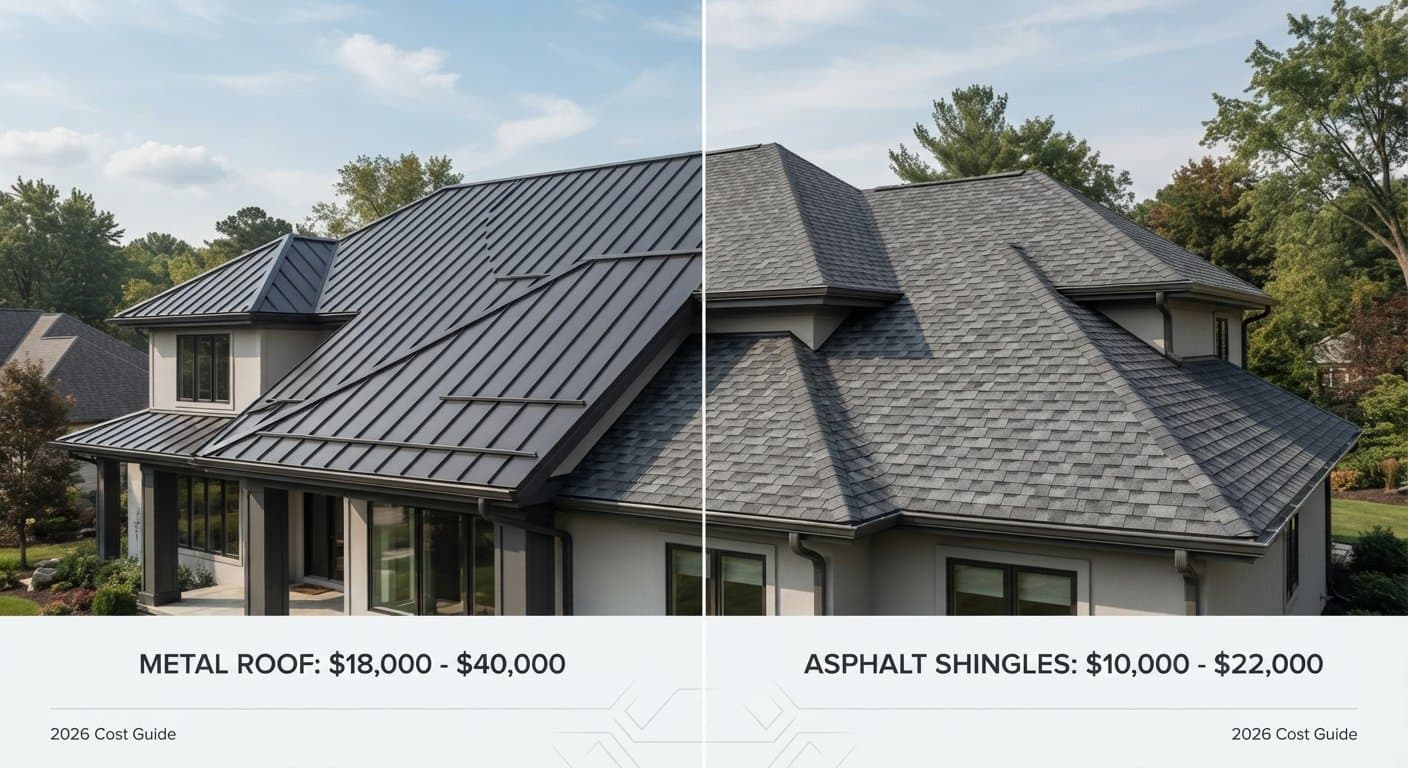
Metal roofing typically costs more to install than asphalt shingles, but it often lasts longer and needs fewer replacements. For a typical 2,000-square-foot roof, installed asphalt shingles cost about $10,000 to $22,000, while metal roofing costs about $18,000 to $40,000. Roof shape, material grade, labor rates, tear-off, and local code requirements drive the final price.

Summary Box

  • What it is: A comparison of installed replacement prices for asphalt shingles and metal roofing.
  • Why it matters: Material choice affects upfront cost, maintenance, energy use, and how soon the roof needs replacement.
  • Typical cost: Asphalt shingles run about $5 to $11 per square foot. Metal runs about $9 to $20 per square foot.
  • Timing: A straightforward roof replacement often takes one to three days. Complex jobs can take a week or longer.
  • When to hire a pro: Hire a licensed roofer for full replacement, steep roofs, structural repairs, or work involving chimney flashing.

What the Price Includes

Roofing estimates usually quote a price per roofing square, which means 100 square feet of roof surface. A 2,000-square-foot home does not necessarily have a 2,000-square-foot roof. Roof pitch, overhangs, dormers, and other features increase the area and labor.

A complete replacement commonly includes removal of old roofing, underlayment, flashing, drip edge, installation, and cleanup. Some quotes exclude disposal, decking repairs, permit fees, or upgrades required by local code. Ask for each item in writing before comparing bids.

Roof Materials and Their Purpose

  • Asphalt shingles: Overlapping fiberglass-based pieces that shed water. Architectural shingles are thicker and often cost more than basic three-tab shingles.
  • Metal panels or shingles: Steel, aluminum, or other metal products fastened over underlayment. Standing seam panels hide most fasteners, while exposed-fastener panels use visible screws.
  • Underlayment: A protective layer installed between the roof deck and outer roofing.
  • Flashing: Metal or other waterproof material placed around chimneys, vents, valleys, and roof edges to direct water away from openings.
  • Roof deck: The sheathing beneath the roof covering. Damaged or soft decking must be repaired before new materials go on.

Typical Installed Costs

For national planning, expect asphalt shingles to cost about $5 to $11 per square foot, with a median near $8. Metal roofing costs about $9 to $20 per square foot, with a median near $14. These figures are for installation, not materials alone, and assume ordinary access and roof conditions.

Line item Typical range Notes and variables
Asphalt shingles $10,000 to $22,000 Based on a 2,000-square-foot roof
Metal roofing $18,000 to $40,000 Standing seam generally costs more
Tear-off and disposal $1,000 to $4,000 Higher for multiple roof layers
Decking repair $50 to $100 per sheet Price depends on damage and access
Permit and inspection fees $100 to $1,000 Set by local requirements

A low-end asphalt bid usually assumes a simple roof, basic shingles, and little deck repair. A high-end estimate may include premium architectural shingles, multiple tear-offs, steep slopes, or high labor costs. Metal prices rise with heavier gauges, specialty finishes, custom flashing, and complex roof shapes. Travel minimums and seasonal labor demand can also increase the bill.

How to Choose Between Metal and Asphalt

Asphalt shingles usually suit homeowners who need a lower upfront price and want a familiar material that most roofing crews can install. They are easier to repair in small sections, and matching replacement shingles are widely available. Their service life is often about 20 to 30 years, depending on product quality, ventilation, weather, and installation.

Metal costs more at installation but can last 40 to 70 years when properly installed and maintained. It can shed snow well and reflect heat, depending on color and finish. Panel repairs may require a specialist, and matching a faded or discontinued finish can be difficult. Metal can also make rain sound louder if the roof assembly lacks suitable insulation and sheathing.

Compare the expected service life, not just the first invoice. If you plan to sell soon, a lower-cost shingle roof may fit your budget. If you expect to stay in the home for decades, metal may reduce the chance of another full replacement, though financing costs and local resale preferences matter.

DIY vs Pro

Factor DIY replacement Professional replacement
Skill level Advanced roofing experience required Crew handles layout and installation
Tools required Roofing nailer, ladders, fall protection, cutting tools Contractor supplies equipment
Safety risk High, especially on steep or wet roofs Managed by trained workers
Permit or code Owner must confirm requirements Contractor should identify permits
Time required Several days or longer Often one to three days
Warranty impact May limit product coverage Correct installation supports warranty terms

Roof replacement is not a good first roofing project. Falls, hidden deck damage, improper flashing, and incorrect fastening can cause serious injury or leaks. Use a licensed and insured roofing contractor. Ask who obtains permits, who handles disposal, and whether labor and materials have separate warranties.

Safety and Code Notes

Non-negotiable: Do not work on a roof without appropriate fall protection, secure access, and training. Keep children and pets away from the work area. Old roofing can contain hazardous materials, especially on older buildings. Stop work if workers uncover suspicious materials, damaged wiring, or structural problems.

Local codes may require specific underlayment, ventilation, fire ratings, or wind resistance. Some areas limit the number of roofing layers. Confirm permit needs with the building department, and ask the contractor to document inspection approval.

Regional Factors

Climate and local construction rules affect both material choice and installation cost. In cold regions, freeze-thaw cycles and ice dams make sound underlayment, ventilation, and flashing essential. Metal can shed snow, but snow guards may be needed above walkways. In hot, humid areas, choose materials rated for heat and moisture, and make sure the attic has proper ventilation.

In arid and wildfire-prone areas, check local fire ratings and approved roof assemblies. In marine climates, salt air can corrode some metals, so coatings and suitable fasteners matter. Wind zones may require stronger fastening and edge protection. Soil type affects foundation movement more than roof choice, but shifting structures can signal issues that should be assessed before reroofing. Local pests, including birds and rodents, can damage roof edges and vents.

Maintenance and Lifespan

Inspect the roof from the ground after severe weather and arrange a professional inspection every few years, or sooner if you see leaks or damage. Clear gutters, trim branches away from the roof, and keep valleys free of debris. Asphalt shingles may lose granules or curl as they age. Metal roofs need checks for loose fasteners, coating damage, and failing flashing. Prompt repairs help prevent water damage to insulation, ceilings, and framing.

FAQs

Is metal roofing worth the higher price?

It can be, if you plan to stay long enough to benefit from its longer service life and your local market values metal roofs.

Planning Your Roof Replacement

Start by measuring your roof accurately and gathering at least three written bids from licensed contractors. Review each line item for clarity on what is included and excluded. Check references and verify insurance coverage before signing any contract. Schedule the work during favorable weather windows to avoid delays and ensure proper installation conditions.
You may also like

Image for Home Warranty vs. Insurance: What Each Actually Covers

Home Warranty vs. Insurance: What Each Actually Covers

November 25, 2026
Image for Whole-Home Battery Backup Costs $15K to $40K Installed

Whole-Home Battery Backup Costs $15K to $40K Installed

November 25, 2026
Image for Home Warranty vs. Insurance: Don't Confuse What They Cover

Home Warranty vs. Insurance: Don't Confuse What They Cover

November 25, 2026

Tagged:

replacement,cost,roofing,roof,metal,shingles,asphalt,2026,roof-replacement-cost-2026,metal-vs-asphalt-shingles

Recent Articles by Melissa Flowers

Image for Whole-Home Battery Backup Costs $15K to $40K Installed

Whole-Home Battery Backup Costs $15K to $40K Installed

November 25, 2026
Image for Landlord Home Warranties Cut Surprise Repair Bills

Landlord Home Warranties Cut Surprise Repair Bills

September 23, 2026
Image for Real ADU Pricing: $100K to $350K Breakdown

Real ADU Pricing: $100K to $350K Breakdown

July 17, 2026

Related: replacement

Image for What Your Roof Replacement Estimate Should Include

What Your Roof Replacement Estimate Should Include

November 25, 2026
Image for Septic Replacement Now Costs $15K on Average

Septic Replacement Now Costs $15K on Average

July 10, 2026
Image for Replacing Roof and Solar Together Saves $8,000 in Labor

Replacing Roof and Solar Together Saves $8,000 in Labor

May 16, 2026
Image for Septic Replacement Runs $6K-$20K in 2026

Septic Replacement Runs $6K-$20K in 2026

April 18, 2026
Image for Hurricane Windows Cut Insurance and Boost Home Value

Hurricane Windows Cut Insurance and Boost Home Value

April 18, 2026

Cost Guides

Whole-Home Battery Backup Costs $15K to $40K Installed

A whole-home battery backup typically costs 15,000 to 40,000 dollars installed before incentives, with larger systems reaching 60,000 dollars or more. Price depends on battery capacity, power output, installation complexity, and how many appliances you want to run. Learn how to estimate your needs, compare itemized quotes, and plan for permits and installation.

November 25, 2026

What Your Roof Replacement Estimate Should Include

Roof replacement costs depend on more than material choice. Roof complexity, labor, tear-off, permits, and hidden decking repairs all shape the final bill. Compare detailed installed-system bids, warranties, and long-term upkeep to budget accurately and select a contractor with confidence.

November 25, 2026

Whole-Home Battery Backup Costs $15,000 to $40,000

Whole-home battery backup typically costs fifteen thousand to forty thousand dollars installed before incentives, with larger systems and electrical upgrades potentially exceeding fifty thousand dollars. The right setup depends on essential loads, outage duration, battery capacity, and power output. Learn how to size storage, compare contractor quotes, navigate installation and safety requirements, and plan for long-term maintenance.

November 25, 2026

Flood Resistant Flooring: What Labels Don't Tell You

Flood-resistant flooring costs $2 to $15 per square foot before installation, but price alone does not guarantee protection. Vinyl and porcelain often offer the best balance, while seams, subfloors, moisture sources, warranties, insurance exclusions, and contractor quality determine real performance. Compare total ownership costs, document everything, and prepare beyond flooring.

September 23, 2026

Solar Panels Cost $15K-$30K Before Federal Tax Credits

Solar installation costs typically range from $15,000 to $30,000 before incentives, with batteries and roof upgrades adding more. Federal tax credits and local programs may reduce expenses, but eligibility varies. Compare three detailed quotes, verify production estimates, financing, warranties, and utility rules to determine whether solar suits your home and budget.

September 23, 2026

Granny Pods Cost $100K–$300K: Site Prep Drives Price

A granny pod typically costs $100,000–$300,000, with size, finishes, site conditions, utilities, and local approvals driving the final price. Before buying, confirm zoning, setbacks, permits, and fees. Compare itemized professional bids, budget 10–15% for surprises, and plan accessibility features early to create affordable, compliant, long-term housing.

September 19, 2026

Home Office Deduction Requires Exclusive Business Use

Converting a room into a home office may offer tax savings, but eligibility depends on self-employment, regular exclusive use, documented expenses, and income limits. Compare simplified and actual methods, separate repairs from improvements, allocate shared costs, and preserve detailed records. Before spending, weigh deductions, depreciation, financing, and future sale consequences carefully.

September 19, 2026

Real ADU Pricing: $100K to $350K Breakdown

Learn the true expenses involved in building a granny flat in 2026. This guide details costs from design through final finishes, explains timeline factors, and outlines key decisions that influence total investment and property value.

July 17, 2026

ADU Projects Cost More Than the Construction Quote

Building an ADU in 2026 involves more than construction. It requires careful attention to design, permits, site preparation, and inspections. Costs range widely based on size, location, and materials. Understanding each expense category, planning contingencies, and managing approvals carefully helps homeowners avoid surprises and achieve realistic, financially sound results.

July 16, 2026

Modular Home Costs Drop 25% in 2026: What Changed

Modular home prices may drop 25 percent by 2026 due to automation and supply improvements. Buyers must examine contracts, site conditions, and warranties to capture lasting value.

July 16, 2026

Granny Pod Costs: $85K to $250K Plus Permits

Thinking about adding a granny pod? Expect costs from $85,000 to $250,000 with permits from $2,000 to $12,000. Learn how zoning, design choices, and construction type affect your budget, timeline, and comfort. This guide covers every step from planning and permits to maintenance for a lasting, flexible backyard living solution.

July 15, 2026

Granny Pod Costs Run $85K–$180K in 2026

Granny pods deliver private living space near family while controlling care expenses. Costs in 2026 average between 85000 and 180000 dollars depending on size and location. This guide covers zoning checks, permit steps, and maintenance practices that support a successful build.

July 14, 2026

Standby Generators Cost $7K–$20K Installed in 2026

Learn what it takes to power a home through outages with a whole home generator. Review installation steps, cost drivers from $7,000 to $20,000, the need for professional setup, and maintenance practices that ensure years of automatic backup power.

July 13, 2026

Home Battery Backup Costs Between $9K and $18K Installed

Home battery backups keep power flowing during outages and cut utility costs by storing energy for later use. Expect installation costs between 9,000 and 18,000 dollars, with professional setup ensuring safety, code compliance, and warranty protection. Proper maintenance and annual inspections extend lifespan to 10 to 15 years of reliable energy resilience.

July 11, 2026

Flood Proofing Costs: $10K to $65K for Climate Defense

Flood proofing a home in 2026 averages 29000 dollars and ranges from 10000 to 65000 dollars. This guide covers cost drivers, interior sealing steps, contractor oversight, regional differences, and upkeep practices that protect value and safety.

July 10, 2026

Impact Glass Costs $60 Less Per Square Foot Than Smart

Impact glass offers dependable hurricane protection at a lower cost, while smart glass adds energy efficiency and privacy with a premium price tag. This guide breaks down 2026 costs, pros and cons, installation steps, and maintenance tips to help homeowners choose the right hurricane rated window for safety and performance.

July 10, 2026

Flood-Proofing Your Home Costs $48K in 2026

Preparing your home for future floods can cost anywhere from $22,000 to $83,000, depending on scope, materials, and site conditions. This 2026 guide explains cost factors, professional versus DIY options, and smart savings strategies to make floodproofing investments pay off through lower insurance premiums and increased property resilience.

July 10, 2026

Septic Replacement Now Costs $15K on Average

Homeowners across the country now face average septic replacement costs of 15000 due to higher material, labor, and permit expenses. The work requires licensed installers, proper design, and inspections to avoid contamination. Find out what influences pricing, when replacement becomes necessary, and how to extend system life.

July 10, 2026

2026 Granny Pod Costs: $12K to $150K Breakdown

Discover how much a 2026 granny pod really costs, what permits you’ll need, and the steps to build one safely. From zoning rules and utility tie-ins to cost-saving tips and maintenance essentials, this guide explains everything required to create a comfortable, code-compliant backyard home for aging loved ones.

July 8, 2026

2026 Granny Pod Costs: $55K to $195K Installed

Granny pods offer independent living close to family, but costs range from $55,000 to $195,000 depending on design and site conditions. Zoning rules dictate size, placement, and utilities, making early planning essential. Learn how to navigate permits, choose designs, and avoid costly mistakes before committing to your backyard dwelling.

July 8, 2026

Categories

Appliance & System Coverage
Cost Guides
Home Guides
Home Warranty Basics
Outdoor & Exterior Guides
Remodeling Cost Comparisons
Room-by-Room Guides