Whole-Home Battery Backup Cost Breakdown
A whole-home battery backup system typically costs between fifteen thousand and forty thousand dollars installed before incentives. Larger systems, complex electrical work, and premium equipment can push the total higher. The right budget depends on how much power you need during an outage, how long you need it, and whether the home already has solar.
This guide explains installed costs, battery sizing, installation steps, and when to hire a licensed electrician. Prices are national planning ranges, not contractor quotes. Local labor rates, utility rules, and equipment availability affect the final price.
What a Whole-Home Battery Backup Does
A whole-home battery stores electricity for use during a grid outage or, where utility rates support it, during high-cost periods. It can charge from the grid or from solar panels. A battery does not automatically power every appliance unless the system and electrical panel are designed for that load.
The key specifications are usable capacity, measured in kilowatt-hours, and continuous power, measured in kilowatts. Capacity describes how much energy is stored. Power describes how many appliances can run at once. A ten-kilowatt-hour battery with a five-kilowatt output may run essential loads for hours, but it cannot necessarily start several large motors together.
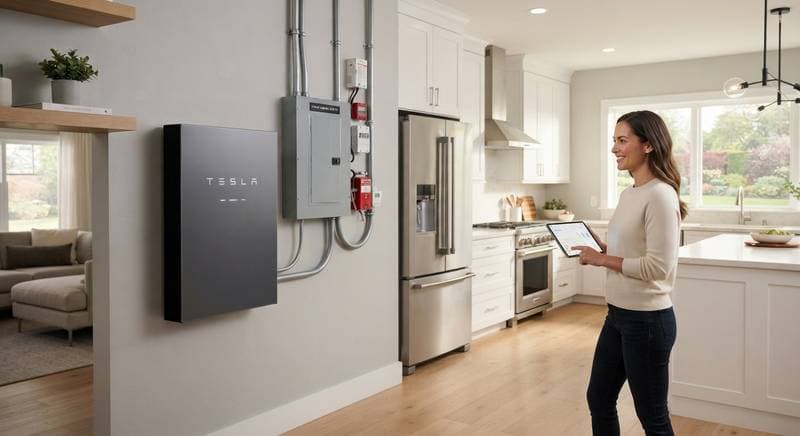
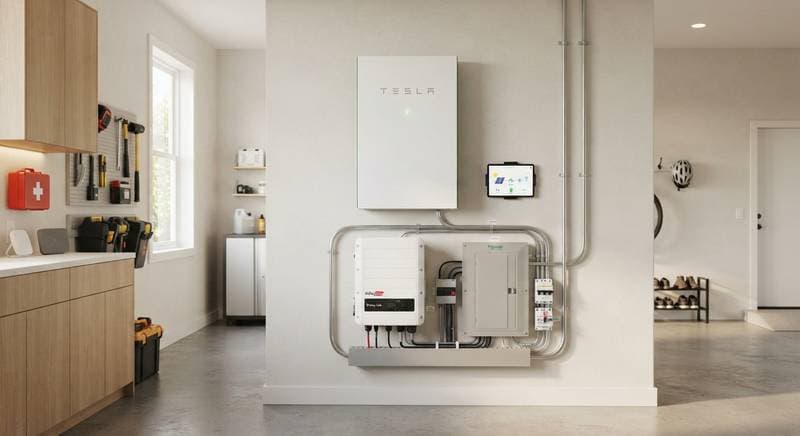
A whole-house setup may need multiple batteries, a compatible inverter, a backed-up loads panel, and a transfer device that disconnects the home safely from the grid.
Installed Cost Ranges
For many homes, a battery installation costs between fifteen thousand and forty thousand dollars before incentives. A smaller essential-load system can cost less, while a high-capacity system with extensive panel work can exceed fifty thousand dollars.
| System scope | Equipment and material cost | Labor cost | Typical installed range | Common price drivers |
|---|---|---|---|---|
| Essential loads, about 10 to 15 kWh | $7,000 to $14,000 | $3,000 to $7,000 | $10,000 to $21,000 | One battery, critical-loads panel, short wiring run |
| Broad home backup, about 20 to 30 kWh | $14,000 to $28,000 | $4,000 to $10,000 | $18,000 to $38,000 | Multiple batteries, larger inverter, load management |
| High-demand home, 30 to 40 kWh or more | $22,000 to $40,000 or more | $6,000 to $15,000 or more | $28,000 to $55,000 or more | Large loads, panel upgrades, long conduit runs |
These ranges may include batteries, inverter equipment, automatic transfer equipment, wiring, permits, and commissioning. Ask contractors to state what each quote includes. Solar panels are usually a separate cost, and adding solar can bring the project total above the battery-only range.
Three Cost Drivers to Check
- Materials grade: Battery capacity, output rating, inverter compatibility, warranty terms, and enclosure rating affect equipment cost.
- Labor complexity: Panel upgrades, backup-load wiring, service relocation, and commissioning add labor.
- Site and access: Long cable runs, finished walls, tight equipment locations, and difficult utility access increase cost.
Regional labor rates and permit fees can change totals. Cold climates may require equipment approved for low temperatures or protected installation locations. Some battery systems need temperature control to maintain charging performance.
Size the Battery Around Your Loads
Start with the circuits you need during an outage, not the number of rooms in the house. A refrigerator, lighting, internet equipment, and a furnace blower use far less power than electric resistance heating, central air conditioning, an electric range, or a clothes dryer.
A practical sizing process is:
- List essential appliances and their running watts.
- Check each appliance's startup demand, especially for pumps, refrigerators, and air conditioners.
- Estimate daily energy use in kilowatt-hours and choose the number of hours or days of backup required.
- Ask the installer to confirm both battery capacity and inverter output against the load calculation.
For example, a household using one kilowatt on average for twelve hours needs about twelve kilowatt-hours of usable energy before losses and reserve capacity. Real usage changes with appliance cycles, battery temperature, and inverter efficiency. Request the manufacturer's usable capacity figure, not only the battery's advertised total capacity.
Solar Battery Installation Cost and Timing
Adding a battery to an existing solar system often costs between ten thousand and thirty thousand dollars or more, depending on storage size and whether the existing inverter can work with the battery. Some older solar systems need a new inverter or additional controls. A new solar and battery project can cost substantially more because it includes panels, roof work, and electrical upgrades.
A straightforward battery installation often takes one to three days on site, after design, equipment delivery, utility approval, and permits. The full project can take several weeks or longer when inspections, utility reviews, or equipment lead times delay work. Get the expected sequence in writing, including who handles permit applications and utility paperwork.
Installation Process and Safety
Battery systems connect to high-voltage electrical equipment and can feed a home when the grid is down. Improper wiring can cause fire, shock, equipment damage, or dangerous backfeeding into utility lines.
PPE for any homeowner preparation: Wear sturdy shoes and eye protection when clearing the work area. Do not open electrical panels, handle battery wiring, or attempt live electrical work.
A qualified installer typically follows these steps:
- Review utility bills, appliance loads, solar equipment, and the service panel.
- Design battery capacity, inverter output, backed-up circuits, and equipment location.
- Obtain required permits and utility approvals.
- Install the battery, inverter, transfer equipment, and any critical-loads panel.
- Complete electrical inspection, configure monitoring, and test outage operation.
Keep batteries in locations allowed by local code and the manufacturer. Required clearances, ventilation, fire separation, and temperature limits depend on the equipment and jurisdiction. Do not assume a garage, basement, or exterior wall is automatically acceptable. Ask the electrician to identify the applicable electrical and fire code requirements and provide inspection records.
DIY or Hire a Pro?
Most homeowners should hire a licensed electrician or qualified battery installer for a grid-connected whole-home system. Permits, utility coordination, transfer equipment, and high-voltage wiring make this a poor DIY project. DIY errors can void equipment warranties, fail inspection, or leave circuits energized during an outage when they should be isolated.
DIY may suit non-electrical tasks such as clearing an approved equipment area, documenting appliance loads, or reviewing monitoring data after commissioning. A hybrid approach can save time, but agree on the division of work before installation. Never modify batteries or electrical panels unless the manufacturer and local rules expressly allow it.
Readiness Checklist
- Safety gear: Eye protection and closed-toe shoes for basic site preparation.
- Permits needed: Confirm electrical permits, inspections, and utility approval with the installer and local authority.
- Prep tasks: Clear the approved location and identify essential circuits.
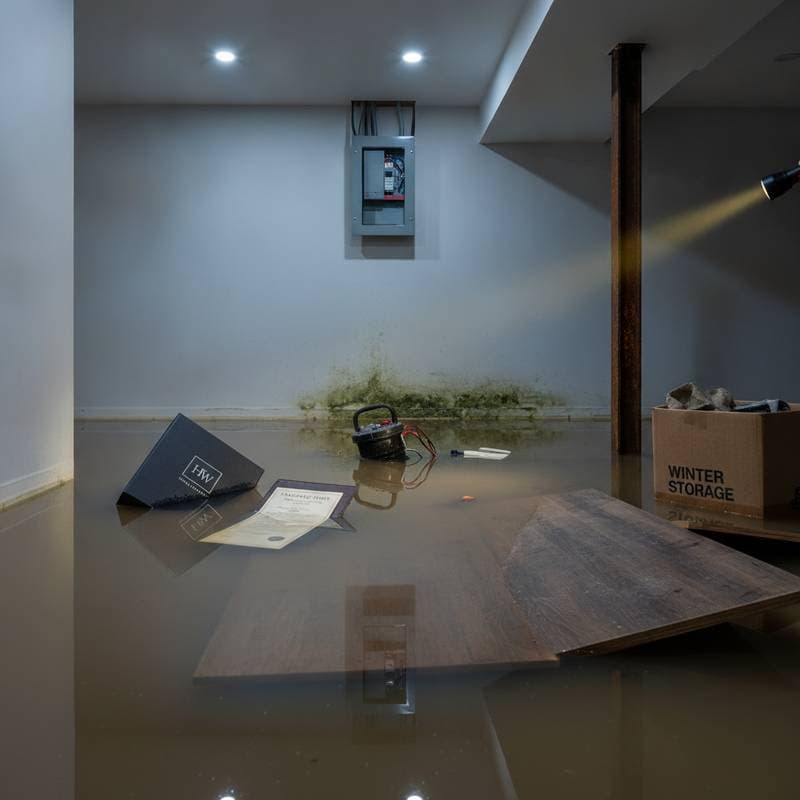
- Site constraints: Check flooding risk, vehicle clearance, temperature range, and required equipment spacing.
Compare Contractor Quotes
Get at least three itemized bids using the same requested battery capacity and backup scope. Compare usable kilowatt-hours, continuous and surge kilowatts, backed-up circuits, warranty coverage, monitoring, and service response. A low bid may exclude panel work, permitting, or utility coordination.
| Line item | Scope to verify | Contractor A | Contractor B | Contractor C | Variance to question |
|---|---|---|---|---|---|
| Battery and inverter | Usable kWh, continuous kW, model | Different capacity or output | |||
| Electrical work | Panel changes, transfer equipment, wiring | Excluded upgrades | |||
| Permits and utility | Applications, fees, inspection support | Owner responsibility | |||
| Commissioning | Outage test, monitoring setup, handoff | Testing omitted | |||
| Warranty and service | Product, labor, response terms | Labor coverage differences |
Put the exact equipment models, labor scope, change-order rates, payment milestones, cleanup, inspection responsibility, and warranty terms in the contract. Confirm the installer's license and insurance with the relevant local authority. Ask who responds if the system fails during an outage.
Maintenance, Lifespan, and Common Problems
Battery lifespan depends on chemistry, temperature, charge cycles, and operating settings. Review the manufacturer's capacity-retention warranty and service terms before buying. Keep firmware and monitoring active, and maintain clear access around equipment.
Use this maintenance cadence:
- After installation: Test backup operation with the installer and save the commissioning report.
- Seasonally: Check the app for alerts and keep vents and equipment access clear.
- Annually: Review battery health, system settings, and warranty status with a qualified service provider.
- At end of life: Arrange approved recycling or disposal. Do not place batteries in household trash.
If the battery does not carry expected loads, check the monitoring app for reserve settings, outage mode, or a tripped circuit. Repeated shutdowns, unusual heat, odor, swelling, or damage require immediate professional attention. Keep people away from damaged equipment and follow emergency instructions from the manufacturer or fire department.
Make the Budget Decision
Before signing, confirm usable capacity, output rating, permit responsibility, utility approval, inspection, warranty, and outage testing. Gather your utility bills and a list of essential appliances today, then ask local installers to price the same backup plan.