2026 Solar Panels: Hidden Costs and Warranty Gaps
Solar panels deliver reduced energy bills and sustainable power generation. However, promotional materials seldom reveal the complete financial picture. Homeowners frequently encounter unforeseen expenses post-installation, coupled with warranty provisions that exclude critical components or labor services. A thorough grasp of these hidden costs and warranty limitations prior to purchase prevents disappointment and secures your investment.
Essential Considerations Before Installation
Several pivotal choices shape the success of a solar project. Evaluate these elements to align the system with your home and budget.
- Roof condition and orientation: Solar panels endure for decades, so the roof requires comparable longevity. Assess for leaks, structural integrity, and optimal tilt for sunlight capture.
- System capacity and regional electricity rates: Payback timelines hinge on local utility prices and household consumption habits. Calculate based on annual kilowatt-hour usage.
- Ownership structure: Options include outright purchase, financing through loans, leasing arrangements, or power purchase agreements. Each influences long-term costs and tax benefits.
- Battery integration: This feature enhances energy independence during outages but significantly increases initial outlay.
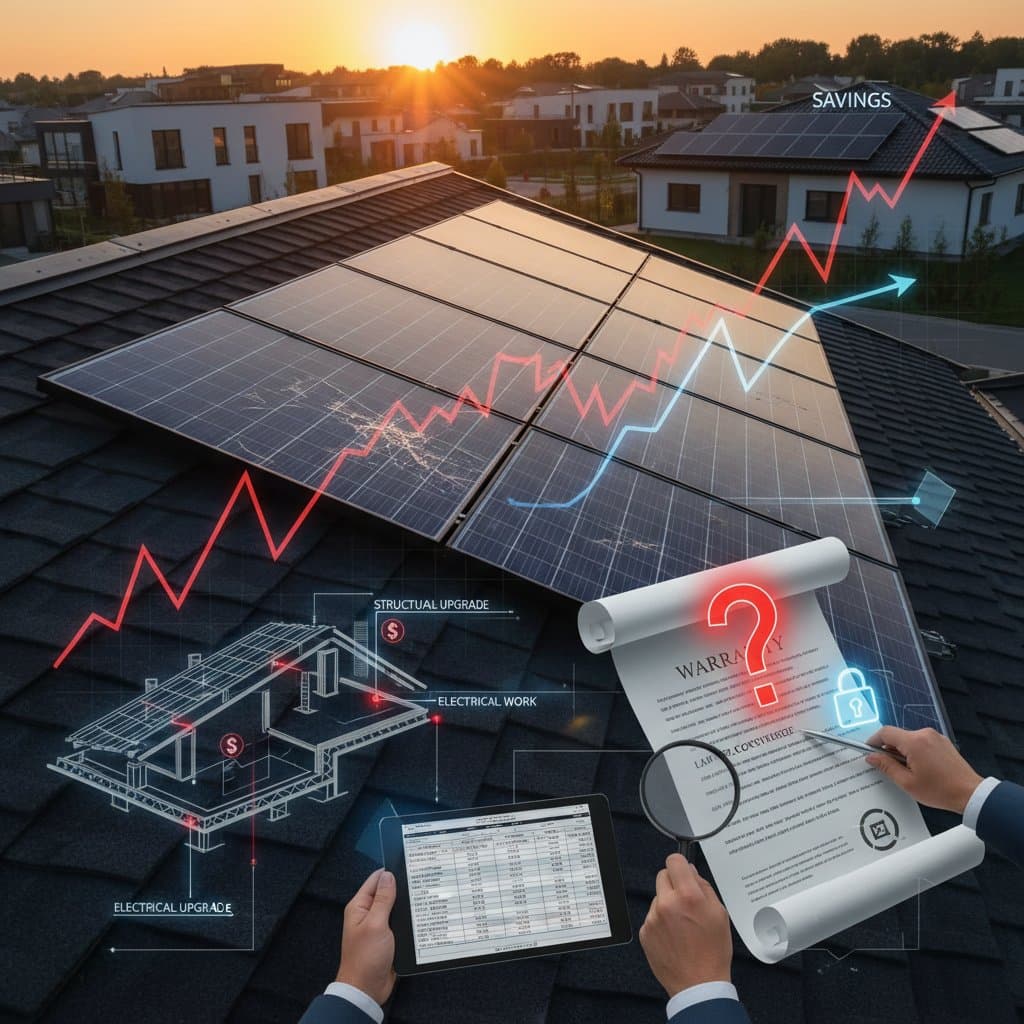
- Warranty specifications: Coverage varies across panels, inverters, and labor by manufacturer. Review output guarantees and performance degradation thresholds.
- Installer credibility: Extended warranties hold minimal value if the provider ceases operations or declines support. Verify licensing, insurance, and customer references.
Evaluating System Configurations
Different solar setups suit varied needs and locations. The table below outlines primary options, highlighting advantages, drawbacks, and approximate expenses for a typical five-kilowatt residential system.
| Option | Pros | Cons | Typical Cost Range |
|---|---|---|---|
| Grid-tied system | Reduced initial expense, straightforward setup, eligibility for net metering credits | Power interruption during grid outages, reliance on utility regulations | $17,000 to $25,000 |
| Hybrid system with battery | Outage resilience, optimization for peak pricing periods | Elevated upfront investment, periodic battery upgrades required | $25,000 to $40,000 |
| Off-grid system | Complete energy autonomy, ideal for isolated properties | Extensive battery requirements, heightened maintenance demands | $30,000 to $60,000 |
Selection guidance:
Opt for a grid-tied system when seeking rapid return on investment and stable grid access prevails. Select a hybrid configuration for reliable backup during blackouts or to capitalize on variable energy tariffs. Reserve off-grid solutions for sites without utility connections or those prioritizing total self-sufficiency.
Identifying Hidden Expenses
Even meticulously designed installations uncover costs absent from initial estimates. Certain outlays prove inevitable, while others arise from specific property characteristics like roof design or electrical infrastructure.
Structural and Electrical Modifications
Solar arrays impose additional load on buildings, necessitating reinforcements in some cases. Older roof frameworks might require supplemental supports to bear panel weight, with expenses ranging from $500 to $2,000. Similarly, upgrading to a 200-amp electrical panel for seamless grid integration typically costs $1,500 to $3,000. Extended wiring paths or specialized conduit installations contribute another $300 to $1,000.
Practical recommendation: Insist on a comprehensive structural and electrical assessment from your installer prior to contract finalization. This step identifies potential upgrades early and refines budget projections.
Permitting, Inspections, and Administrative Charges
Municipal approvals and utility interconnection processes incur fees that fluctuate by jurisdiction, generally totaling $300 to $1,000. Certain regions mandate engineering certifications or adherence to fire safety distances, which extend planning durations and elevate expenses.
Practical recommendation: Demand a detailed itemization of all regulatory fees from your installer at the outset. This transparency aids in comparing bids accurately.
Monitoring Service Subscriptions
Contemporary systems employ online platforms for performance tracking. While fundamental monitoring remains complimentary, premium features like mobile app connectivity often demand $100 to $200 yearly. Corporate mergers or service terminations by providers could result in forfeited access to past performance records.
Roof Replacement During System Life
Should roof repairs occur within the panels' operational span, temporary removal and subsequent reinstallation become necessary. Associated labor charges alone span $1,000 to $3,000.
Practical recommendation: Initiate roof renewal before panel mounting if the existing structure anticipates fewer than fifteen years of service. This sequence minimizes future disruptions and costs.
Inverter Upgrades and Repairs
Inverters transform direct current from panels into alternating current for household use. These components typically outlast panels less, with replacement prices from $1,000 to $3,000 based on capacity and technology. Microinverters or power optimizers, though pricier per unit, enable continued partial functionality amid individual failures.
Routine Cleaning and Upkeep
Accumulated debris such as dust, pollen, or avian waste impairs efficiency by 5 to 10 percent. Professional cleanings, recommended biannually, range from $150 to $300 each. Homeowners may opt for gentle brushing and hosing, yet accessing elevated surfaces poses safety concerns.
Insurance Adjustments and Risk Coverage
Inform your insurer of the solar addition promptly. Annual premiums may increase by $50 to $200. Confirm inclusion of protections against wind, hail, and fire perils beyond mere theft safeguards.
Pricing Breakdown and Influencing Variables
System expenses vary widely due to component selections and site specifics. The following table details common elements and escalation factors for a standard installation.
| Component | Cost Range | Cost-Increasing Factors |
|---|---|---|
| Solar panels | $7,000 to $12,000 | High-efficiency tiers, reputable brands |
| Inverter | $1,000 to $3,000 | Hybrid capabilities, integrated monitoring |
| Mounting hardware | $1,000 to $2,500 | Tile or sloped roofs, intricate arrangements |
| Installation labor | $4,000 to $8,000 | Elevated or multi-level structures |
| Permits and fees | $300 to $1,000 | Stringent local codes, utility stipulations |
| Batteries (optional) | $8,000 to $15,000 | Expanded storage, advanced lithium types |
Overall, a basic grid-tied setup falls between $17,000 and $25,000 post-incentives. Confirm qualification for rebates and credits to offset these figures effectively.
Self-Installation Versus Expert Services
Solar projects demand advanced expertise, encompassing electrical handling, rooftop securing, and regulatory adherence.
Self-installation overview: Pre-assembled kits from select vendors suit off-grid setups in cabins or ground-based arrays. These prove feasible for individuals with electrical proficiency and no grid linkage.
Circumstances warranting professionals:
- Grid-connected arrays necessitate utility permissions and certified wiring.
- Rooftop placements involve safety harnesses and load assessments.
- Battery-inclusive designs carry elevated electrical and thermal hazards.
Critical advisory: Engage certified professionals exclusively for grid-tied or hybrid installations. Errors risk warranty invalidation and endanger occupants.
Upkeep Routines, Preservation, and Durability
Regular attention extends system performance and efficiency.
- Periodic evaluations: Examine mounting points, cabling, and inverter interfaces semiannually for wear or looseness.
- Surface maintenance: Rinse panels using deionized water and extended-reach tools upon noticeable soiling.
- Performance oversight: Analyze monthly output data to detect anomalies from shading or equipment faults.
- Battery protocols: Maintain adequate airflow and adhere to specified operating temperatures.
Panels endure 25 to 30 years, with output degrading incrementally. Inverters and storage units demand earlier renewals. Factor these intervals into financial planning for sustained profitability.
Common Inquiries
How frequently must solar panels undergo replacement?
Panels generally operate for 25 to 30 years, experiencing progressive efficiency reduction. Substitutions occur primarily due to physical damage rather than routine obsolescence.
Do standard home warranties encompass solar installations?
Conventional policies typically omit solar elements. Optional add-ons may address inverter servicing, yet exclude roof penetrations or foundational concerns.
Is relocation of panels to a subsequent residence feasible?
Relocation proves possible, although disassembly, relocation, and reassembly expenses reach thousands. Associated energy incentives and utility pacts remain non-portable.
What transpires if the installing firm dissolves?
Equipment warranties from manufacturers persist independently. Labor assurances, however, may lapse without the original provider. Retain all records and enroll products directly with producers.
Safeguarding Long-Term Value
Solar ownership represents an enduring partnership with your energy future. Document installation details, warranty scopes, and maintenance logs meticulously. Conduct assessments following severe weather events. Monitor production trends routinely and address output variances through cleaning or diagnostics.
When soliciting bids, require explicit written disclosures of ancillary expenses and warranty caveats from each contender. Prioritize comprehensive value over minimal upfront pricing, particularly regarding enduring reliability.