Greywater Recycling Delivers Sustainable Home Savings
Quick Take
Greywater recycling cuts water bills and eases demand on local supplies.
- Reuses water from sinks, showers, and laundry for irrigation or toilets.
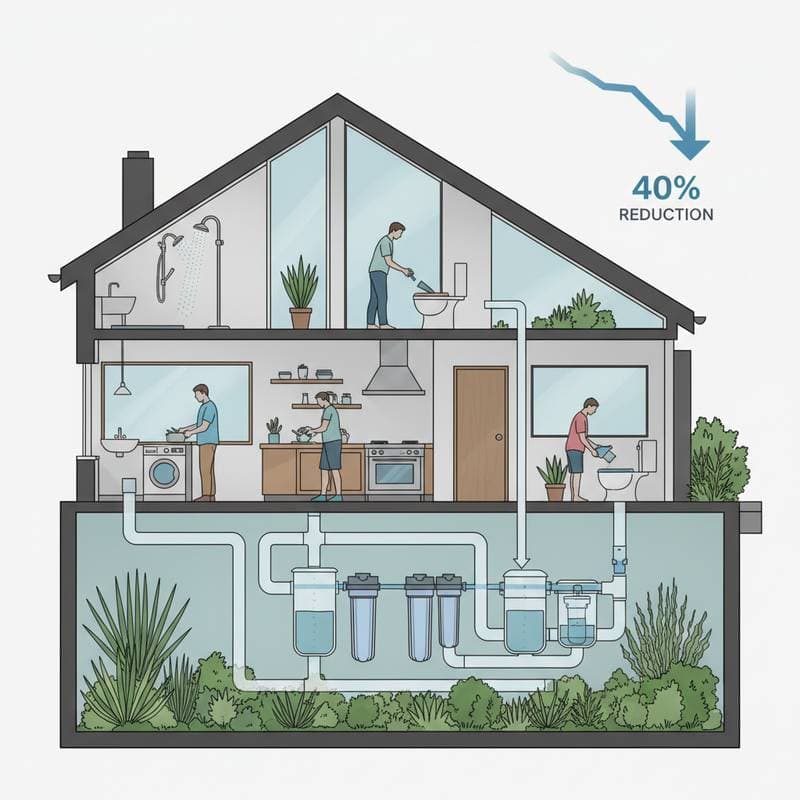
- Typical savings reach 25 to 40 percent of indoor water use.
- Payback often comes through lower utility costs and drought resilience.
What It Is
Greywater is lightly used water from showers, bathtubs, bathroom sinks, and washing machines. It excludes toilet or kitchen waste, which carry higher contamination risks. A greywater recycling system filters and redirects this water for non-potable uses like landscape irrigation or toilet flushing. It keeps clean water where it counts and reduces strain on municipal systems.
Pros and Cons
Pros
- Cuts household water use and bills.
- Reduces load on septic or sewer systems.
- Supports gardens during dry seasons.
- Qualifies for rebates in some regions.
Cons
- Requires plumbing changes and filtration maintenance.
- Not all local codes allow indoor reuse.
- Improper design can cause odors or clogs.
- Upfront cost may be high for small homes.
When It Works or When It Fails
Use It When
- You live in a dry region or face watering limits.
- Your landscape uses drip or subsurface irrigation.
- You already plan plumbing upgrades or new construction.
Avoid or Delay If
- Local codes restrict greywater reuse.
- Soil drains poorly or slopes toward buildings.
- You lack access to plumbing lines behind finished walls.
Step-by-Step: Setting Up a Basic Greywater System
Tools and Materials
- PVC pipe and fittings
- Diverter valve
- Filter or screen
- Irrigation tubing or holding tank
- Pipe wrench, Teflon tape, drill, and saw
- Gloves, goggles, and dust mask
Time: 6 to 10 hours for a simple laundry-to-landscape setup
Difficulty: Moderate
- Check codes first. Contact your local building office. Confirm what types of greywater systems are approved and if a permit or inspection is required.
- Plan the route. Identify which fixtures will feed the system. Laundry drains are easiest since they already discharge through accessible hoses.
- Install a diverter valve. Place it where the greywater line splits from the main drain. This lets you send water to the landscape or back to the sewer as needed.
- Add a filter. A simple mesh or cartridge filter keeps lint and hair from clogging irrigation lines. Clean it monthly.
- Lay out the irrigation lines. Run tubing below mulch or soil. Keep greywater at least 6 inches underground and 1.5 feet from building foundations.
- Test flow. Run a rinse cycle or shower test. Check for leaks, pooling, or odor. Adjust slope or pipe size if drainage slows.
- Label lines. Mark all greywater pipes as non-potable to meet code and avoid confusion later.
- Maintain regularly. Flush lines every few months and inspect filters. Replace worn valves or seals to prevent backflow.
Costs
Typical range: 800 to 6000 dollars.
Factors that raise cost include indoor reuse systems with tanks and pumps, retrofitting older plumbing behind walls, and complex irrigation zones or large landscapes. Factors that lower cost include simple laundry-to-landscape systems, DIY installation with basic tools, and gravity-fed designs that skip pumps. If existing valves or filters corrode or clog repeatedly, replacement saves labor and prevents contamination.
DIY vs Pro
Safe for DIY
- Laundry-to-landscape systems with surface or drip irrigation.
- Simple diverter valves and gravity-fed lines.
- Basic filter cleaning and seasonal flushing.
Hire a Pro When
- You plan indoor reuse for toilets or cooling systems.
- Plumbing runs behind finished walls or under slabs.
- Local code requires inspection or engineered design.
A licensed plumber sizes pipes for proper flow, adds backflow prevention, and certifies compliance with water safety standards. They can also design filtration and pump systems that meet code and warranty requirements.
Maintenance or Prevention
Frequency: Every 3 to 6 months.
Tasks include cleaning or replacing filters, checking valves and seals for leaks, flushing irrigation lines to prevent buildup, and adjusting flow paths if soil shifts or plants change. The outcome is reliable operation, no odor, steady pressure, and safe discharge that supports healthy plants.
Alternatives
Rainwater harvesting works best for roof runoff. It requires storage tanks and first-flush filters but supplies clean water for irrigation and outdoor cleaning. Blackwater treatment uses advanced filtration and disinfection for all wastewater. It proves costly and complex, best suited for off-grid or rural sites. High-efficiency fixtures offer the easiest upgrade. Low-flow showerheads and dual-flush toilets reduce demand without plumbing changes.
FAQs
Is greywater safe for vegetables?
Only if applied below the soil to non-root crops. Avoid contact with edible leaves or fruits.
Does greywater smell?
Not if it drains quickly and filters stay clean. Stagnant water causes odor, so use systems that discharge within 24 hours.
Can I use laundry detergent with bleach?
Avoid chlorine or boron-based products. Choose plant-friendly detergents labeled biodegradable and low-sodium.
Will it hurt my septic system?
Diverting greywater actually reduces load on septic tanks, extending their lifespan.
Do I need a permit?
Many regions allow small systems without permits, but always confirm locally to avoid fines.
Implementation Steps
Greywater recycling works best when you match your system to your home layout and local code. Start small with a laundry-to-landscape setup and expand as you learn. Keep filters clean, water wisely, and record savings on your utility bill. Over time, you will spend less, waste less, and build a home that uses water with purpose.