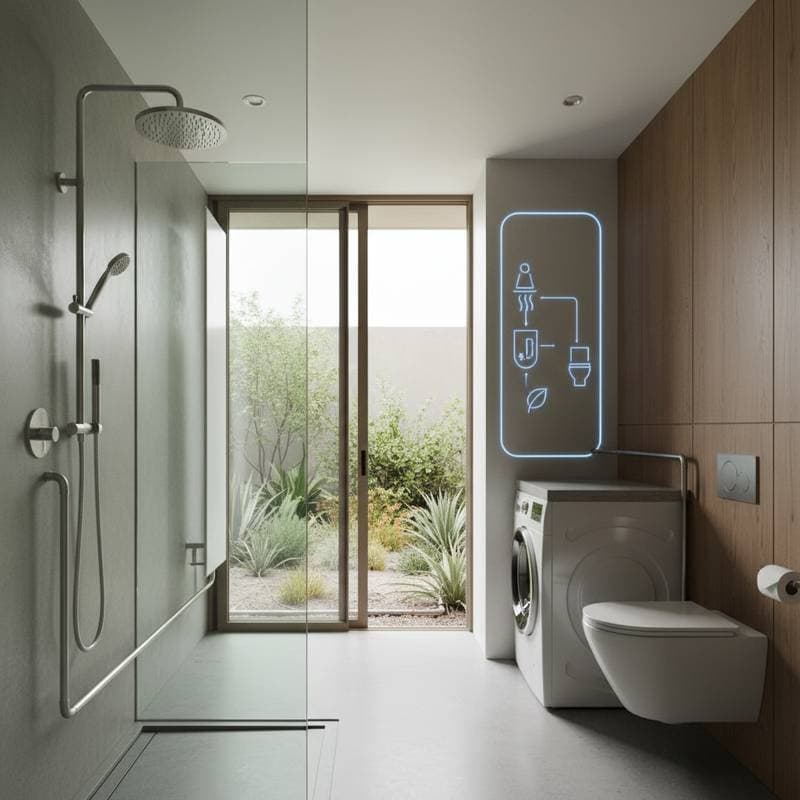
Reduce Water Bills: Install a Greywater System in 2026
Greywater systems repurpose lightly contaminated household water for irrigation or toilet flushing, which lowers utility expenses and alleviates pressure on municipal water sources. These systems collect water from showers, bathtubs, and washing machines, then filter it for safe non-potable applications. Homeowners benefit from long-term savings on water costs alongside greater resilience during water shortages.
Key Facts at a Glance
- Definition: A specialized plumbing setup that gathers and recycles wastewater from sinks, showers, or laundry appliances.
- Benefits: Decreases fresh water consumption by as much as 50 percent and eases the load on public wastewater facilities.
- Installation Cost: Ranges from $2,500 to $7,500 for a typical single-family residence.
- Professional Assistance: Essential for modifications involving plumbing lines, pumps, or storage reservoirs.
- Installation Duration: Generally spans two to five days for residential applications.
- Upkeep Schedule: Clean filters every few months; conduct a comprehensive inspection annually.
Components of a Greywater System
Every greywater system comprises essential elements designed for efficient operation:
- Collection Pipes: These gather greywater directly from household fixtures such as drains.
- Diversion Valve: Allows manual or automatic selection between routing water to the system or the standard sewer line.
- Filtration Assembly: Eliminates particles, lint, and debris to avoid blockages in downstream components.
- Storage Reservoir: Temporarily stores treated water until it reaches the point of reuse.
- Pump and Control Unit: Facilitates water movement and regulates timing for distribution.
- Delivery Network: Consists of piping or low-flow emitters that transport water to gardens or indoor fixtures.
Malfunctions in these components, such as clogs or leaks, may lead to backups or unpleasant smells. Proactive maintenance ensures reliable performance and extends system longevity.
Guide to Installing a Greywater System
Follow these steps to implement a greywater system effectively:
- Design the Configuration. Determine eligible fixtures for greywater production and suitable reuse locations. Prioritize laundry machines and showers, as they yield the cleanest volumes.
- Review Local Regulations. Confirm permit requirements and any prohibitions on above-ground application. Measure required distances from water sources like wells or waterways to comply with health standards.
- Incorporate Diversion Valves. A qualified plumber accesses drain lines to fit three-way valves that enable flow redirection without disrupting normal drainage.
- Integrate Filtration and Storage. Install units that strain out solids, paired with reservoirs equipped with ventilation and overflow safeguards connected to the sewer.
- Extend Distribution Lines. Connect flexible drip tubing for outdoor use or dedicated supply lines for toilet integration directly to the storage unit.
- Conduct Thorough Testing. Inspect for leaks, purge initial debris, and verify uniform water delivery across all outlets.
- Establish Routine Maintenance. Schedule filter servicing every few months and annual line flushing to sustain efficiency.
Simple setups, like those diverting laundry water to landscape basins, complete in a single day. Comprehensive whole-home systems demand up to a week, depending on complexity.
DIY Installation Versus Professional Service
| Category | DIY Approach | Professional Installation |
|---|---|---|
| Skill Requirements | Intermediate knowledge of plumbing | Expertise from a licensed plumber |
| Safety Concerns | Moderate; potential for leaks or contamination | Minimal with proper execution |
| Necessary Tools | Pipe cutters, connectors, drill, sealing tape | Complete plumbing kit and diagnostic gear |
| Regulatory Compliance | Permits often mandatory | Handled by the service provider |
| Time Investment | Two to three weekends | Two to five consecutive days |
| Warranty Considerations | Risk of invalidating appliance guarantees | Protected by contractor's warranty |
DIY methods suit basic laundry diversions to mulch-filled garden beds, where no complex piping occurs. Systems interfacing with irrigation networks or internal plumbing demand professional oversight to prevent health risks and ensure regulatory adherence.
Ongoing Maintenance and System Durability
Proper care extends a greywater system's life to 10 through 15 years. Replace or clean filters on a quarterly basis to maintain water quality. Service pumps and valves every few years, and examine distribution points for obstructions at the start of each growing season. Refresh mulch layers around application areas to enhance soil absorption and prevent runoff.
Address odors or sluggish flow by flushing pipes and inspecting filters promptly. Select plant-friendly cleaners, avoiding bleach or strong chemicals that damage vegetation or obstruct filters.
Frequently Asked Questions
What distinguishes greywater from blackwater?
Greywater originates from sources like showers and sinks, making it suitable for reuse after basic treatment. Blackwater, from toilets and kitchen sinks, contains higher pathogen levels and requires advanced processing before any repurposing.
Can greywater systems work in all climates?
These systems perform well in arid regions by conserving scarce water, but in wet areas, focus on subsurface delivery to avoid saturation. Always align designs with local precipitation patterns and soil types.
How much water savings can homeowners expect?
Typical households save 30 to 50 percent on outdoor and some indoor water needs, translating to hundreds of dollars annually in reduced bills, depending on usage and system scale.
Realize Savings and Environmental Gains
Adopting a greywater system positions homeowners to achieve substantial water conservation while supporting ecological balance. This investment not only offsets installation costs through utility reductions but also fortifies properties against future shortages. Begin planning today to integrate this practical solution into your home's infrastructure.