Greywater System Installation Costs and Rebates
Key Project Details
- National average cost reaches 4800 dollars.
- Typical range falls between 2500 and 8000 dollars.
- Low end starts near 1000 dollars for basic laundry diversion while high end reaches 15000 dollars for whole house treatment.
- Installation requires 2 to 5 days after permits and design approval.
- Small systems allow DIY work yet most projects need licensed plumbers or irrigation contractors.
- Savings reach 25 to 40 percent on outdoor water use with moderate resale value in dry regions.
Cost Breakdown
| Item | Unit cost | Typical quantity | Line total | Notes |
|---|---|---|---|---|
| Greywater diverter valve | 80 to 200 dollars each | 1 | 80 to 200 dollars | Routes laundry or shower water |
| Storage tank | 0.50 to 1.50 dollars per gallon | 200 to 500 gallons | 100 to 750 dollars | Polyethylene or fiberglass |
| Filter and pump assembly | 300 to 1000 dollars per set | 1 | 300 to 1000 dollars | Required for pressurized systems |
| Irrigation or drip line | 0.30 to 1.00 dollars per foot | 100 to 500 feet | 30 to 500 dollars | Distributes treated water |
| Control panel and sensors | 200 to 800 dollars | 1 | 200 to 800 dollars | For automated filtration and flow |
| Labor | 60 to 120 dollars per hour | 30 to 60 hours | 1800 to 7200 dollars | Includes trenching, plumbing, and testing |
| Permit and inspection fees | 150 to 500 dollars | 1 | 150 to 500 dollars | Varies by city |
| Disposal or excavation | 100 to 300 dollars | 1 | 100 to 300 dollars | Hauling soil and debris |
A mid size home system typically totals between 2500 and 8000 dollars. Add ons such as backflow preventers or treatment modules for indoor reuse increase expenses further.
Factors That Influence Price
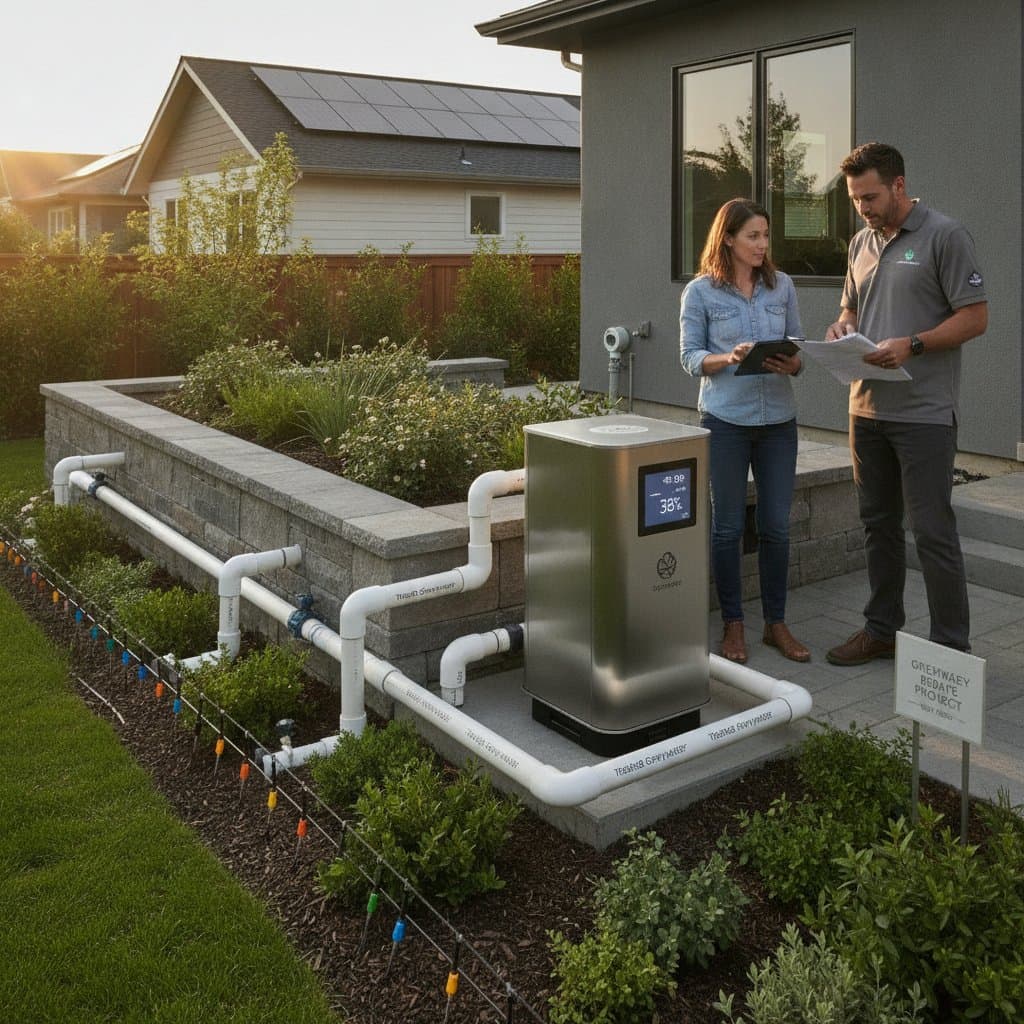
Scope and size determine baseline costs. A single fixture laundry system costs far less than a full house setup. Material grade affects durability and price. Poly tanks and PVC piping remain economical while stainless components raise totals. Site conditions such as rocky soil or long pipe runs extend labor time. Regional labor rates climb in coastal or drought prone areas. Custom features like indoor reuse or extra irrigation zones add design and inspection fees.
DIY Options Versus Professional Installation
Capable homeowners can install a laundry to landscape system with a manual diverter valve and gravity flow. They can also run drip lines from an existing washer drain. Basic trenching helps control expenses. Licensed professionals must handle connections to household plumbing, pump and filter installation, and any indoor reuse treatment. These steps ensure compliance with plumbing and health codes.
Greywater contains soap, lint, and microbes. Improper routing risks soil or groundwater contamination. Systems must discharge below the surface and avoid spraying. Electrical pumps require grounded outlets with GFCI protection. Manufacturer warranties may lapse without permits or licensed labor.
Steps to Reduce Expenses
Use gravity flow whenever possible to avoid pumps and wiring. Select a smaller tank when irrigation demand stays limited. Prepare plumbing stubs and trenches before contractors arrive. Schedule work during cooler months when labor demand drops. Combine the project with other yard upgrades to share excavation costs. Obtain at least three itemized quotes and verify that each covers materials, permits, cleanup, and warranty terms.
Available Rebates and Incentives
Many utilities provide rebates from 100 to 500 dollars for simple laundry diversion and from 1000 to 3000 dollars for complete irrigation systems. Pre approval, proof of inspection, and approved components are standard requirements. Local conservation offices can confirm current programs and priority funding for drought sensitive zones.
Basic Laundry to Landscape Installation
Plan the route from the washer drain to the discharge area while maintaining a gentle downhill slope. Install a three way diverter valve at the drain hose. Run one inch PVC or HDPE pipe to the landscape zone and lay drip tubing around trees and shrubs. Cover outlets with mulch. Test the system with a rinse cycle and label the valve for future reference. This approach costs 800 to 1500 dollars and reduces outdoor water use by several thousand gallons each year.
Project Timeline
Design and permit review take one to three weeks. On site work lasts two to five days. Inspection follows within a week of completion. Homeowner training on maintenance completes the process.
Ongoing Care and Expected Lifespan
Regular filter cleaning and annual valve checks keep systems reliable. Most components last 15 to 20 years with proper upkeep. Consistent maintenance protects water quality and preserves savings.
Long Term Benefits
A well planned greywater system lowers monthly water bills while supporting local conservation efforts. Homeowners gain practical experience with sustainable infrastructure that performs reliably over time.