How Much Does a Granny Pod Cost? 2025 Pricing Guide
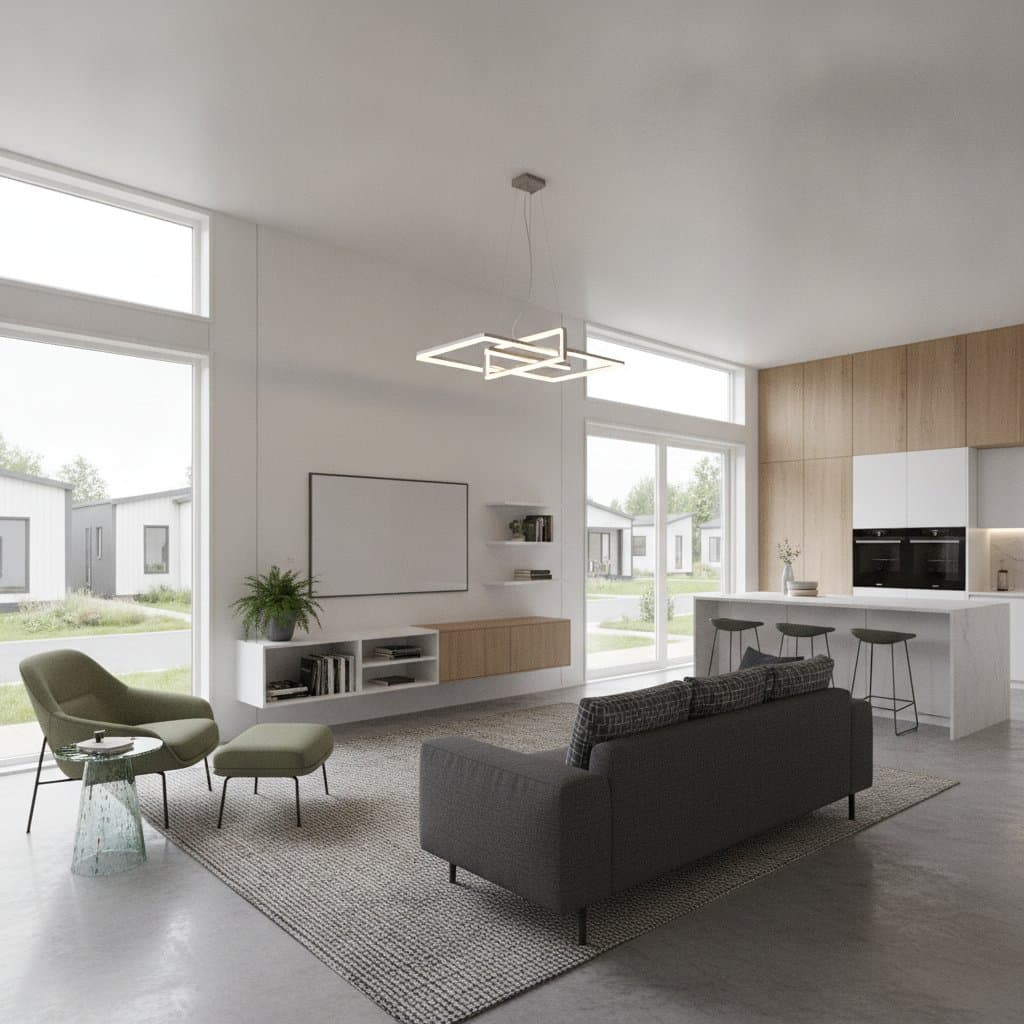
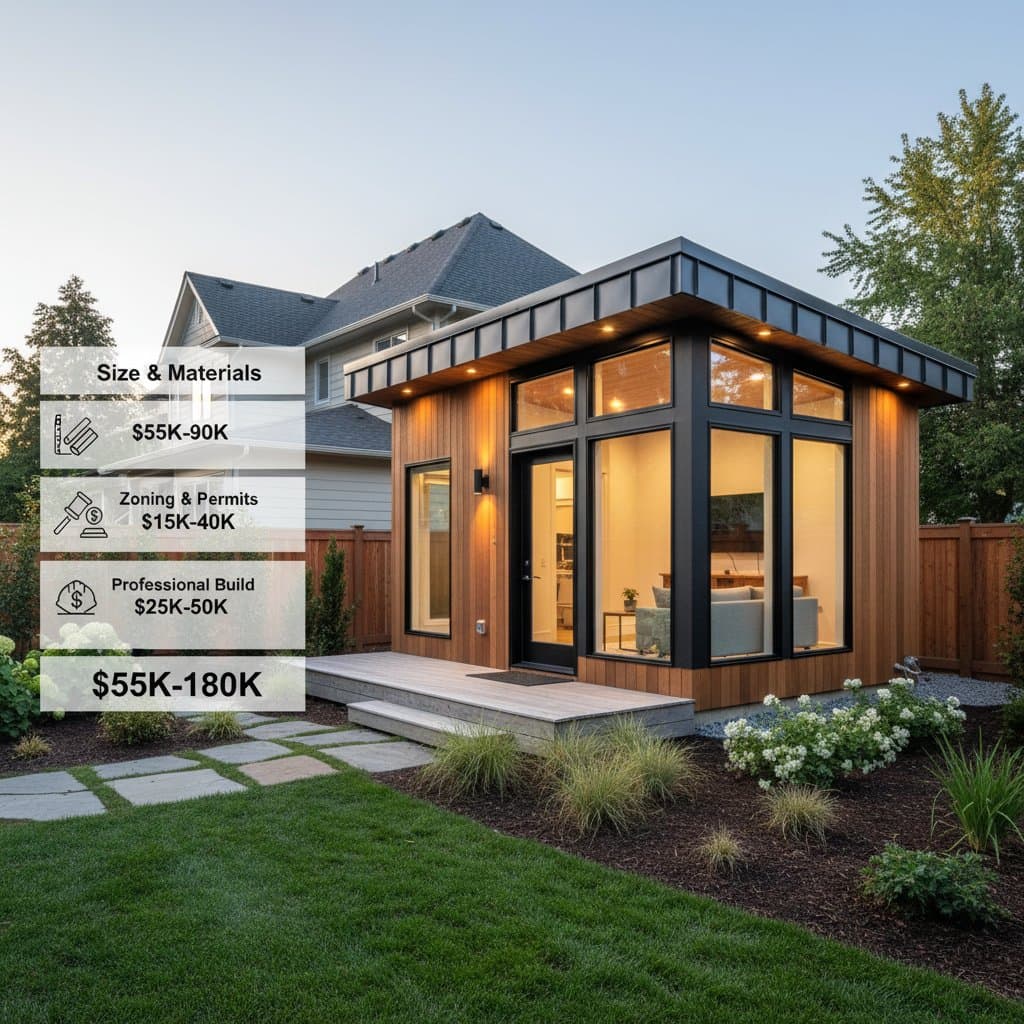
A granny pod, also known as an accessory dwelling unit or ADU, offers aging family members a safe, private, and fully equipped backyard residence. These compact living spaces balance independence with close family proximity, fostering connections while preserving personal boundaries. Professional installation for a granny pod ranges from $55,000 to $180,000, with the average homeowner investing approximately $125,000 in a standard 400-square-foot unit that incorporates utilities, kitchen essentials, and bathroom amenities.
Three key elements shape the total expense: size and layout, materials and finishes, and local zoning or permitting mandates. Rural locations frequently provide greater flexibility, whereas urban settings demand specialized permits and inspections. Data from the National Association of Home Builders indicates that a thoughtfully designed ADU elevates property value by 20 to 35 percent, particularly in regions with robust housing demand. Early planning and verification of local zoning regulations guarantee adherence and enduring benefits.
Detailed Cost Breakdown
Base pricing for granny pods hinges on square footage, finish quality, and site demands. Builders typically assess $250 to $400 per square foot, whereas prebuilt modular options average $75,000 to $120,000, encompassing delivery. Setup and utility integration fees commence at $5,000 for basic services.
Size Considerations
A 300-square-foot granny pod approximates $85,000 in cost, while a 600-square-foot version approaches $160,000. Expanding by 100 square feet generally incurs an additional $20,000 to $25,000, influenced by material selections and labor requirements. Discussions in online forums, such as those focused on ADU initiatives, reveal that compact prefabricated designs accelerate timelines yet encounter elevated utility linkage charges in established communities.
Material and Quality Options
- Entry-level selections: These feature vinyl siding, laminate flooring, and fundamental insulation, with prices spanning $55,000 to $85,000. Such units endure approximately two decades under routine upkeep.
- Mid-range choices: Enhanced with superior windows, composite roofing, and energy-efficient heating, ventilation, and air conditioning systems, costs fall between $90,000 and $130,000. Manufacturers including Clayton Homes and Boxabl deliver reliable options within this category.
- Premium configurations: Equipped with luxury finishes, smart home technologies, and accessibility adaptations for universal design, these range from $140,000 to $180,000. Premium models commonly extend warranties of up to ten years for structural elements and integrated systems.
Site and Design Complexities
Challenges like uneven terrain, restricted access paths, or extensive utility excavation elevate expenses by 10 to 25 percent. Regions with rigorous zoning oversight necessitate architectural plans and ecological assessments, contributing $2,000 to $10,000 extra. Certain states mandate that detached ADUs align aesthetically with the primary residence, thereby amplifying design expenditures.
Navigating State Zoning Laws and Compliance Expenses
Zoning regulations differ significantly across states, affecting both project viability and overall budget. California, Oregon, and Vermont permit ADUs as a matter of course in residential areas, resulting in reduced permit charges and expedited processes. In contrast, Texas and Georgia delegate oversight to municipal authorities, necessitating individualized evaluations.
Typical permitting expenses encompass:
- Building permits: $1,200 to $3,500
- Impact or utility connection fees: $2,000 to $10,000
- Site evaluations and regulatory verifications: $500 to $1,500
Prospective builders must verify setback distances, size limitations, and occupancy guidelines prior to commencing work. Numerous locales restrict ADUs to 800 square feet or 40 percent of the primary home's footprint. Engaging a contractor versed in regional codes minimizes the risk of expensive postponements.
To streamline compliance, start by contacting your local planning department for a pre-application consultation. This step clarifies allowable configurations and uncovers potential incentives, such as fee waivers for energy-efficient designs. Document all communications to build a solid foundation for approvals.
Professional Installation Versus DIY Approaches
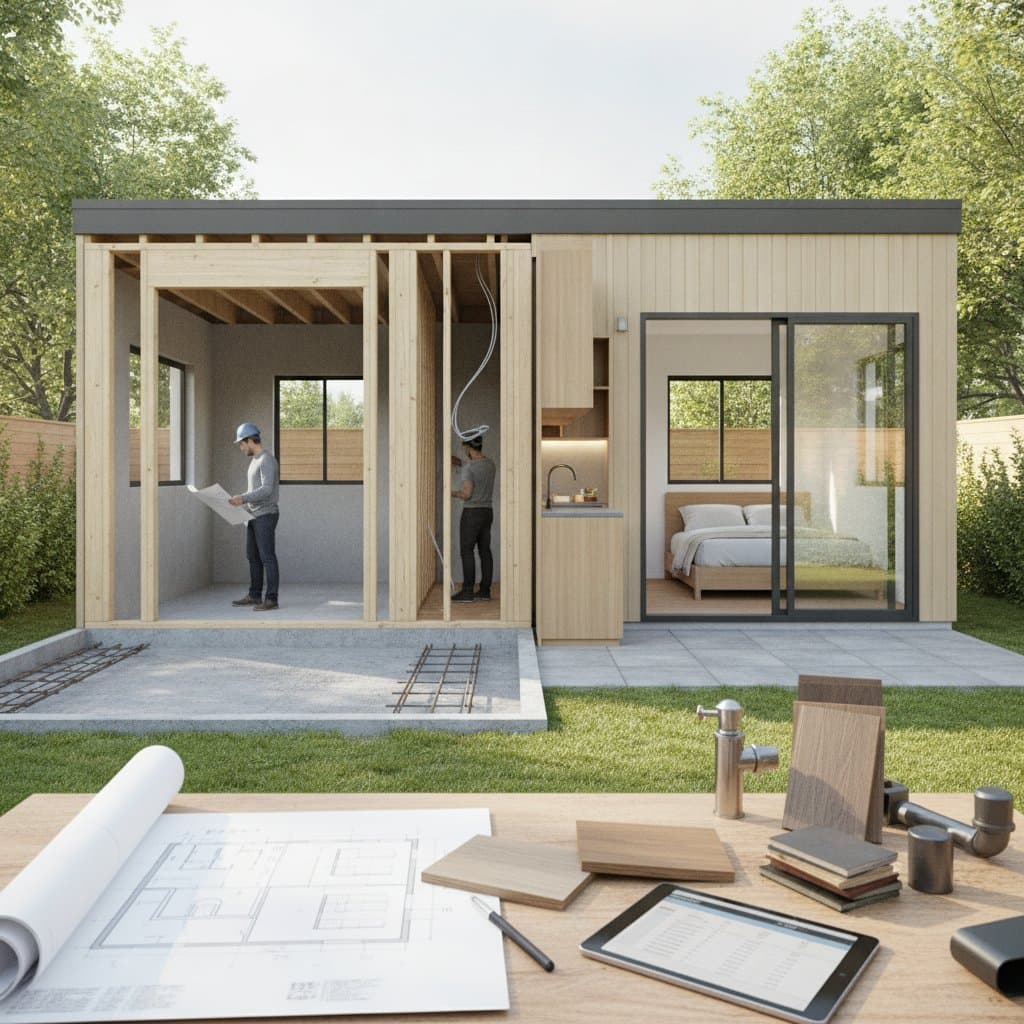
DIY kits and modular frameworks begin at $40,000, though completion expenses frequently match or exceed that amount upon integrating plumbing, electrical systems, and foundational elements. Supplies like treated lumber, insulating materials, and fixtures accumulate $25,000 to $35,000, with equipment leases and regulatory inspections appending $3,000 to $5,000. Self-construction demands several months of dedicated effort and solid intermediate building expertise.
Opting for a licensed professional provides assurances through warranties, liability protection, and specialized tools. Such projects span two to three months, conserving substantial labor time. Although initial outlays prove higher, the diminished likelihood of structural flaws or regulatory violations justifies the investment for sustained reliability.
Before deciding, assess your skill level and timeline constraints. For DIY enthusiasts, prioritize kits from reputable suppliers that include detailed assembly guides and compliance checklists. Professionals, meanwhile, handle subcontractor coordination, ensuring seamless integration with existing property infrastructure.
Effective Strategies for Cost Reduction
Schedule construction during slower seasons to decrease labor rates by 10 to 15 percent. Solicit bids from no fewer than three ADU experts via services like HomeAdvisor or Angi to strengthen bargaining positions.
Explore financing options such as home equity loans or local grants aimed at multigenerational housing. Select modular units that arrive nearly complete, slashing on-site labor by up to 30 percent. Incorporate durable, low-maintenance materials from the outset to curb future repair costs.
Realizing Lasting Value from Your Granny Pod
A strategically constructed granny pod enhances living flexibility, expands usable space, and appreciates real estate worth. It serves diverse purposes, from familial accommodations and visitor quarters to revenue-generating rentals. Mastery of zoning stipulations, precise sizing, and meticulous installation planning secures regulatory alignment and budgetary efficiency, yielding comfort and economic advantages for years ahead.