What 2026 Holds for Flood-Resistant Flooring Costs
Quick Take
- Expect moderate price increases due to higher material demand and shipping costs.
- Vinyl, ceramic, and sealed concrete remain the most reliable flood-resistant surfaces.
- Local codes and insurance incentives may steer more homeowners toward certified flood-safe materials.
Pros and Cons
Pros
- Resists swelling, mold, and odor.
- Easier cleanup after floods or spills.
- Long lifespan when installed over a sealed subfloor.
- Can lower insurance costs in flood-prone areas.
Cons
- Higher upfront cost than basic laminate or carpet.
- Some types feel cold or hard underfoot.
- Limited pattern choices in heavy-duty materials.
- May need professional installation to stay watertight.
Step-by-Step: Installing Flood-Resistant Flooring
Tools and Materials
- Utility knife
- Trowel and waterproof adhesive
- Moisture meter
- Level
- Safety gloves and knee pads
Time: 1 to 2 days for most rooms
Difficulty: Moderate
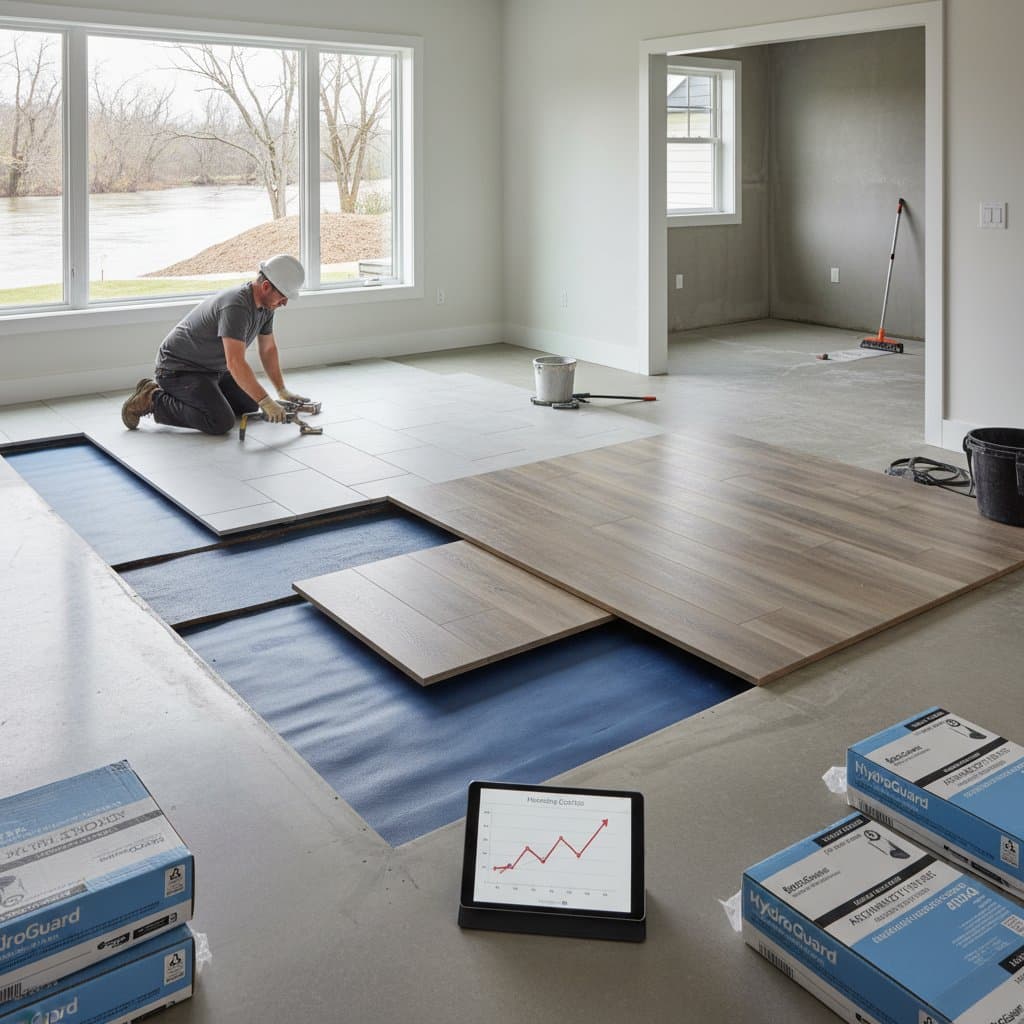
- Prep the subfloor. Remove old flooring and check moisture levels. The surface must be clean, flat, and completely dry.
- Seal the surface. Apply a waterproof primer or membrane. Let it cure as directed.
- Plan the layout. Dry-fit tiles or planks before using adhesive. This avoids uneven joints.
- Apply adhesive. Spread evenly with a trowel. Work in small sections to prevent drying before placement.
- Set flooring. Press each piece firmly. Use spacers for expansion gaps where required.
- Seal edges. Run silicone or urethane sealant along walls and fixtures.
- Inspect. Look for gaps, bubbles, or raised edges. Re-press or trim where needed.
- Clean up. Wipe adhesive residue before it hardens. Dispose of old flooring and adhesive containers according to local waste rules.
DIY vs Pro
Safe for DIY
- Floating vinyl plank systems with built-in locks.
- Simple concrete sealers or roll-on membranes.
- Replacing small damaged sections after minor flooding.
Hire a pro when
- You see subfloor cracks or uneven moisture readings.
- Local code requires flood-resistant certification.
- You need integrated floor drains or sump systems.
What the pro will do differently
A professional will check vapor barriers, fix foundation leaks, and ensure seams meet flood-resistance ratings. This adds cost but prevents long-term failure.
Maintenance or Prevention
Frequency
Inspect annually or after any major rain event.
Tasks
- Check seams and caulk lines for separation.
- Reapply sealant every few years.
- Keep drains and sump pumps clear.
- Use area rugs that dry quickly instead of carpet.
Outcome
A tight, sealed surface that prevents moisture from seeping into the subfloor and walls.
Alternatives
Luxury Vinyl Tile (LVT)
Best for homeowners wanting a wood look without the flood risk. Durable and easy to clean, but sensitive to extreme heat.
Ceramic or Porcelain Tile
Ideal for basements, bathrooms, and entryways. Fully waterproof but can feel cold unless paired with radiant heat mats.
Sealed Concrete
Perfect for garages and lower levels. Low maintenance, but may need periodic resealing to prevent surface wear.
FAQs
Can laminate flooring be flood-resistant?
Most laminate is only water-resistant, not fully flood-rated. Once water reaches the core, it swells and fails.
How long does flood-resistant flooring last?
With proper sealing and upkeep, 15 to 25 years is realistic. Lifespan depends on traffic, moisture level, and maintenance.
Do insurance companies reward flood-resistant upgrades?
Some carriers offer small discounts or easier claim approvals when you use certified flood-resistant materials. Check your policy.
Is cork flooring flood-safe?
No. Even sealed cork absorbs moisture over time and can curl or discolor after flooding.
Your Next Steps
Start by checking your flood zone and reviewing any local building code updates. If your home sits in a moderate or high-risk area, plan for materials rated for full water exposure, not just splash resistance. Gather quotes from at least three installers, and ask for moisture testing before you commit.
Once you choose a material, invest in good sealants and proper edge protection. Skipping these small details often leads to bigger repair bills later. Flood-resistant flooring is not a luxury anymore. For many homeowners, it is a basic part of keeping a home resilient, dry, and ready for the next storm.