Are AI HVAC Systems Covered by Home Warranties?
Summary Box
What it is:
An AI HVAC system represents a heating, ventilation, and air conditioning unit that employs intelligent sensors and algorithms to automatically regulate temperature, humidity, and airflow based on real-time data.
Why it matters:
Such systems elevate indoor comfort, minimize energy consumption, and prolong equipment durability. However, their warranty terms grow complex owing to integrated electronics and software elements.
Typical cost and what changes it:
Installed smart HVAC systems range from $8,000 to $18,000. Factors influencing price include unit capacity, manufacturer reputation, and extent of intelligent functionalities.
When to hire a pro:
Engage a certified HVAC specialist for all installation, configuration, and warranty activation procedures.
How long it takes:
The process spans one to three days, including calibration and software integration.
Maintenance interval:
Replace filters every one to three months, update sensors and firmware semiannually, and schedule professional inspections annually.
Anatomy of an AI HVAC System
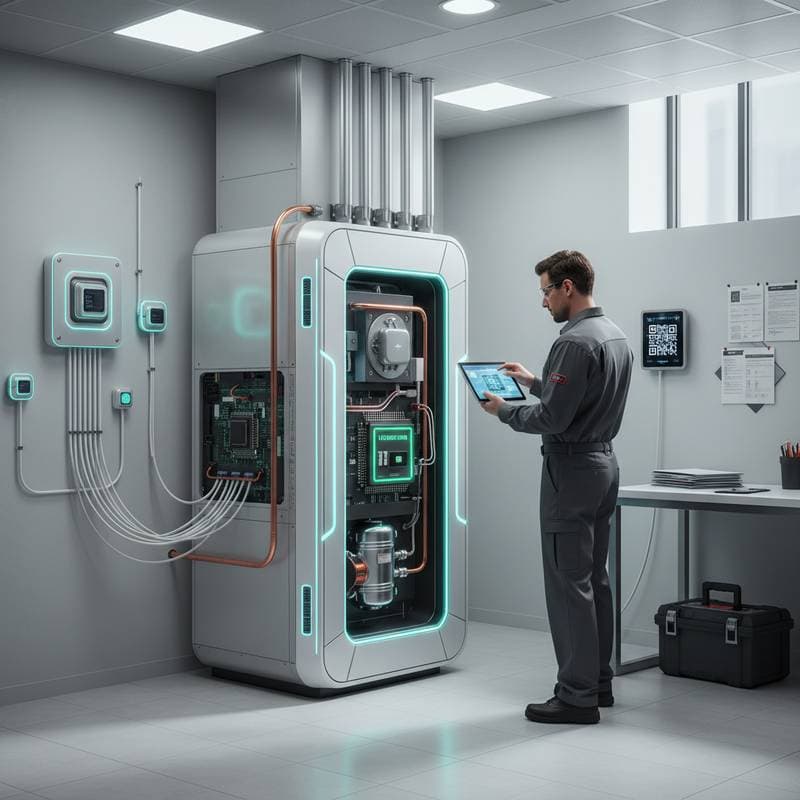
Contemporary AI HVAC systems comprise essential components that work in unison:
- Smart thermostat or hub: Serves as the central processor, collecting environmental data and directing system operations.
- Indoor air handler or furnace: Distributes conditioned air throughout the living space while generating heat or coolness.
- Outdoor condenser or heat pump: Handles refrigerant circulation to facilitate heating or cooling cycles.
- Sensors: Monitor variables such as temperature, humidity levels, and occupant presence.
- Cloud software or app: Archives operational data and enables remote monitoring and adjustments.
- Machine learning engine: Analyzes usage patterns to optimize performance progressively.
Reliable internet connectivity underpins the AI functionality. Interruptions in network service might mimic hardware malfunctions, yet they generally lie beyond warranty protections.
How Warranty Coverage Works
Manufacturer warranties and home warranties operate distinctly. A manufacturer warranty addresses flaws in materials or assembly for individual parts. In contrast, a home warranty functions as a service agreement that handles repairs or replacements stemming from ordinary usage and deterioration.
Most home warranty policies reference HVAC system inclusion without detailing AI or smart elements. Coverage hinges on these primary considerations:
- Component type: Core mechanical elements, including the compressor, blower motor, and coils, receive standard protection. Advanced items like sensors, intelligent thermostats, and circuit boards often face exclusions.
- Installation quality: Absence of professional installation by a licensed technician can lead to rejection of claims under both warranty types.
- Software or connectivity issues: Policies typically omit coverage for programming errors, application malfunctions, or wireless network problems.
To verify specifics, review your policy documents or contact the provider directly for clarification on smart HVAC inclusions.
Costs and Cost Factors
| Line Item | Typical Range | Notes and Variables |
|---|---|---|
| AI HVAC System (complete) | $8,000 - $18,000 | Influenced by capacity, brand, and smart integrations |
| Smart Thermostat Replacement | $250 - $800 | Frequently excluded from home warranties |
| Control Board Replacement | $400 - $1,200 | Generally addressed by manufacturer warranties |
| Sensor Replacement | $150 - $400 per unit | Often not covered under home plans |
| Annual Maintenance Visit | $100 - $300 | Essential for warranty preservation |
Local labor costs, part sourcing, and required permits may alter totals by approximately 20 percent. Budget for these variables during planning.
Safety and Code Notes
Disconnect electrical power prior to accessing any HVAC enclosure. Equip yourself with gloves, protective eyewear, and a respiratory mask when handling refrigerants or airborne particles. Adhere to regional building regulations regarding wiring, drainage systems, and refrigerant management.
AI systems participating in utility demand-response initiatives might necessitate municipal oversight in certain locales. Consult authorities early to ensure compliance.
Regional Factors
Climate considerations:
In regions with high heat and humidity or coastal exposure, opt for units featuring anti-corrosion casings to shield sensors and electronics from degradation. Cold-weather installations demand AI heat pumps equipped with advanced defrost mechanisms suitable for subzero conditions.
Code or permit notes:
Local ordinances may mandate permits for integrating smart technologies. Verify requirements with your building department before proceeding.
Material suitability:
Select dust-proof and moisture-resistant enclosures for environments prone to particulates or dampness.
Timing by season:
Schedule installations during spring or autumn periods to benefit from reduced contractor workloads and potentially lower rates.
FAQs
Do home warranties automatically include smart HVAC systems?
No. Policies often cover basic HVAC but omit smart controls and sensors unless explicitly stated.
Can a home warranty deny coverage for software issues?
Yes. Failures related to software or connectivity do not qualify as mechanical breakdowns.
Does adding a smart thermostat affect warranty coverage?
Yes. Unauthorized additions by non-professionals risk invalidating both manufacturer and home warranties.
How do I protect my warranty?
Employ certified installers, adhere to recommended maintenance, and retain all service documentation.
Are AI HVAC systems more expensive to repair?
Yes. Diagnostic tools and specialized components increase costs by roughly 30 percent.
Can I buy extended coverage for AI components?
Certain manufacturers and providers offer add-on options for smart features.
What if my system loses Wi-Fi?
Basic HVAC operations continue uninterrupted, though intelligent adjustments halt. This scenario does not trigger warranty claims.
Should I register my system online?
Yes. Registration activates manufacturer coverage in most cases.
Steps to Secure Your AI HVAC Warranty
Begin by selecting a reputable manufacturer that provides clear terms for smart components. Engage a licensed contractor experienced in AI integrations to handle setup and initial registration. Establish a maintenance routine immediately, documenting each service to build a robust claim history.
Monitor system performance through the companion app and address connectivity issues promptly to avoid misdiagnosed failures. If uncertainties arise, consult your warranty provider for policy interpretations tailored to your setup. These measures not only preserve coverage but also maximize the long-term value of your AI HVAC investment.