Understanding Solar Panel Warranties in 2026
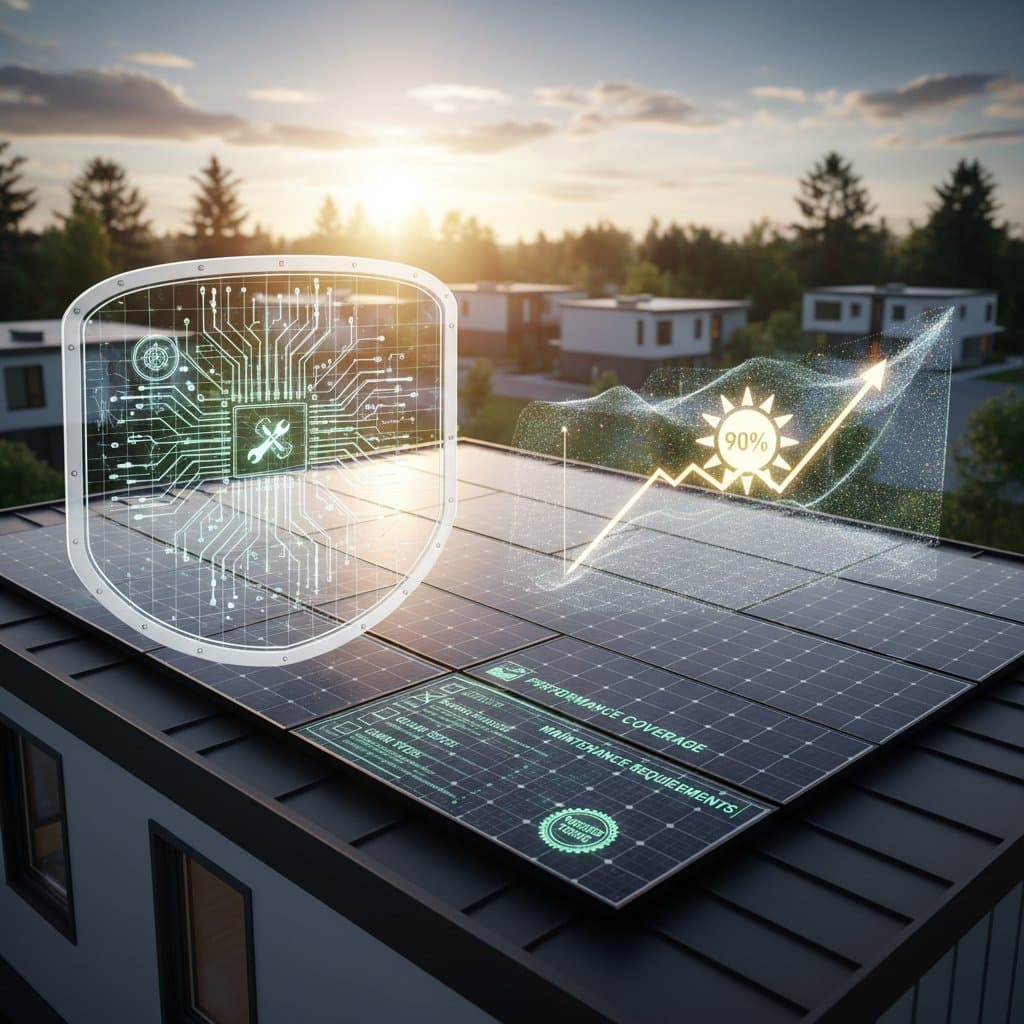
Solar panel warranties serve as critical safeguards for your investment. These guarantees ensure that panels perform as expected over time, covering manufacturing issues and energy output declines. By grasping the core components, you position yourself to maximize reliability and minimize unexpected expenses.
Core Components at a Glance
- Warranties typically divide into product and performance categories.
- Product coverage addresses defects in materials and workmanship.
- Performance guarantees maintain specified output levels over decades.
- Additional labor protections vary by manufacturer and installer.
Defining Solar Panel Warranties
A solar panel warranty represents a formal commitment from the manufacturer or installer. It assures that the panels will operate without defects for a defined duration and retain adequate energy production. While comprehensive, these warranties exclude certain scenarios, such as environmental damage, making them essential yet not all-encompassing protections.
Benefits and Limitations
Advantages
- Shields against costs from defective components or installation errors.
- Mitigates risks of accelerated performance decline.
- Enhances property value through transferable coverage to future owners.
Drawbacks
- Labor expenses often require separate agreements.
- Terms differ across brands, complicating comparisons.
- Successful claims demand thorough records and professional assessments.
Scenarios for Warranty Activation
Ideal Applications
- Visible damage like cracks or separation in panel layers.
- Energy production falling below permitted thresholds.
- Confirmed manufacturing faults identified by certified technicians.
Common Denials
- Harm from extreme weather beyond manufacturer responsibility.
- System alterations without prior authorization.
- Failures resulting from neglected upkeep.
Detailed Coverage Breakdown
Modern solar warranties encompass three primary elements, often coordinated among manufacturers, installers, and suppliers.
Product Warranty
This provision protects against flaws in construction and materials, such as fractured glass, malfunctioning electrical boxes, or deteriorating frames. Durations typically span 10 to 25 years. Upon validation of a defect, the manufacturer supplies a replacement or equivalent value.
Performance Warranty
This ensures panels sustain a minimum output percentage relative to initial capacity. Degradation limits, often under 1 percent annually, trigger compensation if exceeded. Remedies include panel swaps or financial adjustments to restore expected production.
Labor and Installation Warranty
Installers frequently provide distinct labor guarantees for disassembly and reinstallation of faulty units. These extend from 1 to 10 years. Certain manufacturers reimburse labor costs when systems involve their approved partners.
Guide to Verifying Warranty Coverage
Required Resources
- Installation contracts and receipts.
- Official warranty documents from the manufacturer.
- Access to production monitoring tools or applications.
- Basic testing equipment like a multimeter.
Estimated Time: 30 to 60 minutes
Skill Level: Beginner
Step 1: Collect Documentation
Assemble contracts, specification sheets, and service agreements. Store digital versions in an accessible repository for reference.
Step 2: Confirm Identifiers
Locate serial numbers on panel frames or backs. Verify alignment with registered details; update records with the manufacturer if discrepancies arise.
Step 3: Examine Policy Details
Scrutinize sections on defects, output standards, and reimbursements. Note restrictions labeled as limited or conditional.
Step 4: Assess Output Levels
Contrast current generation data against design projections. Retest following panel cleaning and shade elimination to rule out external factors.
Step 5: Initiate a Claim
Notify the installer to evaluate and document the problem. Retain records of interactions, including images, for submission.
Step 6: Monitor Progress
Submit required inspections or metrics as requested. Upon approval, expect delivery of replacements or credits, with potential labor support.
Step 7: Validate Replacements
Record new serial numbers and installation timelines. Conduct output verification to confirm functionality.
Financial Considerations
Standard Expenses: Claims under warranty incur no cost for parts, but labor may add $500 to $1,000 or higher.
Expense Increases
- Services outside warranty periods.
- Access challenges on elevated or complex structures.
- Obsolete or custom components.
Cost Reductions
- Inclusive labor from installer plans.
- Active full-term manufacturer support.
- Straightforward ground-based setups.
Replacement Over Repair
For widespread underperformance, full array renewal often proves more economical than isolated fixes. This approach also refreshes the performance timeline.
Handling Tasks: DIY or Professional
Suitable for Independent Efforts
- Document review and data logging.
- Gentle panel cleaning with safety precautions.
- Photographing evident issues or accumulations.
Professional Recommendations
- Electrical disconnections or enclosure access.
- Roof work requiring harnesses.
- Advanced diagnostic procedures.
Expert Advantages
Certified specialists perform specialized evaluations, such as current-voltage tracing and connector analysis. They streamline claims via direct manufacturer channels.
Upkeep Strategies for Longevity
Schedule: Biannual checks or post-storm assessments.
Essential Actions
- Rinse panels using soft water and mild solutions.
- Examine connections for wear or looseness.
- Analyze inverter records for anomalies.
- Secure mounting hardware.
Expected Results
Routine vigilance identifies minor problems early. Maintained cleanliness and records facilitate efficient warranty resolutions.
Key Exclusions to Anticipate
Warranties outline specific non-covered events to manage expectations.
- Environmental Damage: Hail, storms, or electrical surges typically require homeowner insurance.
- Non-Approved Interventions: Unauthorized servicing voids protections.
- Substandard Setup: Non-certified installations limit or nullify claims.
- Intentional Harm: Physical impacts from tools or foot traffic qualify as abuse.
- Obstruction Effects: Reduced output from foliage or debris falls outside guarantees.
- Incompatible Integrations: Issues linked to unendorsed inverters or storage may exclude coverage.
Coverage from Top Manufacturers
Leading producers standardize protections with minor variations.
- Defect Protection: 12 to 25 years.
- Output Assurance: 80 to 92 percent retention post-term.
- Workmanship Support: 5 to 10 years via authorized installers.
High-end options bundle elements under unified plans. Economy models focus on components alone. Local providers may extend system-wide guarantees, contingent on their reliability.
Strategies for Effective Claims
Thorough preparation accelerates approvals.
- Record Comprehensively: Capture images of panels, displays, and identifiers, alongside transaction proofs.
- Engage Installer Initially: They validate issues and coordinate; bypass to manufacturer if unavailable, using serial proofs.
- Supply Evidence: Present output histories, ideally spanning 30 days.
- Await Assessment: Allow time for system review while maintaining accessibility.
- Coordinate Fulfillment: Schedule exchanges and document component handling.
Supplementary Protection Options
Extended Service Plans
Installers offer add-ons for prolonged parts and labor, priced at $200 to $800 based on scale.
Home Policy Extensions
Some warranties incorporate solar elements, addressing ancillary components like wiring.
Specialized Insurance
Riders protect against perils like theft or weather, augmenting manufacturer terms.
Frequently Asked Questions
Registration Necessary? Yes, complete within months of setup to secure full benefits; otherwise, transferability limits apply.
Transferable Upon Sale? Most allow one transfer with notification and proof.
Installer Bankruptcy Impact? Direct manufacturer claims remain viable with ownership documentation.
Inverter and Storage Coverage? Separate, shorter-term policies apply; review component specifics.
Detecting Underperformance? Measure against baseline estimates; exceedances warrant professional review.
Self-Cleaning Feasible? Yes, employing safe, non-damaging techniques.
Performance Void Triggers? Neglect, unapproved additions, or wiring changes.
Essential Validity Checklist
- Register components promptly.
- Archive all transactional records.
- Conduct regular evaluations.
- Employ safe cleaning practices.
- Refrain from unpermitted changes.
- Log production consistently.
- Consult professionals prior to claims.
Securing Your Solar Future
Effective warranty management begins with informed selection and ongoing diligence. Review agreements meticulously, clarifying responsibilities for components and services. Organize records to enable swift responses to issues.
For expansions like storage integration, verify compatibility to preserve protections. Seasonal monitoring sustains peak efficiency, transforming your warranty into a reliable asset for sustained energy benefits.