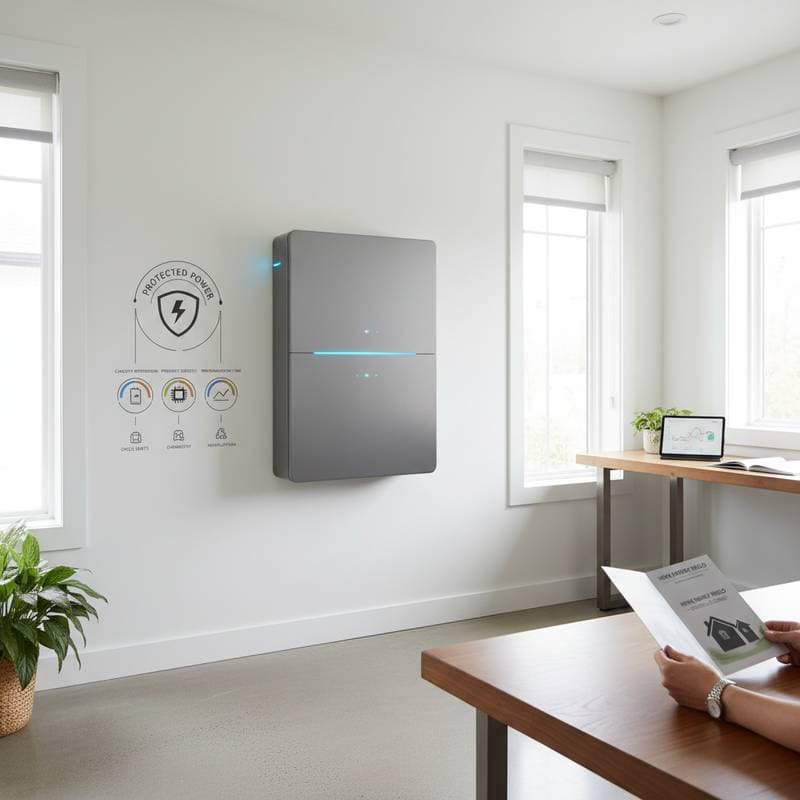
What Home Battery Warranties Truly Cover: A Homeowner's Essential Guide
Home battery systems deliver reliable power during outages and lessen reliance on the electrical grid. Installation by professionals typically ranges from $9,000 to $18,000, with average costs around $12,500 for a standard mid-range unit. Each system includes a warranty, yet the specifics of coverage often prove complex. Factors such as usage cycles, capacity retention, and manufacturer policies shape the protection offered. Brands including Tesla, Enphase, and LG Chem apply distinct terms, so careful review of details before buying proves essential. A robust warranty shields against early capacity decline and equipment failures, ensuring the system operates effectively throughout its intended duration. Clear knowledge of coverage details helps avoid substantial replacement expenses and supports sustained energy performance.
Core Elements of Home Battery Warranty Protection
Home battery warranties primarily address capacity degradation and manufacturing defects. Manufacturers commit to maintaining a defined percentage of the battery's initial capacity following a specified number of charge cycles. For instance, coverage might guarantee 70 percent retention after 10,000 cycles or 10 years, whichever occurs first. Certain warranties encompass labor for repairs or replacements, whereas others limit support to parts alone.
These guarantees draw from performance testing and safety standards. Under typical operating conditions, the warranty confirms the battery avoids accelerated efficiency loss. Protection excludes harm from faulty installation, extreme environmental conditions, or unapproved alterations. Systems installed by certified experts preserve complete warranty validity, while self-performed setups risk nullifying all coverage.
Capacity Retention Standards and Cycle Thresholds
Capacity retention forms the foundation of warranty assurances. This provision specifies the minimum energy storage level the battery must sustain over time. Tesla's Powerwall, for example, warrants 70 percent retention after 10 years or 37.8 megawatt-hours of energy throughput. Enphase provides comparable protection, though it relies on cycle counts instead of total energy passed through the system.
Degradation occurs gradually, with each 1,000 cycles reducing capacity by approximately 3 to 5 percent, influenced by battery chemistry and thermal management. Units equipped with liquid cooling, like the Powerwall, experience less wear than those using air cooling. Homeowners gain insight into projected longevity by calculating these rates, allowing informed decisions on when to plan for upgrades.
Manufacturing and Operational Performance Guarantees
Product warranties target defects in construction, covering issues in cells, wiring, or electronic controls. These apply over the same timeframe as performance clauses but emphasize structural integrity over energy output. Limited lifetime options exist, yet they often diminish benefits after initial periods or cycle thresholds. Claims under such terms might yield prorated credits for new units rather than complete swaps.
Verification of included services remains crucial, as some warranties omit shipping, disassembly, or reinstallation fees, which can exceed several hundred dollars. Homeowners should confirm these elements to assess full protection scope.
Key Influences on Warranty Effectiveness
Warranty value aligns with household energy patterns and setup conditions. Critical aspects include battery chemistry, placement environment, and operational demands.
Variations by Battery Chemistry and Manufacturer
Lithium iron phosphate batteries exhibit extended cycle endurance and minimal degradation compared to lithium nickel manganese cobalt types. An Enphase LFP model might preserve over 80 percent capacity beyond 10,000 cycles, surpassing the 70 percent mark common for NMC variants. Such differences impact the warranty's real-world utility.
Established brands like Sonnen and Enphase command premium pricing through superior warranty durations and performance metrics. Budget options from lesser-known producers offer initial savings but may incur higher long-term costs due to quicker capacity fade.
Environmental Factors in Installation
Ambient temperature and airflow significantly influence battery durability. Placement in a warm, unventilated garage accelerates wear more than a tempered indoor area. Warranties often define acceptable ranges, such as 32 to 104 degrees Fahrenheit, and deny claims for deviations.
Engaging a qualified electrician guarantees optimal cooling and compliance with protocols. Oversight in these areas frequently results in rejected warranty requests.
Impact of Usage Patterns and Throughput
Intensive use, such as deep discharges in high-consumption homes, accelerates cycle accumulation. A 30-megawatt-hour throughput cap might deplete faster under daily full loads than intermittent backup scenarios. Moderate users extend system life well beyond baseline expectations.
Built-in software logs cycles and energy flow, providing data for claim evaluations. Homeowners access these records to monitor adherence to limits.
Warranty Levels and Their Implications
Standard Coverage Essentials
Basic warranties encompass:
- Specified energy retention thresholds
- Safeguards against material and component flaws
- Limits on cycles or total energy throughput
This level fits occasional backup needs, with systems priced from $8,000 to $11,000 installed. Duration spans 10 years or 6,000 cycles, whichever precedes the other.
Enhanced and Premium Protections
Advanced plans incorporate labor expenses, system monitoring, and superior retention commitments. These increase costs by 10 to 20 percent yet yield savings through durability. Brands like Sonnen and FranklinWH integrate firmware enhancements and diagnostics in these packages.
Overall expenses for upgraded systems fall between $14,000 and $18,000, justified by lower upkeep and prolonged service. Such coverage suits frequent cycling for peak-hour savings or grid independence.
Supplementary Protection Plans
Extended options from installers or independents cost $500 to $1,000 extra, addressing inverters, connectivity, or service logistics. Bundles via platforms like EnergySage combine battery and inverter coverage, reducing expenses by up to 15 percent.
Outcomes of Professional Installation Versus Self-Setup
Self-installation cuts initial outlays by thousands but typically invalidates manufacturer guarantees. Leading brands mandate certified handling to meet safety and integration standards.
Self-Setup Expense Overview:
- Unit acquisition: $8,000 to $10,000
- Equipment and protective items: $500
- Regulatory approvals: $300
- Risks from errors: Substantial potential losses
Benefits of Expert Installation:
- Unrestricted warranty access
- Optimized setup for peak output
- Specialized tools valued over $1,000
- Included support for repairs
Professional routes often offset costs through avoided claim denials and enhanced reliability.
Practical Steps to Optimize Warranty Benefits
Homeowners prolong coverage through deliberate choices and upkeep routines. Schedule annual inspections to detect early wear, ensuring components align with manufacturer guidelines. Pair batteries with compatible solar inverters for seamless operation and preserved terms.
Monitor usage via app interfaces to stay within cycle bounds, reserving full discharges for emergencies. Select climate-appropriate enclosures to shield against heat or moisture. These measures sustain performance, minimize claims, and amplify investment returns.
Securing Long-Term Power Resilience
Effective warranty management transforms home batteries into dependable assets. By aligning selections with needs and adhering to best practices, homeowners achieve extended reliability and cost efficiency. This approach not only fulfills immediate backup requirements but also fortifies energy independence for years ahead.