The End of AI Coverage in Home Warranties: What Changes in 2026
Quick Overview
- Devices in smart homes that incorporate artificial intelligence will lose warranty coverage in the near future.
- Providers point to erratic software updates and privacy vulnerabilities as primary reasons.
- Protection remains available through dedicated technology support or extended manufacturer warranties.
Benefits and Drawbacks
Benefits of excluding AI coverage:
- Minimizes conflicts over software malfunctions that providers cannot effectively diagnose.
- Maintains steady premium rates for owners of traditional, non-connected appliances.
- Reduces potential liabilities related to privacy breaches and cybersecurity incidents.
Drawbacks for homeowners:
- Diminishes the scope of items protected under existing plans.
- Increases personal expenses for repairs involving AI components in appliances.
- Generates uncertainty in managing devices that combine hardware with cloud-based operations.
Reasons for the Coverage Shift
Home warranty providers traditionally address mechanical and electrical breakdowns. They compensate for parts and labor, but not for software troubleshooting or firmware recovery. The integration of machine learning into appliances has presented adjusters with claims that prove difficult to validate.
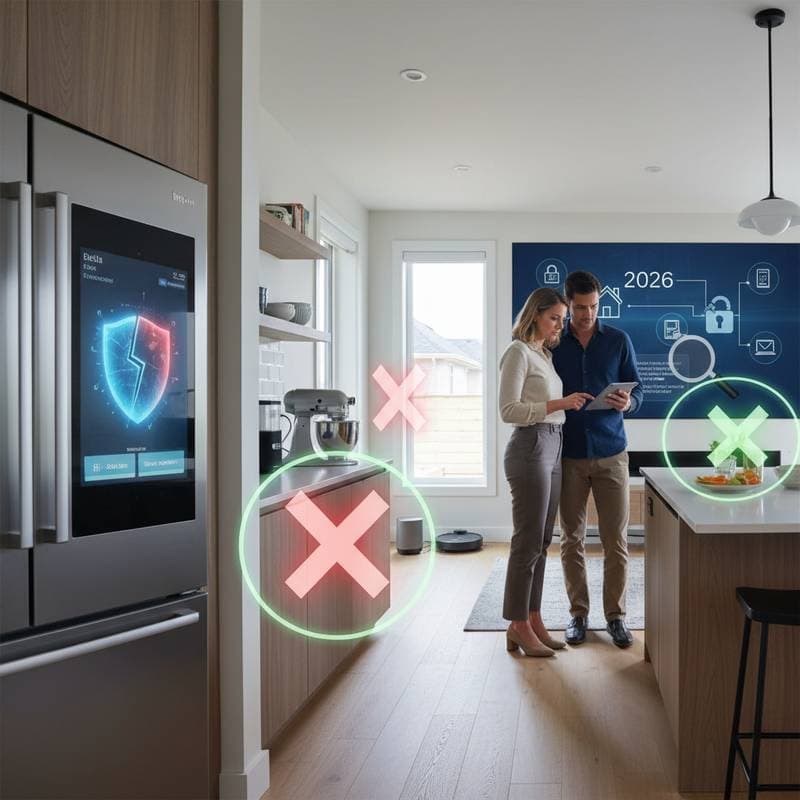
Consider a refrigerator that fails to cool properly because its AI interprets temperature readings incorrectly, rather than due to a compressor malfunction. Providers lack the capability to reprogram or debug the software, leaving the root cause undetermined. This ambiguity elevates overall claim expenses.
Cybersecurity concerns contribute significantly. Smart devices frequently link to remote servers. In cases of data breaches or malware infections that impair functionality, providers risk accountability for information loss or unauthorized access. Excluding AI elements sidesteps these exposures.
Guide to Reviewing Your Coverage
Required tools:
- Your policy document or an electronic version from the provider
- A highlighter or digital note-taking application
- Instruction manuals for your appliances
Estimated time: Approximately 30 minutes
Level of difficulty: Straightforward
- Find the exclusions portion. Look for phrases such as smart device, AI functionality, or connected technology. Mark any provisions that eliminate or restrict coverage.
- Assess protected elements. Determine which components qualify for repair or replacement.
- Identify hybrid appliances. Flag items that blend physical and digital elements, like intelligent refrigerators or adaptive thermostats.
- Consult your provider. Reach out via email or online chat to clarify treatment of hybrid devices. Request written verification when feasible.
- Examine manufacturer alternatives. Numerous brands offer service agreements for software or enhanced support tailored to connected features.
- Evaluate coverage needs. For devices essential to smart operations, arrange distinct protection or prolonged warranties from the maker.
Key inspection advice: If a device becomes inoperable in manual mode once its smart capabilities fail, it probably falls outside warranty scope.
Organization step: Store your annotations in a dedicated folder named Warranty Updates. Retain electronic versions for policy renewal conversations.
Handling Repairs: Self-Service or Professional
Suitable for self-service:
- Verifying Wi-Fi configurations and restarting networked devices.
- Installing firmware updates via brand-specific applications.
- Clearing sensors or reinitializing network routers.
Instances requiring professional assistance:
- When a device fails to connect to the home network after multiple resets.
- If hardware or circuit boards exhibit failure.
- In situations suggesting electrical faults or power surge impacts.
Professional advantages:
Experts employ specialized diagnostic equipment and proprietary access codes to evaluate circuit boards and connectivity modules. They distinguish hardware problems from software glitches, aiding in verification of eligibility under remaining coverage terms.
Protection Alternatives
Choice A: Extended manufacturer warranties
Ideal for households with several appliances from the same brand. These agreements typically encompass software updates and remote diagnostics. The downside involves elevated costs compared to basic home warranties.
Choice B: Dedicated technology support agreements
Suitable for those seeking assistance with Wi-Fi management, routers, and smart hubs. Coverage focuses on troubleshooting rather than hardware fixes. Limitations include no reimbursement for replacement components.
Choice C: Add-on insurance endorsements
Appropriate for integrated smart security or automation setups. These attach to standard homeowner policies. Potential increases in premiums arise from frequent claims.
Common Questions
What happens if my AI-equipped refrigerator becomes unresponsive yet continues to cool?
Mechanical repairs should qualify for coverage. The intelligent interface or screen falls outside protection.
Do software updates count as routine maintenance?
Providers now view updates as owner responsibilities, separate from warranty obligations.
Is it possible to purchase standalone coverage for AI elements?
Certain manufacturers and independent tech services provide plans for software safeguarding, including remote troubleshooting and resets.
Does disabling smart capabilities void coverage?
Disabling internet connectivity and using manual controls preserves mechanical protection.
How should I submit a claim for a hybrid device?
Focus on tangible symptoms in descriptions. State dishwasher fails to activate, rather than app displays an error. Emphasize hardware performance.
Provider Perspectives on the Transition
Administrators explain that they cannot oversee or examine distant servers affecting device performance. Errors from cloud algorithms lie beyond their authority. Manufacturers introduce regular software revisions that alter device behavior during active contracts.
Disputes over smart device claims have risen, often stemming from user mistakes or network problems instead of genuine hardware defects. Excluding AI restores focus on physical components and labor, aligning with foundational models.
Regulatory and privacy issues intensify the move. Accessing diagnostic information from smart devices may involve sensitive data like usage habits or audio logs. Eliminating AI coverage circumvents these compliance challenges.
Immediate Actions for Homeowners
- Inventory connected devices. Compile a roster of all networked appliances, including thermostats and locks. Indicate reliance on cloud services.
- Scrutinize your policy. Pinpoint exclusions and retained protections.
- Engage your provider. Inquire about optional AI add-ons or incentives for non-connected setups.
- Research brand-specific plans. Several include basic AI assistance in extended options.
- Prepare for policy renewal. Choose between mechanical-only retention or tech-oriented alternatives.
Navigating the Implications
This adjustment might seem like a setback for homeowners invested in smart systems. However, it delineates clear boundaries of responsibility. Home warranties excel at tangible wear and tear, not fluid algorithms.
Align protections with anticipated issues. For compressor failures or plumbing leaks, existing plans provide solid value. For connectivity errors or interface glitches, turn to brand or tech specialists.
Technology advances outpace warranty frameworks. Coverage terms evolve with each cycle. Proactive inquiries ensure preparedness against unexpected gaps.
Steps to Secure Your Setup
Review your policy immediately. Annotate all references to AI, smart elements, or networked technology. Verify ongoing protections with your provider.
For daily reliance on intelligent features, investigate manufacturer or third-party tech safeguards ahead of renewal. Preserve device configurations through backups, maintain current firmware, and deploy surge protectors to mitigate threats.
Distinguishing physical durability from digital dynamics allows sustained home protection and smoother adaptation to technological shifts.