How Much Does a Granny Pod Cost? A 2026 Pricing Guide for Multigenerational Homes
Transforming Family Living and Independence
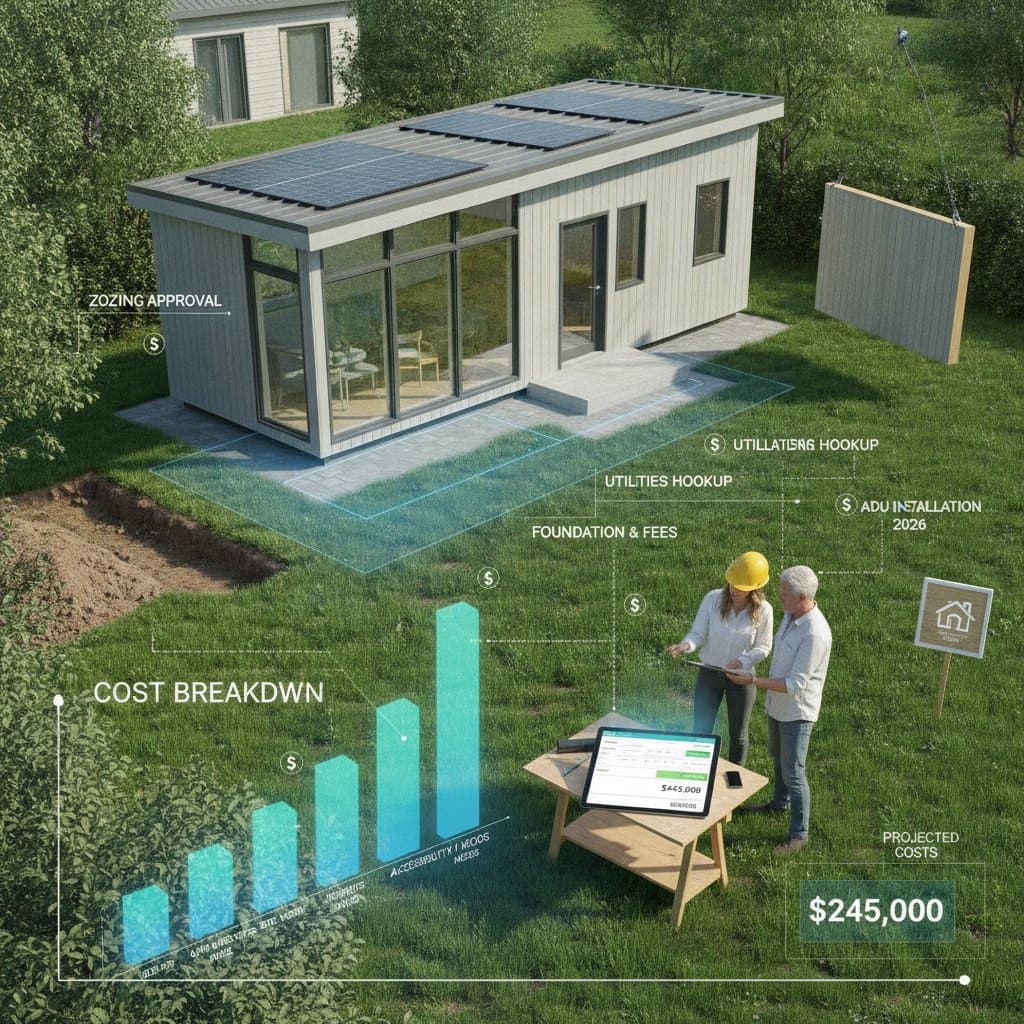
Granny pods offer private, accessible housing for aging relatives right in the backyard, reshaping multigenerational living. Professional installations typically range from $70,000 to $150,000, with the average homeowner spending about $98,000 on a fully equipped unit. This investment supports independence while keeping family close.
Three key factors shape the final price: size and layout, material quality, and site conditions for utilities. A basic compact unit costs less than a luxury model with medical monitoring or full kitchens. In urban areas with high demand, labor and permitting fees can increase totals by up to 25 percent.
Data from senior housing analysts indicates that a thoughtfully designed granny pod boosts property value by as much as 35 percent. It also cuts long-term assisted living costs by nearly 60 percent. Families gain both emotional proximity and financial benefits from this setup.
Detailed Cost Breakdown
Primary Pricing Structure
Pricing for granny pods falls between $150 and $300 per square foot. Site preparation and permitting add an average minimum of $10,000. National costs break down as follows:
- 25th percentile: $75,000 for a 250-square-foot unit
- 50th percentile: $98,000 for a 300-square-foot unit
- 75th percentile: $130,000 for a 400-square-foot luxury unit
These figures account for standard installations across various regions.
Size and Scope Factors
Larger units drive up expenses, with each additional 100 square feet adding approximately $20,000. For example, a 200-square-foot prefab model installs for around $60,000, while a 350-square-foot semi-custom pod with a kitchenette and full bathroom reaches $115,000. HomeAdvisor data shows West Coast projects average 18 percent higher due to zoning and energy standards.
Consider your relative's needs when selecting size. Smaller units suit temporary stays, while larger ones provide space for long-term comfort. Always verify local building codes early to avoid surprises.
Material and Quality Tiers
Entry-level options feature vinyl siding, laminate flooring, and basic insulation. Brands like Studio Shed start at $65,000 for durable, minimalist designs suited to shorter-term use.
Mid-range selections include quartz counters, energy-efficient windows, and upgraded flooring. Providers such as Boxabl and Backyard ADU price these customizable units from $85,000 to $115,000, offering a strong balance of features and value.
Premium models from MEDCottage or Dvele incorporate accessibility aids, smart climate controls, and medical tech. These exceed $130,000 but include ADA compliance and warranties up to 20 years, ensuring longevity and safety.
Select tiers based on budget and desired lifespan. Higher-quality materials reduce maintenance over time.
Complexity and Site Conditions
Challenging terrain or extended utility lines raise installation costs. Ramps, widened doors, or reinforced floors for accessibility add $5,000 to $15,000.
In rural areas, delivery fees can increase totals by 10 to 15 percent due to logistics. Permitting and inspections average $3,000 to $5,000, varying by location, as reported by Angi.
Assess your site with a professional survey first. This step identifies potential issues and refines your budget estimate.
Service Types and Comprehensive Pricing
Basic or Standard Package
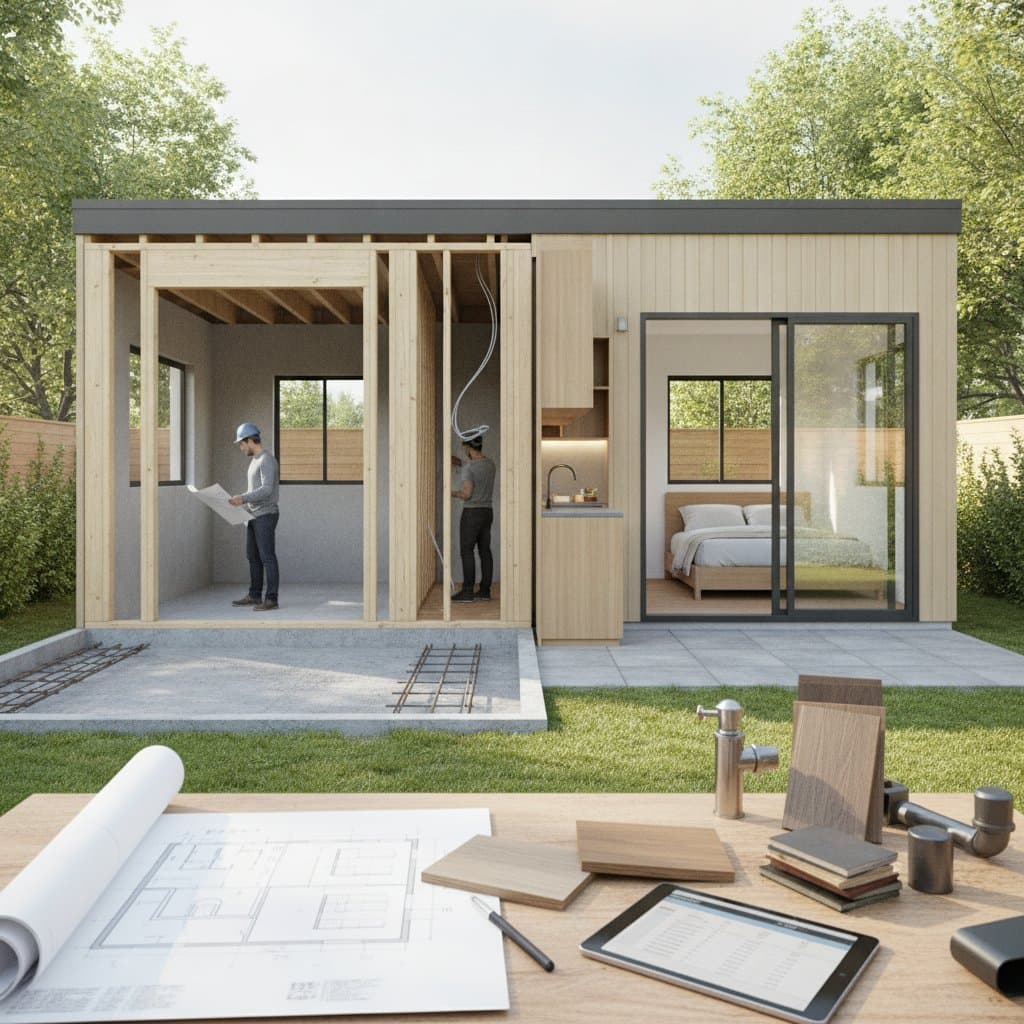
Standard packages cover modular delivery, basic foundation, electrical and plumbing connections, plus standard finishes and insulation. Prices range from $70,000 to $95,000, with installation taking about four weeks.
This option works well for transitional housing or short-term needs. It provides essential functionality without excess features.
Premium or Comprehensive Package
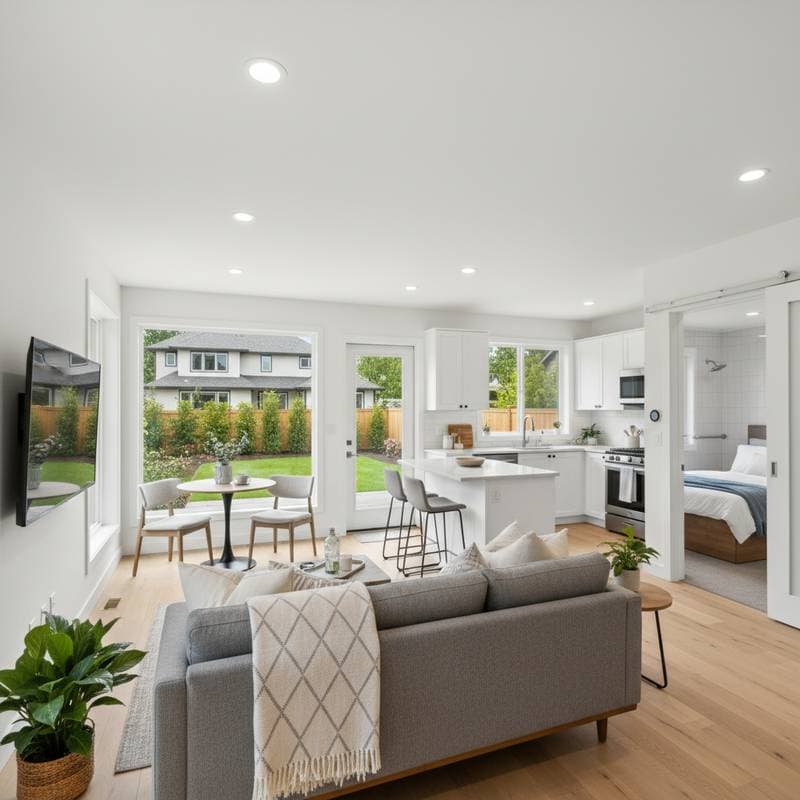
Premium versions include full kitchenettes, enhanced bathrooms, smart security, and advanced HVAC. Costs span $110,000 to $150,000, with benefits like better noise isolation and energy efficiency.
Return on investment reaches 60 to 75 percent through property appreciation and lower care costs. These units support extended family living with added comfort.
Add-On Services and Bundles
| Add-On Service | Average Cost | Savings When Bundled |
|---|---|---|
| Solar panel integration | $8,000 | 10% with premium package |
| Accessibility ramp | $3,500 | 5% with ADA bundle |
| Landscaping and walkway | $2,800 | 7% if installed during foundation work |
| Smart home automation | $4,500 | 12% when bundled with HVAC system |
Build during off-peak seasons to save up to 15 percent on labor, per BuildZoom insights. Bundling maximizes value.
Professional vs. DIY Analysis
DIY Cost Breakdown
DIY projects using prefab kits for a 250-square-foot unit require $35,000 to $45,000 in materials like framing, insulation, and roofing. Tools add $2,000 if bought or $500 if rented, with 300 hours of labor for those with intermediate skills.
Permits and inspections push the true total to $55,000 to $65,000. Electrical or plumbing errors can lead to costly fixes.
Professional Advantages
Professionals finish in half the time, ensure code adherence, and provide warranties worth $5,000 to $10,000. Their insurance covers liabilities, and builds achieve 20 percent better energy efficiency plus 15 percent higher resale value than DIY efforts.
Opt for pros on complex sites. Their expertise minimizes risks and enhances quality.
Decision Framework
Pursue professional help for grading, plumbing, or ADU regulations. DIY fits experienced builders with ample time. Structural errors in framing or waterproofing often require expensive repairs, favoring expert involvement for most.
Evaluate your skills honestly. Prioritize safety and compliance above all.
Actionable Cost-Saving Strategies
Timing Optimization
Off-peak scheduling cuts labor by 10 to 20 percent. Midweek starts may yield further discounts from available crews.
Plan around weather and family schedules. Early booking secures better rates.
Smart Shopping Techniques
Obtain three quotes from certified ADU specialists to save 8 to 12 percent. Negotiate milestone-based payments for control.
Buy appliances directly from suppliers to trim $1,000 to $3,000. Research incentives for energy-efficient choices.
Preparation and Communication
Clear the site and mark utilities in advance to shave up to $2,000 in labor. Discuss layout details upfront to avoid change orders.
Document agreements clearly. This prevents misunderstandings and extra fees.
Market Dynamics and Considerations
Geographic Variations
Urban centers like Los Angeles or Boston add a 25 percent premium from zoning and space limits. Southern and Midwestern areas cost 15 percent less with easier permitting and lower labor.
Research local trends. Some regions offer grants for aging-in-place solutions.
Market Timing and Inflation
Lumber and steel fluctuations add 3 to 6 percent quarterly. Supply issues may delay prefabs, so order early.
Monitor material markets. Lock in prices where possible to hedge against rises.
Value and ROI Indicators
Granny pods enhance convenience and add 60 percent ROI on resale, per real estate data. Energy models save 20 percent on utilities annually, plus eldercare reductions.
View this as a dual-purpose asset. It serves family now and boosts equity later.
Building for Connection and Comfort
A granny pod extends beyond construction to foster family bonds through independence and privacy. Select durable materials, secure permits, and prioritize accessible designs.
Match your choice to lifestyle demands. This creates lasting stability and closeness across generations.