
How Much Does FHA 203(k) Renovation Financing Cost? 2025 Pricing Guide
FHA 203(k) loans enable buyers to purchase and renovate properties through a single government-backed mortgage. These loans finance projects from $5,000 to $200,000, based on the work required and home value. National data from the U.S. Department of Housing and Urban Development shows the average financed renovation totals $35,000.
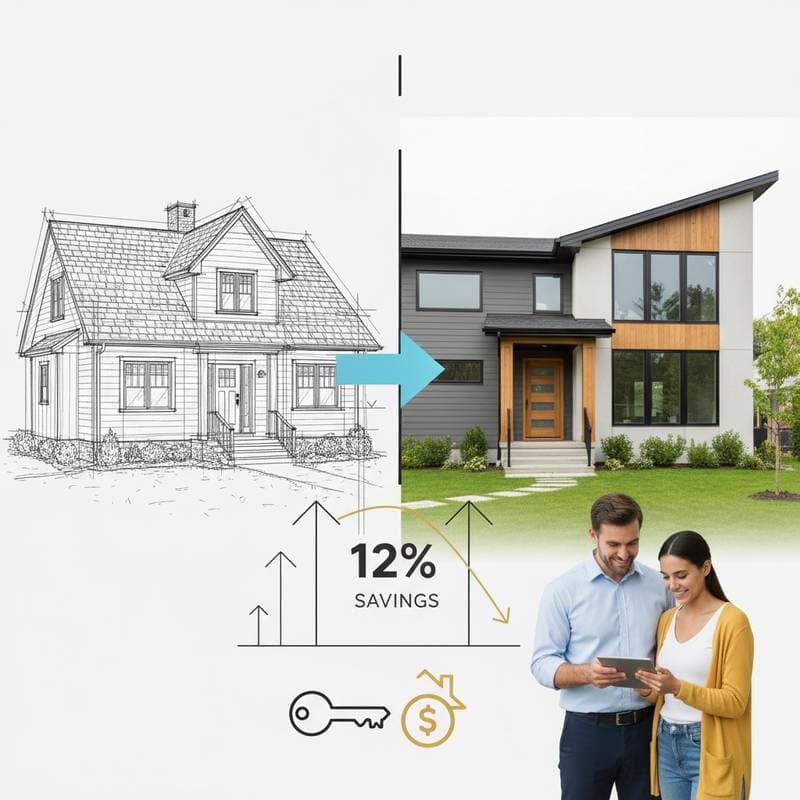
Three key elements shape the overall expense: the chosen loan type, project scale and intricacy, and regional contractor pricing. In urban centers, labor and supplies often run 15 to 25 percent higher than in rural areas. Strategic application of a 203(k) loan lowers total financing needs by up to 12 percent, per National Association of Realtors insights.
This program merges home acquisition with upgrades into one streamlined option. It minimizes initial outlays, eases budgeting, and supports steady equity buildup over time.
Detailed Cost Breakdown
Costs for FHA 203(k) loans depend on the variant selected, renovation extent, and oversight needs. The program features two core options: Limited for minor fixes and Standard for substantial overhauls.
Primary Pricing Structure
Contractors bid $50 to $200 per square foot for eligible work. Cosmetic efforts, like fresh paint or new counters, span $10,000 to $35,000. Comprehensive rebuilds climb to $75,000 to $200,000.
Projects must meet a $5,000 threshold for eligibility. Distribution across scales includes:
- Small updates at the 25th percentile: $8,000
- Moderate overhauls at the 50th percentile: $35,000
- Extensive transformations at the 75th percentile: $120,000
Additional charges cover a 1.5 percent origination fee and HUD consultant services, ranging from $400 to $1,000 based on scope.
Size and Scope Factor
Larger areas drive up expenses systematically. Adding 100 square feet typically incorporates $7,500 to $15,000. A 1,500-square-foot refresh with flooring, paint, and appliances might total $45,000; incorporating roof or foundation fixes doubles that to $90,000.
HomeAdvisor and LendingTree reports peg national full remodels at $70 per square foot for 203(k)-funded efforts.
Material and Quality Tiers
Basic selections, including laminate surfaces and standard fixtures, fall between $40 and $60 per square foot and endure roughly 10 years.
Mid-tier choices, such as durable countertops, wood floors, or efficient windows, elevate pricing to $60 to $100 per square foot. These selections enhance durability and appeal to future buyers.
High-end features like bespoke storage, luxury surfacing, and premium brands (GE Profile or Bosch) push costs to $120 to $200 per square foot. Such investments frequently lift appraised values, amplifying net worth post-project.
Complexity Variables
Properties needing ramps, code fixes, or engineering reviews incur extra charges. Foundation mending alone adds $10,000 to $25,000. Rewiring or pipe overhauls in aged homes contribute $5,000 to $15,000.
Location plays a role too. Coastal zones command elevated rates; rural settings may prolong schedules due to sparse options, hiking totals by 10 percent.
Service Types and Comprehensive Pricing
Basic FHA 203(k) (Limited)
The Limited variant funds surface-level changes, including:
- Interior coatings and surfaces
- Kitchen or bath refreshes
- Heating, piping, or wiring enhancements
- Exterior coverings or glazing
These initiatives span one to three months and range $10,000 to $50,000. It suits aesthetic boosts without foundational shifts.
Standard FHA 203(k)
The Standard edition handles intensive builds, such as:
- Extensions or space additions
- Base or frame corrections
- Complete cooking or washing area rebuilds
- Substantial efficiency improvements
Expenses cover $50,000 to $200,000, with a 20 to 30 percent markup over Limited. Expert consultants manage progress and checks. Properties demanding deep rehab thrive under this unified financing approach.
Add-on Services Matrix
| Add-On Service | Typical Cost | Savings When Bundled |
|---|---|---|
| Energy-efficient upgrades | $3,000 - $10,000 | Up to 8% on utility bills |
| Landscaping improvements | $2,000 - $7,000 | 5-10% appraisal gain |
| Accessibility modifications | $4,000 - $15,000 | 50% eligible for financing |
| Mold remediation | $1,500 - $5,000 | Prevents $10,000+ future damage |
Integrating services into one loan trims overhead by 10 to 15 percent through single processing and synced workflows.
Professional vs DIY Analysis
DIY Cost Breakdown
FHA guidelines restrict self-work, mandating pros for key tasks. Approved exceptions include painting or mounting fixtures.
Common supplies encompass:
- Coatings and tools: $300 to $600
- Lighting: $150 to $500
- Surfaces (Pergo or LifeProof): $1,000 to $3,000
- Equipment hire: $50 to $200 daily
Self-efforts cap at $5,000 but require expertise and HUD alignment. Errors risk delays in funding or sign-off.
Professional Advantages
Experts manage approvals, verifications, and guarantees. Labor comprises 60 percent of budgets yet avoids expensive fixes.
Consultants, costing $1,000 plus, safeguard quality for all parties. Pro-led projects cut durations by 25 percent and raise values by 15 percent over flawed alternatives.
Decision Framework
Opt for professionals on load-bearing, utility, or system jobs. Reserve DIY for basic aesthetics. Revision expenses often match double the original plan, favoring skilled oversight.
Actionable Cost-Saving Strategies
Timing Optimization
Off-season bids, particularly winter, yield 10 percent reductions amid lower volume. Midweek launches trim another 2 to 3 percent via eased calendars.
Smart Shopping Tactics
Secure three bids from 203(k)-savvy teams. Link payments to phases for control. Direct material buys can shave 5 percent, subject to terms.
Preparation Actions
Prep spaces, strip elements, or demo sites to deduct $200 to $500 per labor hour. Precise lender-contractor dialogue accelerates steps and curbs alterations.
Market Dynamics and Considerations
Geographic Variations
Expenses differ regionally. Pacific or Atlantic hubs add 20 to 25 percent versus central zones like Cincinnati or Kansas City. Remote areas contend with scarcity, inflating logistics.
Market Timing
Supply chains and economic shifts affect inputs. Recent steadiness in wood and devices eases inflation by 6 percent annually. Trades remain the primary escalator in expanding locales.
Value Indicators
Track return potential through efficiency gains, curb appeal lifts, and compliance upgrades. These elements not only control costs but elevate market positioning and owner satisfaction.
Maximizing Your Investment
Select materials aligned with long-term plans to balance upfront spends against future gains. Engage early with lenders to map financing precisely. This approach turns renovations into equity builders, delivering lasting financial and living benefits.