Understanding Coverage in 2025 AI Home Warranties
Quick Overview
- AI home warranties protect connected systems, sensors, hubs, and automated devices from defects and internal malfunctions.
- Coverage excludes misuse, faulty installation, or conflicts arising from third-party applications.
- Examine policy limits closely, particularly for smart heating, ventilation, and air conditioning systems, solar controls, or unified security setups.
Defining AI Home Warranties
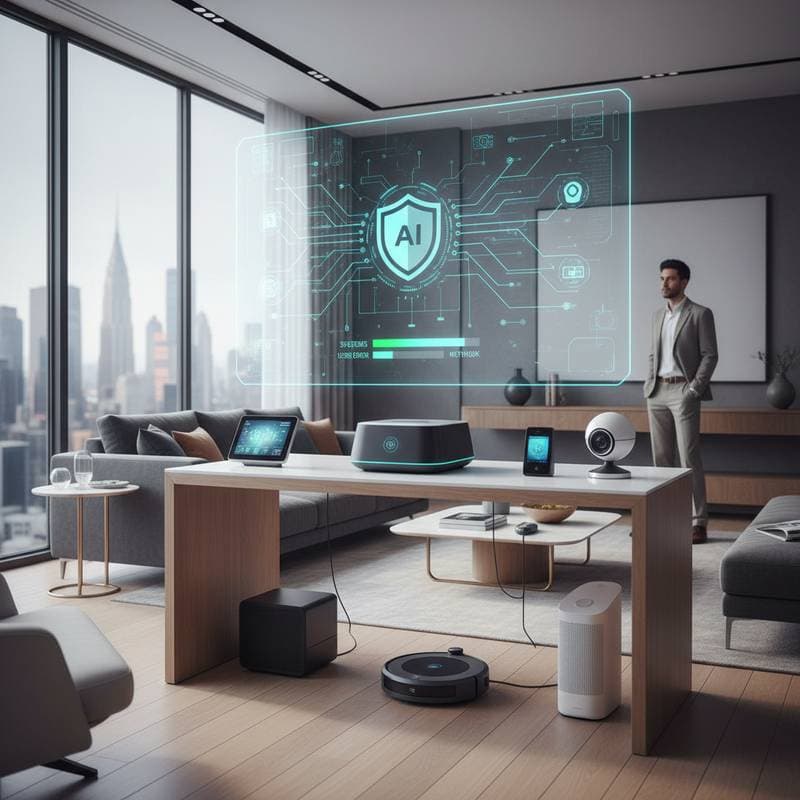
An AI home warranty serves as a service agreement that shields smart home devices and automation frameworks from breakdowns during standard operation. This contract fills the space between a manufacturer's limited warranty and comprehensive repair options by addressing mechanical components alongside software assistance. Distinct from conventional warranties, these policies account for the interplay of hardware, firmware, and cloud-based operations that maintain home connectivity.
Advantages and Drawbacks
Advantages
- Encompasses numerous smart devices within a single policy.
- Provides round-the-clock technical assistance or remote troubleshooting services.
- Lowers expenses associated with repairs and replacements for intricate systems.
- Enhances property value during sales by demonstrating upkeep of integrated systems.
Drawbacks
- Typically omits damage from user actions or obsolete firmware.
- Disruptions in cloud services can invalidate claims.
- Caps on claims may prove insufficient for premium devices.
- Certain policies mandate the use of designated service providers for repairs.
Ideal Scenarios and Limitations
Apply coverage when:
- The residence depends on interconnected smart features such as lighting, heating, ventilation, air conditioning, and voice-activated controls.
- Predictable expenses for fixing automation centers or sensors become essential.
- Equipment falls beyond the manufacturer's warranty period yet remains vital for routine activities.
Coverage falls short when:
- Devices undergo alterations or lack ongoing support.
- Malfunctions originate from inadequate wireless fidelity signal strength or router malfunctions.
- Neglected software patches lead to operational clashes.
Guide: Verifying Warranty Coverage Details
Required Resources
- Inventory of connected devices including serial numbers.
- Full text of the AI home warranty agreement.
- Entry to the smart home application or primary control interface.
Estimated Duration: 45 minutes.
Complexity Level: Straightforward for those comfortable with device interfaces and electronic documents.
- Compile the device inventory. Record each smart item, its model identifier, and connection method, whether via a central hub or direct wireless fidelity link.
- Access the policy specifics. Identify segments titled “Covered Systems” or “Included Elements.”
- Align devices with provisions. Determine if items like thermostats, entryway cameras, or illumination controls receive explicit mention.
- Examine exclusions. Search for terms such as “user-induced faults,” “incorrect setup,” or “external software interference.”
- Assess service fees. Policies frequently impose a standard charge per incident, ranging from $50 to $150.
- Outline the claims procedure. Certain agreements demand electronic confirmation via device activity records prior to service deployment.
- Document findings. Create a concise table detailing covered items, associated fees, and relevant contact details for each category.
Should significant omissions appear, reach out to the issuer to inquire about supplementary options for elements like solar power converters or intelligent watering systems.
Pricing Structure
Standard Annual Range: $400 to $1,200.
Elements Increasing Premiums:
- Expansive properties featuring several control centers or voice interfaces.
- Sophisticated installations including unified security, power reserves, or zoned heating, ventilation, and air conditioning automation.
- Elevated thresholds for service visits or minimal deductibles.
Elements Reducing Premiums:
- Combining with a conventional home warranty package.
- Restricting protection to select valuable items.
- Selecting repair-only options without replacement provisions.
Opting for Replacement Over Repair:
When equipment becomes antiquated or loses cloud compatibility, substitution often proves more economical than persistent diagnostics. Intelligent devices forfeit manufacturer support more rapidly than legacy appliances, diminishing policy worth as time progresses.
Self-Help Versus Professional Assistance
Suitable for Independent Efforts:
- Verifying connections, rebooting units, or applying firmware upgrades.
- Swapping basic sensors or battery-operated illumination toggles.
- Wiping camera optics or inspecting unsecured cabling at accessible points.
Engage Experts For:
- Integrations involving elevated voltage lines or heating, ventilation, and air conditioning regulators.
- Policies stipulating accredited servicing for valid claims.
- Complications encompassing activity records or cloud authorizations impacting interconnected units.
Distinct Professional Approaches:
Certified specialists utilize proprietary diagnostic software, validate policy applicability, and safeguard against rejection through meticulous records. They adhere to regulatory standards for low-voltage cabling, airflow management, and connectivity protocols.
Upkeep and Proactive Measures
Schedule: Monthly inspections, quarterly thorough reviews.
Essential Activities:
- Apply firmware enhancements and validate cloud linkages.
- Sanitize and validate sensors, prioritizing smoke and carbon monoxide units.
- Archive automation configurations prior to significant application revisions.
- Evaluate policy annually and flag devices past support dates.
Benefits:
Systems maintain reliability, claims process efficiently, and connectivity lapses that could nullify protection become preventable.
Comparable Options
Choice A: Extended Manufacturer Safeguards.
Optimal for residences centered on a singular intelligent platform. Limitation: Narrow scope across diverse brands.
Choice B: Supplementary Traditional Home Coverage.
Suitable for existing policies on plumbing, heating, ventilation, air conditioning, or wiring. Limitation: Delayed technical aid and reduced intelligent assessments.
Choice C: Independent Technical Subscription.
Ideal for proficient users seeking autonomy. Limitation: Elevated per-incident expenses offset by complete adaptability.
Frequently Asked Questions
Do AI home warranties address software problems?
In part. Policies generally include firmware breakdowns triggering hardware issues but exclude application glitches from external integrations.
How does a wireless fidelity outage affecting operations factor in?
Connectivity disruptions fall outside scope. Maintain robust networks and record interruptions to resolve potential conflicts.
Are voice interfaces such as Alexa or Google Home included?
Only if specified. Providers often classify them as supplementary rather than foundational components.
Is maintenance documentation required?
Affirmative. Records of consistent upgrades and sensor validations aid in claim acceptance.
Can warranties transfer during property sales?
Most permit reassignment for a modest charge, typically below $100, boosting purchaser assurance.
Do plans extend to intelligent locks or garage mechanisms?
Generally, provided they integrate into the automation framework and exceed battery dependency.
What immediately nullifies coverage?
Interfering with cabling, installing unapproved firmware, or bypassing security protocols.
Include cybersecurity protections?
Select advanced tiers offer fundamental defenses against cloud threats, excluding personal data breaches or information loss.
Pre-Claim Verification List
- Confirm device models and identifiers align with policy listings.
- Ensure firmware and applications reflect latest versions.
- Validate stable power and wireless fidelity.
- Rule out user-inflicted harm or alterations.
- Retain evidence of routine upkeep or records.
- Familiarize with service charges and claim identifiers prior to assistance.
Implementing Effective Coverage
For homes powered by intelligent devices, warranty strength hinges on thorough comprehension. Though agreements appear complex, user practices determine claim outcomes. Initiate by organizing device records, confirming firmware currency, and pinpointing protected assets.
Maintain a compact journal of upgrades and fixes. This archive substantiates normal-use failures during incidents. Address recurring glitches or sluggish links through manual diagnostics before seeking aid; simple reboots or refreshes avert many denials.
During service requests, request technician notations. Retain duplicates of assessments and substituted elements. Such files reveal trends indicating broader connectivity or compatibility concerns. Leverage remote analysis if available; digital traces expedite eligibility confirmation over on-site evaluations.
Conduct annual policy audits. Intelligent advancements evolve swiftly, as do terms. Post-acquisition additions may require manual inclusion. Utilize provider portals for receipt and identifier uploads to streamline tracking and claims.
Prior to enhancements, assess integration viability. Novel control units or artificial intelligence panels might disrupt existing safeguards. Consult issuers on multi-vendor compatibility or mandatory professional setups to avert future invalidations.
Sustaining Smart Home Reliability
AI home warranties deliver tranquility by securing efficiency, safety, and linkage in residences. Effectiveness demands active network stewardship. Firmware vigilance, orderly cabling, and precise records complement contractual assurances.
View coverage as collaborative: providers supply response, users provide preparation. This synergy ensures enduring automation stability and protection. Grasp provisions and uphold system integrity to sidestep disruptions and preserve investments.