2026 Granny Pod Costs: Navigating Permits and Expenses
Granny pods, known also as backyard cottages or accessory dwelling units, offer families a versatile solution for housing needs. These structures enable independent living arrangements for elderly relatives, generate potential rental revenue, or serve as secluded guest accommodations. However, the path to installation involves navigating permits and associated costs, which frequently lead to uncertainty. Understanding these elements equips homeowners to proceed with assurance and sidestep unexpected financial burdens.
Essential Planning Factors
Several critical decisions shape the feasibility and expense of a granny pod project. Homeowners must evaluate local regulations and site-specific conditions to ensure compliance and efficiency.
Zoning and Lot Size Requirements
Local zoning laws determine whether a property qualifies for an accessory dwelling unit. Municipalities often impose restrictions on the maximum square footage, typically capping units at 800 to 1,200 square feet, and mandate that the primary residence remains owner-occupied. Begin by reviewing your city's zoning map and consulting the planning department. In some regions, such as coastal California zones, additional setbacks from property lines apply to preserve neighborhood aesthetics and privacy.
Utility Connections and Infrastructure
Connecting the pod to existing utilities constitutes a significant portion of the budget. Water and sewer lines may require trenching across the yard, costing $5,000 to $15,000 depending on distance and soil type. Electrical upgrades, including panel expansions to handle increased load, add another $3,000 to $8,000. Solar panel integration emerges as a popular option in sunny locales, potentially offsetting long-term energy costs through incentives like federal tax credits.
Foundation Options
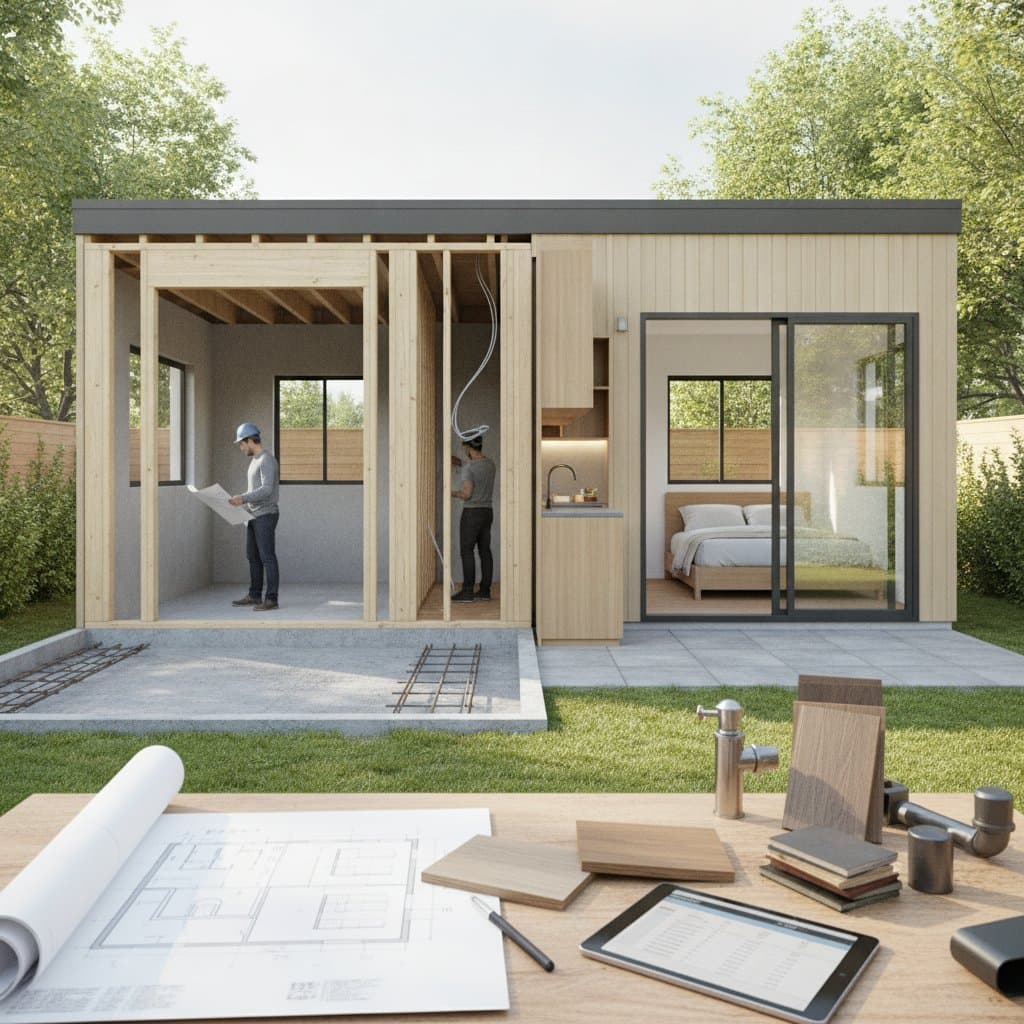
The choice of foundation influences both cost and durability. A concrete slab foundation suits flat, stable lots and ranges from $4,000 to $7,000 for a 600-square-foot unit. Crawl spaces provide better access for plumbing repairs in flood-prone areas but increase expenses to $6,000 to $10,000. Pier foundations work well on sloped terrain, minimizing excavation while costing $5,000 to $9,000. Soil testing, recommended at $500 to $1,500, reveals drainage issues that could otherwise lead to structural problems.
Prefab Versus Custom Construction
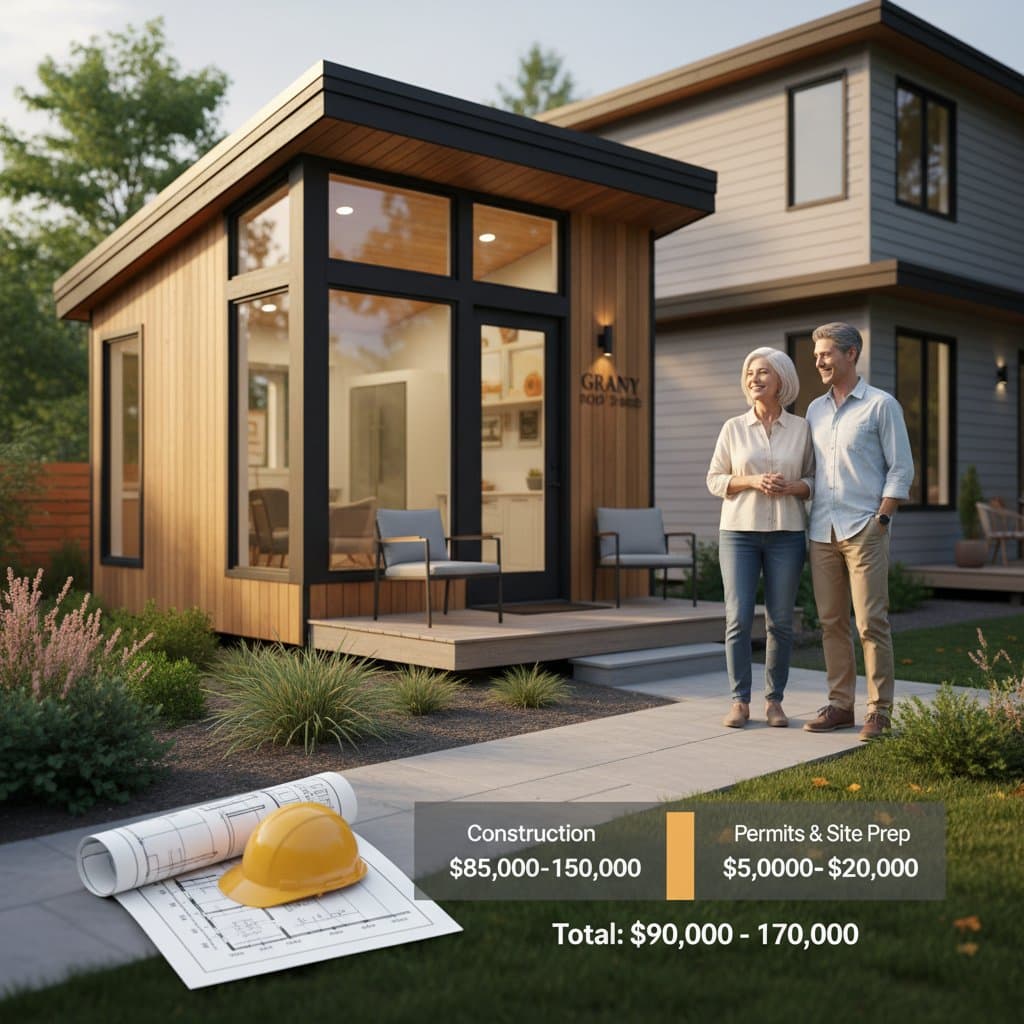
Prefabricated units arrive nearly complete, slashing on-site construction time to two to four weeks and costs to $85,000 to $120,000, inclusive of delivery and basic installations. Custom builds allow personalization, such as integrated smart home systems, but extend timelines to three to six months and elevate prices to $120,000 to $150,000. Consider prefab for speed in permit-heavy areas, while custom suits those prioritizing unique features like energy-efficient insulation exceeding R-30 standards.
Accessibility and Design Features
Incorporating universal design elements enhances the pod's longevity. Features such as 36-inch doorways, zero-threshold entries, and reinforced walls for grab bars add 5 to 10 percent to the total cost, or about $4,000 to $12,000. These modifications not only support aging in place but also broaden the unit's appeal for future resale or rental. Consult an occupational therapist early to tailor specifications to specific mobility needs.
Permit Processes and Timelines
Permit requirements differ by jurisdiction, with some locales demanding approvals from building, health, and environmental departments. The process spans 30 to 90 days, longer in historic districts where aesthetic reviews apply. Fees encompass plan reviews, inspections, and impact assessments, totaling $5,000 to $20,000 in urban settings. Rural areas maintain lower thresholds at $1,000 to $3,000, but delays arise from septic system evaluations if municipal sewer access proves unavailable.
Detailed Cost Breakdown
Budgeting requires a comprehensive view of expenses beyond the base structure. Factor in site preparation, regulatory hurdles, and finishing touches to achieve an accurate projection.
Base Structure Pricing
For prefabricated models, expect $85,000 to $120,000, covering a 400- to 800-square-foot unit with standard appliances and finishes. Custom constructions start at $120,000 and climb to $150,000 for larger or specialized designs, including architectural fees of $5,000 to $10,000. Garage conversions offer a budget-friendly alternative at $60,000 to $100,000, provided the existing structure meets seismic and insulation codes with minimal reinforcement.
Permit and Regulatory Fees
Permit costs fluctuate based on location density and project scale. In suburban zones, basic fees range from $1,000 to $3,000 for plan submittals and inspections. Urban environments impose higher charges, reaching $10,000 to $20,000 when including traffic impact studies or utility capacity fees. Additional expenses emerge for environmental permits, such as wetland delineations at $2,000 to $5,000 in ecologically sensitive areas.
Site Preparation and Utilities
Grading uneven terrain or installing retaining walls adds $3,000 to $10,000. New driveway access, essential for emergency vehicle clearance, costs $4,000 to $8,000 per 20 feet. Sewer line extensions or septic upgrades represent the largest variable, from $7,000 for simple ties to $25,000 for full installations. Always obtain multiple bids from licensed contractors to compare material and labor efficiencies.
Finishing and Contingencies
Interior completions, including cabinetry and countertops, add $10,000 to $20,000. Allocate 10 to 15 percent of the total budget for contingencies, covering unforeseen issues like soil contamination or code revisions. Energy-efficient upgrades, such as LED lighting and low-flow fixtures, qualify for rebates that recoup 5 to 10 percent of costs within the first year.
Balancing DIY Efforts with Professional Expertise
Constructing a granny pod demands adherence to stringent building codes, particularly in structural, electrical, and plumbing domains. Engage licensed professionals for these core elements to guarantee safety and compliance. Foundations require engineering certifications, electrical work necessitates permits per circuit, and plumbing involves pressure testing to prevent leaks.
Homeowners with advanced skills may tackle cosmetic aspects post-inspection. Painting demands preparation with primer for moisture resistance, while flooring installation favors durable vinyl plank over carpet for easy maintenance. Interior trim work enhances aesthetics but requires precise measurements to align with door frames. The project spans several months, with weekly progress checks to align with permit schedules.
Long-Term Maintenance Strategies
A quality granny pod endures 25 to 50 years under diligent care. Seasonal inspections of caulking around windows and doors prevent water intrusion, while roof flashing repairs every five years extend shingle life. Gutters demand clearing twice yearly to avoid foundation erosion.
Interior upkeep includes quarterly HVAC filter replacements to maintain air quality and efficiency. Monthly tests of smoke and carbon monoxide detectors ensure occupant safety. For rental units, annual professional audits verify code adherence, addressing issues like pest control or ventilation upgrades promptly. Budget $500 to $1,500 annually for these routines, preserving the investment's value.
Steps to Launch Your Project
Initiate the process by contacting your local building department to obtain ADU guidelines and application forms. Schedule a site visit to assess zoning compliance and utility feasibility. Collect detailed quotes from three sources: two prefab providers and one custom builder, emphasizing inclusive pricing for permits and utilities.
Review financing options, including home equity loans or grants for aging-in-place modifications. Engage an attorney for easement reviews if shared driveways apply. Track all documentation in a centralized file to streamline inspections. This methodical approach transforms a granny pod into a enduring asset that fosters family proximity and elevates property worth for generations.