Why Whole-Home Generators Fall Outside Standard Warranties
Whole-home generators protect households during power outages. Yet most home warranty plans exclude them. High installation expenses, intricate utility connections, and rigorous upkeep requirements create coverage gaps. Homeowners benefit from understanding these limits to plan repairs, explore alternatives, and safeguard their systems effectively.
The outcome is that even premium home warranty plans usually omit generator coverage or provide it solely through costly add-ons.
Cost Factors
Several elements determine the price of a whole-home generator.
- Scope and size: Capacity influences expense above all else. A 14 kW air-cooled unit manages essential circuits for around 6000 dollars installed. A 38 kW liquid-cooled model that supports a full residence or additional suite reaches 20000 dollars or higher.
- Material grade and finish: Aluminum or composite enclosures withstand corrosion better than steel, particularly in coastal areas. These options raise initial costs yet extend service life.
- Site conditions and accessibility: Extended wiring distances, confined outdoor space, or difficult soil increase labor time. Crane use or excavation can add 500 to 1000 dollars.
- Labor market and season: Electricians and gas technicians command higher rates during peak storm periods or local shortages. Booking work in milder months reduces expenses by 10 to 15 percent.
- Custom work and change orders: Relocating the gas meter, upgrading the electrical panel, or installing smart load controls raises both labor and material costs.
DIY Tasks Versus Professional Service
Owners can perform basic upkeep themselves.
- Maintain clearance around the unit from debris and plants.
- Operate the generator weekly through its built-in exercise function.
- Inspect oil and coolant levels when the manufacturer permits owner access.
- Swap the air filter and spark plugs according to the owner manual.
Professional intervention is required for other tasks.
- Connections at the electrical panel.
- Fuel line installation along with leak verification.
- Transfer switch wiring and load distribution.
- Detailed yearly inspections and software revisions.
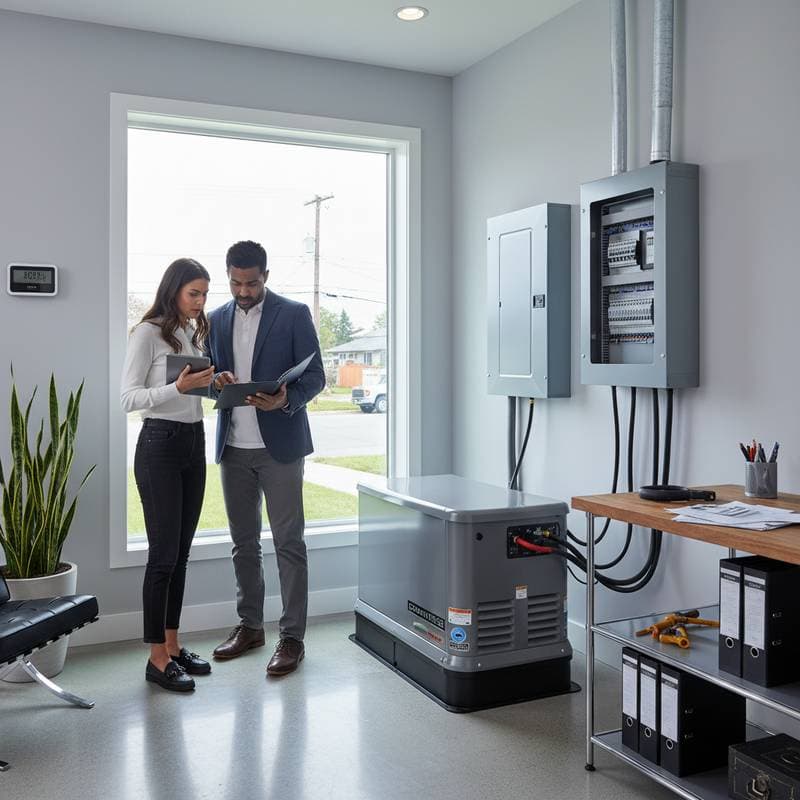
Safety considerations and code compliance matter. Work on generators involves energized circuits and flammable fuel. Improper connections risk feeding power back into utility lines and endangering line workers. Gas leaks create explosion hazards. Licensed electricians and plumbers must handle these elements.
DIY changes or missed service records can nullify manufacturer warranties and extended plans. Retain all invoices and maintenance documentation.
Options for Securing Coverage
Specialized providers now supply generator-specific service agreements. These operate differently from typical home warranties and resemble maintenance contracts with restricted repair support.
Common provisions include an annual tune-up and oil change, coverage for designated parts such as regulators or sensors, exclusions for neglect, fuel problems, or storm damage, and caps on payouts per visit.
Annual fees range from 300 to 800 dollars based on unit size and brand. Most agreements require the generator to meet age limits and receive service from approved technicians.
Owners who hold an existing home warranty should inquire about systems upgrade options. Such riders seldom include generators yet may address related electrical items like surge devices or smart panels.
Maintenance Practices and Expected Lifespan
Consistent care supports reliable operation.
- Activate the generator weekly for 10 to 15 minutes.
- Replace oil and filter after every 100 to 200 hours of runtime.
- Install a fresh battery every two to three years.
- Clear all vents and air intakes regularly.
Early signs of trouble include difficult starts or rough operation that point to fuel delivery issues, reduced voltage output that suggests worn brushes or a failing regulator, and repeated shutdowns that indicate a blocked filter or overheating.
Repair versus replacement decisions hinge on age. Units older than 15 years with major component failures usually cost more to fix repeatedly than to replace. Newer models deliver improved efficiency and quieter performance.
Steps to Protect Your Investment
Review current warranty documents to confirm exclusions. Schedule service with certified technicians to preserve any remaining coverage. Compare specialized generator plans from multiple providers before the next outage occurs. Track all maintenance to support future claims or resale value.