How Much Does Solar Panel Maintenance Cost? Home Warranty Exclusions Explained
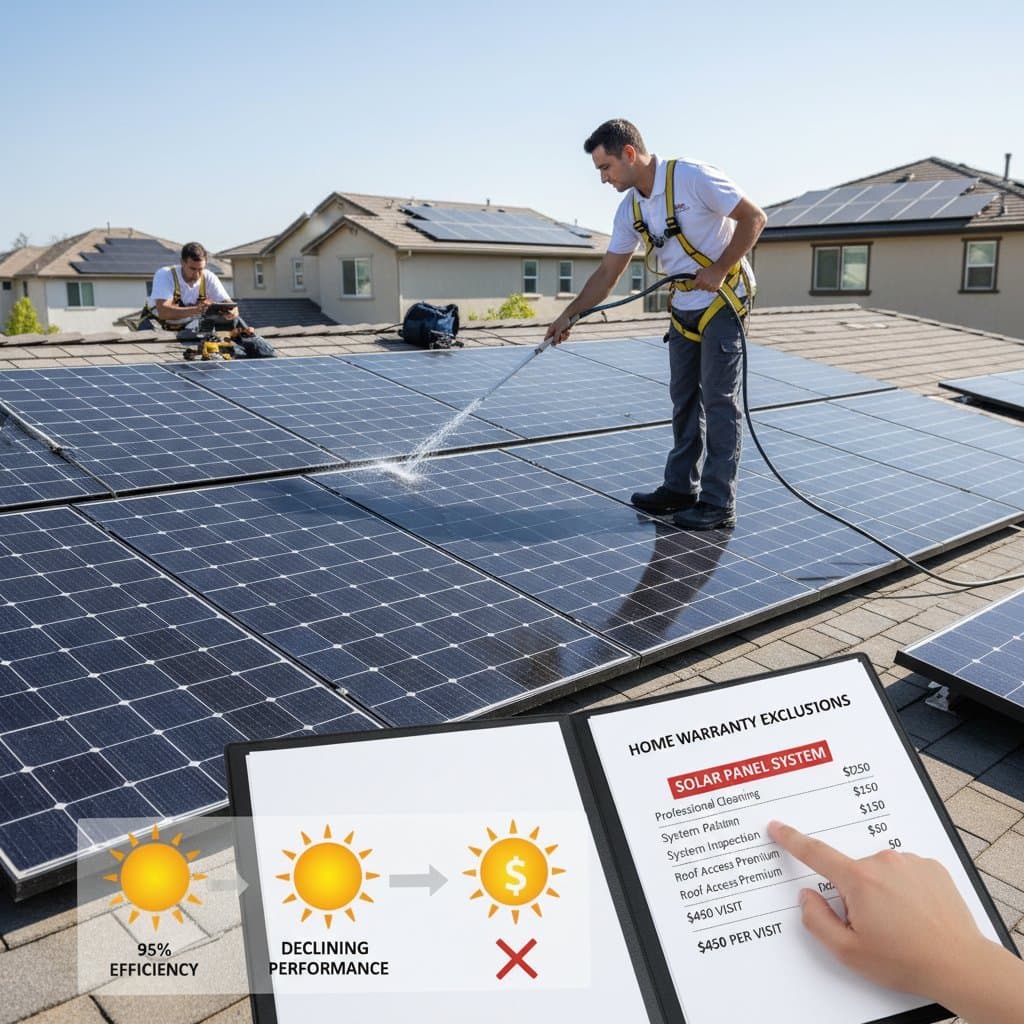
Solar panels deliver reduced energy bills and sustainable living, yet numerous homeowners discover that standard home warranties exclude coverage for these installations. Professional maintenance for solar panels typically ranges from $150 to $650 per visit, with an average expense of $400 for thorough cleaning and inspection. Additional tasks, such as inverter diagnostics or wiring evaluations, can increase the total further.
Costs depend primarily on three elements: the scale of the solar array, ease of access to the roof, and how often maintenance occurs. Expansive systems demand extended labor and specialized supplies, while challenging roof pitches necessitate advanced safety measures. Infrequent upkeep risks escalating repair bills. Most home warranties classify solar setups as optional features, not essential structural components. Data from EnergySage indicates that well-maintained panels retain up to 95 percent of their original output, whereas overlooked systems often fall below 80 percent efficiency.
Committing to routine maintenance secures optimal performance and prolongs equipment durability. Grasping warranty limitations alongside actual expenses empowers homeowners to budget effectively and sidestep unforeseen financial burdens.
Service Types and Comprehensive Pricing
Basic or Standard Service Package
A typical maintenance package covers essential checks and cleaning. It encompasses:
- Cleaning the surfaces of all panels to remove dust and grime
- Inspecting for visible damage like cracks or fading
- Examining mounting hardware and exposed wiring
- Reviewing basic inverter metrics
- Delivering a summary report on system status
For a standard 20-panel installation, this two-hour session costs $300 to $450. Such packages fit well for relatively new arrays serviced once a year. Technicians employ eco-friendly solutions and gentle tools to avoid surface abrasions that impair energy capture.
Premium or Comprehensive Service
Advanced packages provide deeper analysis and remediation. They include:
- Detailed electrical assessments of inverters and connection points
- Thermal scans to identify heat anomalies
- Clearing obstructions from nearby roof areas and drainage systems
- Comparing current output against expected benchmarks
Expect to pay $600 to $800 for these services, a 35 percent increase over basic options. In environments with heavy pollen, leaves, or pollutants, premium care proves indispensable for sustained production. Insights from Clean Energy Associates show that thorough evaluations boost annual energy gains by 5 to 10 percent, often recouping the investment through enhanced savings in under 12 months.
Add-On Services Matrix
| Add-On Service | Cost Range | Bundle Savings | Description |
|---|---|---|---|
| Microinverter Testing | $150-$300 | 10% if bundled | Verifies stable power delivery |
| Panel Re-sealing | $100-$250 | 15% if bundled | Seals edges against moisture |
| Bird Guard Installation | $200-$400 | 20% if bundled | Deters birds from roosting |
| Remote Monitoring Setup | $100-$150 | 5% if bundled | Enables app-based performance tracking |
Integrating extras into scheduled visits cuts costs by an average of 15 percent versus standalone bookings. Services listed on platforms like Thumbtack and Angi frequently see price matching during off-peak seasons.
Actionable Cost-Saving Strategies
Timing Optimization
Service rates shift with the calendar. Arranging visits in late spring or early autumn trims expenses by 10 to 15 percent amid reduced demand. Opt for weekdays over weekends, and leverage flexible timing for extra reductions.
Certain companies propose annual plans with two sessions for approximately $700, yielding 20 percent savings over individual calls.
Smart Shopping Tactics
Obtain quotes from at least three providers via EnergySage, Thumbtack, or HomeAdvisor. Present competing offers to negotiate matches. Upfront payments or long-term agreements often secure another 5 to 10 percent off.
Supplying your own basic supplies might lower small fees, but experts typically use superior products for better results.
Preparation Actions
Homeowners can trim bills through preparatory steps:
- Prune overhanging branches to eliminate shading, saving $50 to $100 in labor.
- Sweep away loose debris from the roof, cutting cleaning time and $25 to $50.
- Review monitoring logs to pinpoint issues, streamlining the technician's focus.
Discussing array configuration and component locations upfront with the service team minimizes on-site time and unexpected charges.
Market Dynamics and Considerations
Geographic Variations
Expenses differ across locations. Urban centers impose 15 to 25 percent higher labor fees due to demand. Remote areas might incur travel surcharges from scarce specialists. Regions near oceans demand more visits to combat salt buildup.
Arid or elevated zones, vulnerable to sand or snow accumulation, benefit from quarterly rather than yearly routines.
Market Timing
Rising material prices and skilled labor gaps have pushed rates up 5 to 8 percent yearly, adjusted for inflation. Advances in automated cleaning and digital diagnostics, however, shorten job durations and balance some increases.
Weighing Long-Term Value
Evaluate providers by their track record in efficiency gains and warranty adherence. Systems under consistent care not only maximize returns but also enhance property appeal. Homeowners who prioritize proactive maintenance report fewer disruptions and steadier energy savings, turning an upfront cost into enduring financial and environmental benefits.