Exposed: Home Warranty Gaps and Hidden Costs in 2025
Home warranties aim to deliver reassurance against the expense of repairing or replacing essential household systems and appliances. However, the detailed terms within these contracts frequently reveal restrictions, exclusions, and additional charges that catch homeowners off guard during claim processing. Gaining insight into actual coverage enables informed choices about the value these plans provide.
Summary Box
What it is:
A home warranty functions as a service agreement that covers the repair or replacement of major home systems and appliances when they malfunction from typical wear and tear.
Why it matters:
Numerous policies omit coverage for pre-existing defects, insufficient upkeep, and failures tied to building code violations, which can leave property owners responsible for substantial out-of-pocket expenses.
Typical cost and what changes it:
Annual premiums range from $500 to $900, with service call fees between $75 and $150. Factors such as home size, supplementary coverage options, and the age of installed systems influence the total price.
When to hire a pro:
Engage only the warranty provider's designated contractors, or obtain explicit written permission for alternatives. Repairs performed without approval risk invalidating the entire policy.
How long it takes:
Claims typically receive assignment to a technician within 48 hours, but delays in sourcing parts or coordinating schedules may extend the resolution to a full week or more.
Maintenance interval:
Conduct yearly evaluations of heating, ventilation, air conditioning, plumbing, and electrical components to prevent rejections based on claims of neglect.
How It Works
The process begins when a homeowner submits a claim for a malfunctioning covered item. The warranty provider then dispatches a qualified technician to assess the issue on-site. Following the diagnosis, the technician submits findings to the company for review against policy guidelines.
Approval hinges on adherence to contract stipulations, such as the absence of exclusions. Upon approval, the homeowner covers the designated service fee, while the provider handles remaining costs up to the specified per-item or aggregate limits. Denials occur if the failure falls outside defined parameters, prompting homeowners to explore appeal options or alternative funding.
Signs You Might Face a Denial
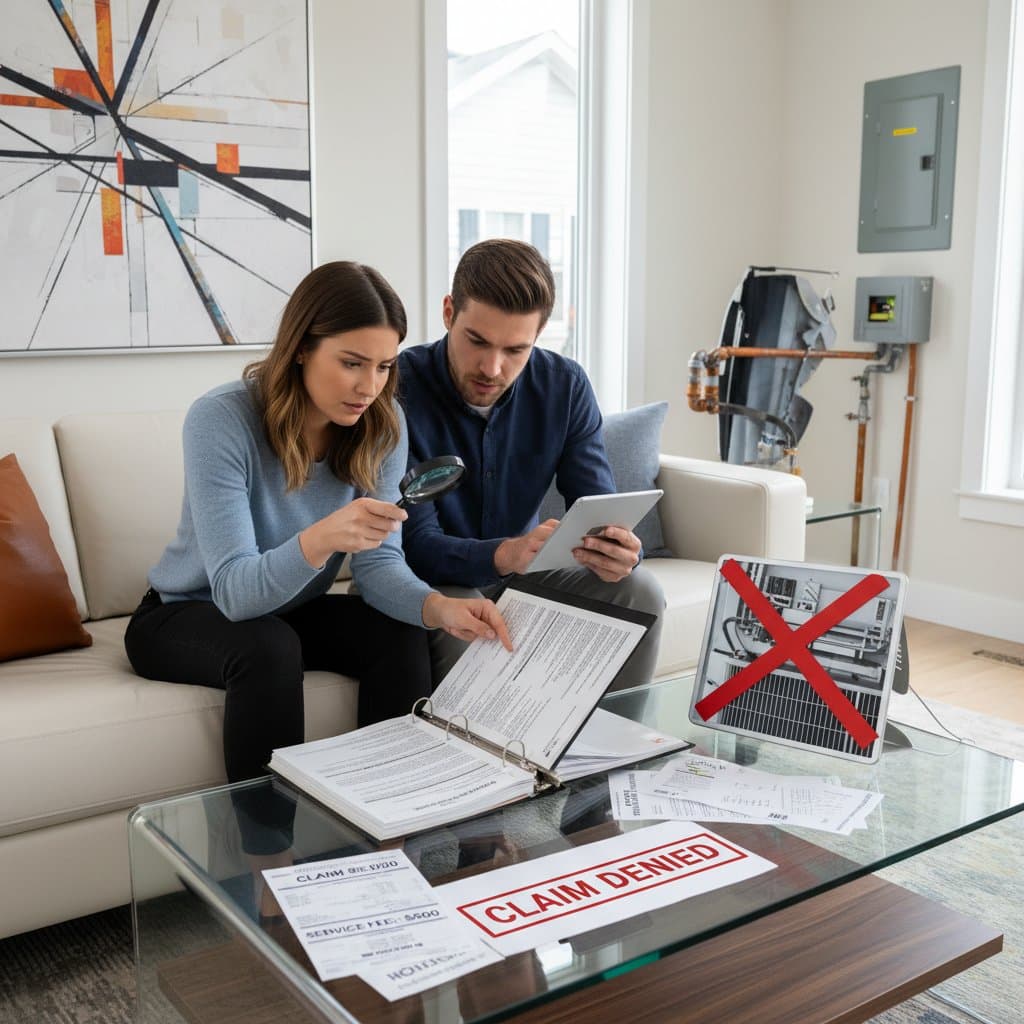
Homeowners should remain alert for indicators that a claim could encounter resistance. Technicians who provide ambiguous explanations for breakdowns often signal underlying issues like pre-existing wear. Requests for historical maintenance documentation further suggest scrutiny over upkeep standards.
Contract language referencing "unknown pre-existing conditions" serves as a common denial rationale, even for issues not immediately apparent at purchase. Additionally, when per-item caps fall short of genuine repair estimates, partial or full denials become likely. In such scenarios, demand a comprehensive inspection summary and a detailed written explanation of any rejection to build a case for reconsideration.
DIY vs Pro Repairs
Homeowners weigh options between self-repairs and professional intervention, but warranty terms heavily favor licensed experts. The table below outlines key considerations for common tasks.
| Category | DIY Level | Safety Risk | Tools Required | Permit or Code | Time Required | Warranty Impact |
|---|---|---|---|---|---|---|
| Appliance troubleshooting | Moderate | Low | Basic hand tools | No | 1 to 2 hours | Permitted if limited to diagnostics |
| HVAC service | High | High | Gauges, meters | Yes | 1 to 2 days | Demands licensed professional |
| Plumbing leak repair | Moderate | Medium | Pipe wrenches, sealant | Sometimes | 2 to 4 hours | Potential to nullify coverage |
| Electrical repair | High | High | Multimeter, safety gear | Yes | 1 day | Requires certified electrician |
Adhering to authorized service providers remains crucial for warranty-covered repairs. Independent actions, even well-intentioned, frequently trigger complete claim rejections and may jeopardize broader policy validity.
Maintenance and Lifespan
Consistent upkeep not only sustains warranty eligibility but also prolongs the operational life of home systems. For heating, ventilation, and air conditioning units, schedule professional inspections biannually and replace air filters quarterly to maintain efficiency and prevent strain-related failures.
Water heaters benefit from annual flushing to eliminate sediment accumulation, which otherwise accelerates corrosion and reduces heating performance. Plumbing systems require seasonal checks for leaks, clogs, and material degradation to avert costly water damage. Appliances demand routine cleaning of condenser coils, door seals, and ventilation paths to optimize functionality and minimize breakdown risks.
Well-maintained systems typically endure 10 to 15 years, depending on usage and environmental factors. Home warranties address repair expenses during this period but do not inherently prolong equipment durability; they serve as financial safeguards rather than preventive measures.
Regional Factors
Local conditions significantly influence warranty claims and maintenance needs. In regions with hot and humid climates, air conditioning units face accelerated coil corrosion, leading to elevated claim volumes and potential denials if preventive care lapses. Colder areas impose additional stress on furnaces through freeze-thaw cycles and on pipes via expansion risks, necessitating insulated protections.
Arid or dusty environments cause rapid filter clogging in ventilation systems, which providers may cite as neglect if unaddressed. Building codes vary by state; certain jurisdictions mandate licensed professionals for all covered work, and unpermitted modifications can bar claims entirely. Material choices also matter: plastic piping deteriorates quicker in extreme heat, while metal elements succumb to salt-induced corrosion near coastlines.
Steps to Secure Your Coverage
To maximize home warranty benefits, start by thoroughly reviewing contract details before enrollment, focusing on exclusion lists and cap amounts. Document all maintenance activities with dated records and receipts to substantiate claims. Select plans with flexible service networks and robust appeal processes for added protection.
When filing claims, provide precise descriptions of issues and avoid any unauthorized interventions. If a denial arises, promptly request documentation and consider third-party inspections to challenge decisions. By prioritizing proactive maintenance and informed selections, homeowners transform warranties from potential pitfalls into reliable assets against unforeseen repair demands.