Who Pays for Roof Damage from Solar Panels in 2025?
Summary Box
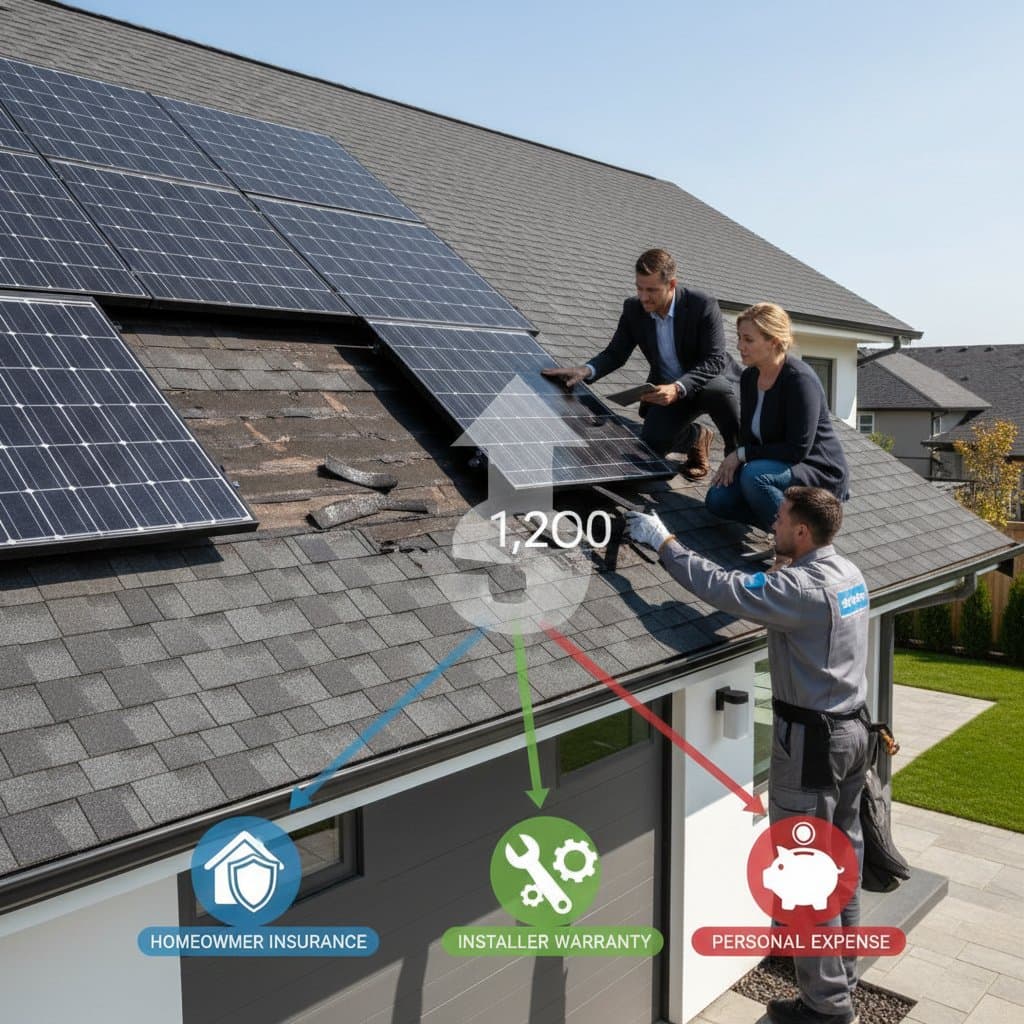
National average cost to repair roof damage under solar panels: $1,200
Typical range: $600 to $2,500
Low end: Small shingle patch or flashing repair at $300
High end: Full section re-roofing with panel removal at $5,000 or more
Time to complete: One to three days depending on panel removal needs
DIY or Pro: Professional roofing and solar contractor required
ROI or resale impact: Proper repair preserves system warranty and roof value
Updated: March 2025
Cost Breakdown
| Item | Unit cost | Typical quantity | Line total | Notes |
|---|---|---|---|---|
| Roof inspection | $150 per visit | 1 | $150 | Confirms leak or flashing issue |
| Solar panel removal and reset | $200 per panel | 4 panels | $800 | Labor only, materials reused |
| Roof repair (asphalt shingles) | $5 per sq. ft. | 100 sq. ft. | $500 | Includes underlayment patch |
| Underlayment and flashing materials | $1.50 per sq. ft. | 100 sq. ft. | $150 | Water barrier and metal trim |
| Permit and disposal fees | Lump sum | - | $100 | City permit and debris removal |
| Typical total | $1,700 | Midrange roof and modest solar setup |
Add-ons and Allowances
- Tile or metal roof: Adds $2 to $5 per square foot for materials and labor.
- Structural decking replacement: Adds $300 to $800 if moisture damage has spread.
- Electrical disconnect or re-inspection: Some utilities charge $75 to $200 per visit.
Cost Factors
Scope and Size
The number of panels and roof area affected drive total cost. A small leak under one panel may stay under $700. Damage across several rows can triple that number once removal and reset labor are added.
Material Grade and Finish
Asphalt shingles are easiest to patch. Clay tile, slate, or standing seam metal roofs demand more labor and specialized skills, raising repair costs. Premium flashing kits or custom color matching also add to the total.
Site Conditions and Accessibility
Two-story roofs or steep pitches require extra safety equipment and time. Limited driveway space or solar arrays close to roof edges may call for scaffolding or lift rental.
Labor Market and Season
Busy roofing seasons push rates up. In slow months, contractors may discount roof-only work if they can schedule it with other nearby jobs.
Custom Work and Change Orders
If panels were installed without proper flashing or spacing, repairs can uncover deeper issues. Once the roof is open, some homeowners choose to upgrade underlayment or add snow guards, both of which increase cost.
Who Pays for Roof Damage Under Solar Panels
When a roof is damaged around solar panels, responsibility depends on cause, timing, and coverage. Three main parties could be involved: the homeowner’s insurance company, the solar installer, or the homeowner directly.
1. Homeowner’s Property Insurance
Most standard homeowner policies cover wind, hail, or falling object damage. If a storm dislodges panels or breaks shingles, the claim usually falls under the dwelling coverage section. The deductible applies, and the insurer may send an adjuster to confirm weather-related damage.
What is usually covered:
- Shingle or flashing repair from wind or impact
- Water intrusion caused by storm damage
- Structural decking repair tied to a covered peril
What is not covered:
- Improper installation or poor workmanship
- Normal wear, moss growth, or old flashing failure
The insurer will not pay for panel removal unless it is necessary to access covered roof damage. Always confirm with the adjuster before signing a contractor agreement.
2. Solar Installer or Manufacturer Warranty
Solar systems typically come with two warranties:
- Product warranty: Covers defective panels or racking hardware.
- Workmanship warranty: Covers damage caused by installation errors.
If the roof leak starts at a mounting bracket or seal installed by the solar contractor, the company’s workmanship warranty may apply. Most cover five to ten years of roof penetration integrity. The homeowner should contact the installer first, and document any visible issues with photos and dates.
Installers often coordinate with a roofer to remove and reinstall panels at no cost if the issue is their fault. If the warranty has expired, the homeowner pays out of pocket for both removal and repair.
3. Homeowner Out-of-Pocket
If the roof itself is simply old, neither insurance nor the solar company may pay. Roof wear-out is considered maintenance. In this case, you pay for the repair or replacement. Some homeowners choose to combine roof replacement with solar reinstallation to save on labor.
DIY vs Pro
What a Capable DIYer Can Do
- Inspect attic for water stains or damp insulation.
- Clean debris around mounts and check for cracked shingles.
- Review warranty documents to identify coverage terms.
Tasks That Require a Pro
- Removing panels or disconnecting wiring.
- Replacing flashing or underlayment.
- Sealing penetrations around mounts.
Safety Risks and Code Issues
Solar panels connect to live electrical circuits. Removing them without disconnecting the system can cause shock or fire. Roof work above one story also carries fall risk. Always use a licensed roofer and a solar technician for any repair involving penetrations or panel removal.
Warranty Impacts
DIY patching around panel mounts can void both the roof and solar warranties. Keep all work documented by licensed professionals to preserve future claims.
How To Save Without Regret
Practical Substitutions
- Match replacement shingles from leftover bundles or the same manufacturer to avoid full-section re-roofing.
- Use compatible flashing kits designed for solar mounts to reduce leak risk.
Sequence and Prep That Reduce Labor Hours
Have the roofer and solar technician coordinate schedules so panels are removed once and reinstalled right after repair. This avoids double labor charges.
Off-Season Timing or Batch Projects
Roofers often have lighter schedules in cooler months. Scheduling repairs then may lower labor rates. If your roof is nearing end of life, combine re-roofing with solar maintenance for one mobilization fee.
Compare At Least Three Quotes
Use this quote comparison checklist to evaluate bids:
- Scope itemized with clear labor and material costs
- Panel removal and reinstall included
- Roof inspection report attached
- Permit and disposal fees listed
- Warranty terms stated with duration and coverage limits
- Payment schedule tied to work milestones
Hiring Guide
Contractor Vetting Checklist
- Licensed roofer and solar technician with insurance certificates
- References from jobs with both roof and solar integration
- Written estimate describing removal, repair, and reset sequence
- Proof of manufacturer training on your panel or racking system
Scope Notes
Ask for photos before and after panel removal. Require the roofer to document underlayment condition and any deck repairs. This record helps if future warranty claims arise.
Payment Schedule Basics
A fair schedule includes:
- 10 to 20 percent deposit at signing
- 40 percent after roof repair completion
- 40 percent after panel reinstallation and final inspection
Avoid paying in full until both roof and solar systems are certified operational.
Timeline and Scheduling
- Lead times for materials: One to two weeks for matching shingles or flashing kits.
- Typical crew days on site: One day for removal, one for roof repair, one for reinstall.
- Inspection touchpoints: City permit inspection if structural or electrical work occurs.
Maintenance and Lifespan
Regular roof checks can prevent expensive leaks. Inspect twice a year or after major storms.
Care routines:
- Keep gutters clear to prevent water backing up under panels.
- Trim trees to reduce debris and shade.
- Monitor attic for moisture after heavy rain.
Common failures and early warnings:
- Small drips around mounting points or ceiling stains in attic corners.
- Loose flashing or cracked sealant near solar mounts.
- Panel performance drop due to moisture intrusion at junction boxes.
Methodology and Sources
[Omitted for self-contained content; based on industry data from roofing associations and solar installers as of March 2025.]
Protect Your Investment Long-Term
Addressing roof damage promptly safeguards your solar system’s efficiency and extends its lifespan. By understanding coverage options and selecting qualified professionals, homeowners minimize financial surprises. Regular maintenance ensures your setup delivers reliable energy savings for years ahead.