Understanding Electrical Coverage in Your 2025 Home Warranty
Electrical systems in homes and offices function reliably until a sudden issue arises, such as a tripped circuit, failed breaker, or flickering light. A home warranty provides financial relief for such repairs, provided you understand its scope. Many property owners mistakenly believe that all electrical fixes qualify for coverage. In reality, 2025 warranties deliver robust protection only when terms are reviewed thoroughly and upgrades are planned with precision.
This resource clarifies typical coverage areas, distinguishes between repairs and upgrades, and identifies situations that require a licensed electrician. It also outlines costs for common electrical projects to help align warranty benefits with practical expenses.
Cost Breakdown
| Item | Unit cost | Typical quantity | Line total | Notes |
|---|---|---|---|---|
| Electrical panel upgrade (100 to 200 amps) | $1,200 to $2,500 | 1 | $1,200 to $2,500 | Often covered if the panel fails or poses safety risks |
| Circuit rewiring | $6 to $10 per linear foot | 200 ft | $1,200 to $2,000 | Coverage applies to damaged wires in most cases |
| GFCI or AFCI outlet install | $60 to $150 each | 4 | $240 to $600 | Typically covered when replacing defective outlets |
| Light switch replacement | $75 to $150 each | 3 | $225 to $450 | Included under electrical fixture repairs |
| Whole-home surge protection | $300 to $800 | 1 | $300 to $800 | Possible coverage under premium plans as an upgrade |
| Labor (licensed electrician) | $85 to $150 per hour | 10 hours | $850 to $1,500 | Rates vary by region |
| Permit and inspection | $50 to $250 | 1 | $50 to $250 | Generally excluded from warranty coverage |
Typical Coverage Under a 2025 Warranty
Standard electrical provisions safeguard essential power distribution components. These elements receive protection:
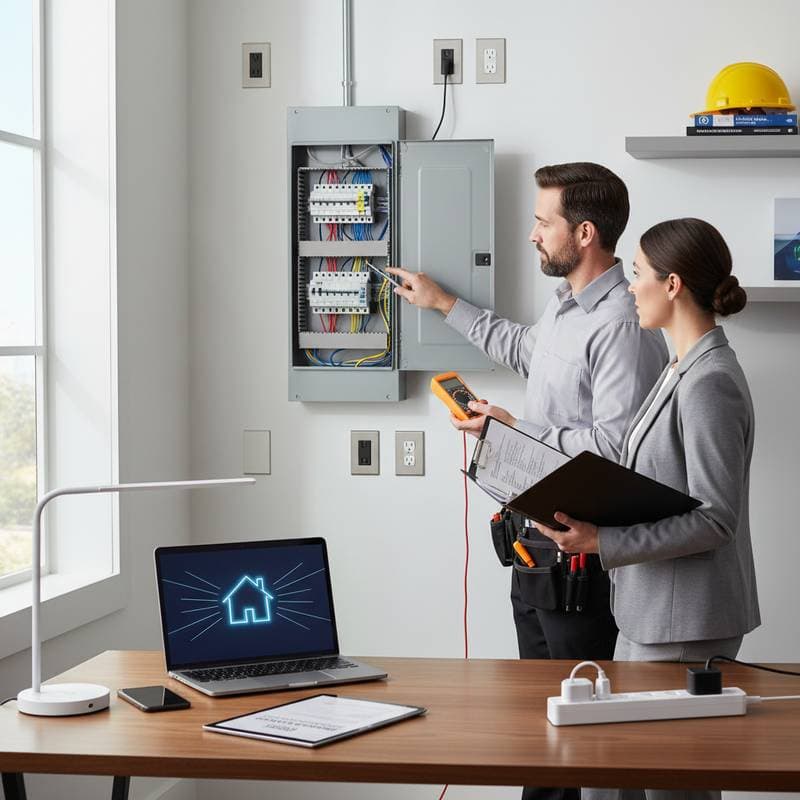
- Main electrical panels and subpanels
- Interior wiring and junction boxes
- Standard outlets and switches
- Breakers and fuses
- GFCI (ground fault circuit interrupter) and AFCI (arc-fault circuit interrupter) devices during replacement of failed units
- Ceiling fan wiring and fixture mounts, limited to electrical failures rather than mechanical issues
Exclusions commonly apply to the following:
- New circuits or rewiring associated with renovations
- Smart lighting systems or integrated home automation
- Solar power integrations
- Exterior wiring, landscape lighting, or pool-related circuits
- Capacity upgrades unless directly tied to safety concerns
Warranty providers cover repairs or replacements for failures stemming from normal wear, aging, or manufacturing defects, up to the policy limit. Requests for higher-capacity breakers or additional circuits to accommodate electric vehicle chargers or office setups qualify as upgrades outside standard terms.
Strategies to Manage Costs Effectively
Electrical projects escalate in expense rapidly. Implement these approaches to control budgets while upholding safety protocols.
- Consolidate tasks. During a remodel, group all electrical requirements into a single initiative. This reduces labor time as professionals address multiple elements simultaneously.
- Select standard materials. Mid-range outlets, switches, and breakers deliver equivalent performance to luxury options. Reserve premium selections for prominent locations.
- Review allowance provisions. Certain warranties allocate a fixed reimbursement per service. Awareness of these limits avoids unexpected charges.
- Schedule strategically. Opt for off-peak periods to lower rates. Appointments in winter or on weekdays frequently prove more economical.
- Obtain several estimates. Secure bids from at least three qualified contractors for comparison.
Essential Elements for Quote Evaluation
- Itemized project scope
- Specified material grades and brands
- Inclusion of surface preparation and cleanup
- Coverage of permits and waste disposal
- Defined warranty conditions and completion timeline
- Milestone-based payment structure
Detailed quotes facilitate precise alignment between warranty entitlements and project expenditures.
Project Timelines and Coordination
Approved electrical work progresses efficiently, though interruptions may occur due to material availability or regulatory reviews.
Lead times for materials vary. Local suppliers stock panels and breakers routinely. Specialized or intelligent components might require one to two weeks for delivery.
On-site crew durations differ by task:
- Panel upgrade: One day for installation, followed by one day for inspection
- Rewiring: Two to three days, based on accessibility
- Outlet or switch replacement: Half a day
Inspections occur at key stages. Authorities verify service panels, grounding systems, and breaker labels. Arrange these checks prior to enclosing work with drywall or finishes.
Considerations by Region
Warranty specifics differ across locations. Certain states mandate distinct permits for panel enhancements or grounding corrections. Labor costs peak in urban and coastal zones, reaching $150 per hour. Rural areas align closer to $85 per hour. Verify that your warranty network includes vetted professionals in your vicinity prior to submitting claims.
Aligning Repairs with Policy Terms
Navigating electrical enhancements demands preparation, yet a comprehensive warranty mitigates substantial risks. Prioritize transparency in your approach. Familiarize yourself with policy inclusions, maintain meticulous records, and insist on certified workmanship alongside required inspections. Position the warranty as a safeguard for vital safety measures, distinct from aesthetic or lifestyle enhancements.
Coordinate discussions with your warranty advisor and electrician concurrently before commencing significant efforts. This ensures separation of reimbursable repairs from optional improvements. Through organized records and deliberate strategy, your 2025 warranty addresses the financial demands of electrical integrity, empowering you to oversee enhancements that elevate functionality and ease.
Basis for Estimates and Coverage Insights
The presented costs and provisions draw from nationwide averages, insights from contractors, and data from home service operations. Actual figures fluctuate with geographic factors, workforce dynamics, and individual warranty guidelines. Consult your specific policy to confirm limits and exceptions.