Greywater Systems: What Home Warranties Actually Cover
Greywater systems recycle wastewater from sinks, bathtubs, and laundry appliances for uses such as irrigation or toilet flushing. These systems decrease water consumption and lower utility expenses, yet breakdowns reveal that warranty coverage lacks the clarity homeowners anticipate. This guide details typical inclusions and exclusions in home warranties, along with strategies to safeguard investments during and after installation.
Advantages, Disadvantages, and Ideal Applications
Advantages
- Lowers water bills and eases pressure on municipal water supplies.
- Supplies consistent irrigation during periods of drought.
- Boosts property value in regions enforcing water conservation measures.
- Alleviates burden on septic systems.
Disadvantages
- Initial expenses exceed those of conventional plumbing setups.
- Filters and pumps demand regular cleaning and eventual replacement.
- Certain local regulations restrict indoor reuse unless certified treatment units are employed.
- Inadequate maintenance may result in odors or bacterial proliferation.
Ideal Applications
Greywater systems benefit homeowners committed to long-term residency, possessing foundational plumbing expertise, and residing in areas that incentivize conservation via rebates or reduced utility rates.
Installation Process
Required Preparations
- Safety equipment: Gloves, safety glasses, and sturdy boots.
- Permits: Plumbing permit, potentially supplemented by environmental health evaluation.
Detailed Steps
- Evaluate plumbing configuration. Identify greywater sources and verify separation from blackwater lines.
- Plan the system. Determine storage tank dimensions and choose filtration method.
- Obtain permits. Provide plans illustrating pipe routing, backflow prevention, and discharge areas.
- Install collection piping. Employ pipes with a minimum 1.5-inch diameter and appropriate slope.
- Position tanks and filters. Secure tanks on stable bases, incorporate backflow valves, and attach filters according to manufacturer guidelines.
- Conduct leak and flow tests. Activate water through each fixture and check for cross-connections.
- Link to irrigation or toilet lines. Adhere to local codes regarding distances from potable water systems.
- Arrange for inspection. Local jurisdictions typically mandate approval by a plumbing inspector prior to backfilling trenches.
Professional teams complete installations in two to five days, contingent on project scale. DIY efforts may extend to a week or longer, particularly with manual trenching.
Typical Home Warranty Coverage
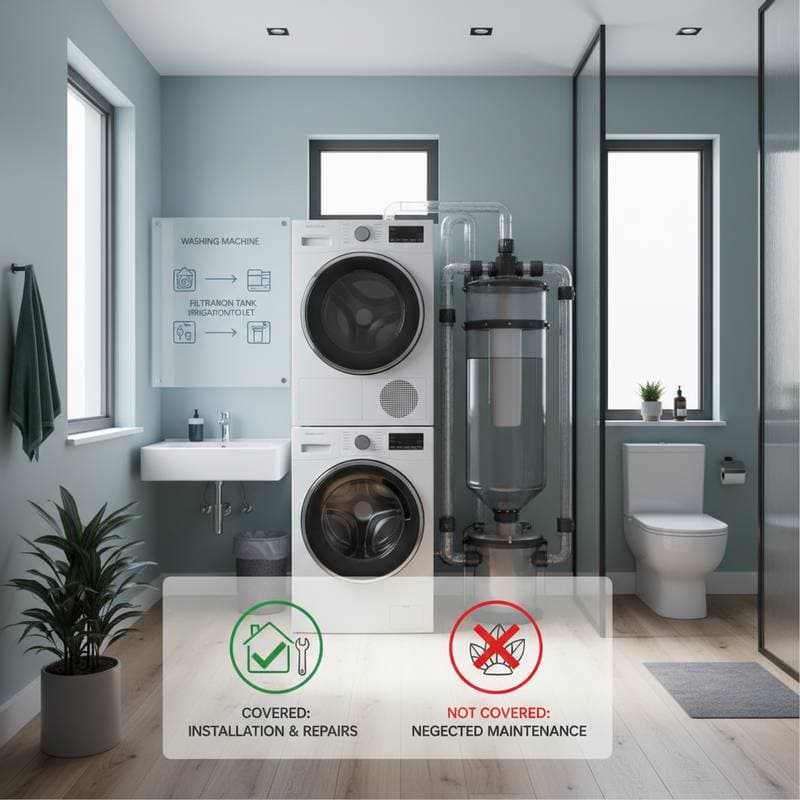
Home warranties seldom encompass greywater systems comprehensively. Coverage generally extends to mechanical elements rather than plumbing or storage tanks. Standard policies address:
- Repair or replacement of pump motors.
- Malfunctions in control panels or sensors.
- Failures in pressure switches or relays.
- Leaks arising from ordinary wear on mechanical seals.
Exclusions frequently apply to:
- Filters, strainers, and valves classified as maintenance components.
- Damage from sediment buildup, freezing, or misuse.
- Plumbing modifications or tank leaks.
- Non-conventional systems or those installed without professional assistance.
Review the plumbing and appliance provisions in the policy contract for verification. Certain providers categorize greywater systems under optional environmental add-ons, incurring additional premiums.
Common Pitfalls to Sidestep
- Neglecting permits. Systems without approval often invalidate warranty and insurance protections.
- Merging greywater with blackwater. Such integration breaches codes and invites penalties.
- Overlooking maintenance schedules. Clean filters every two to four months based on usage volume.
- Selecting undersized tanks. Insufficient capacity leads to overflows and pump overload.
- Employing aggressive detergents. Products containing phosphates or bleach harm vegetation and clog filters.
Guidelines for Professional versus DIY Installation
Apply the DIY Gate Framework to inform decisions.
- Assess skill alignment. Fundamental plumbing and basic electrical knowledge prove essential. Individuals lacking experience with PVC cutting or joining should engage professionals.
- Evaluate safety concerns. Installations linked to indoor plumbing or powered pumps necessitate inspections and ground-fault circuit interrupter outlets.
- Verify tool access. Essential items include pipe cutters, trenching equipment, and voltage testers.
DIY approaches suit straightforward gravity-fed irrigation systems with external discharge. Engage licensed plumbers for projects involving indoor elements, pumps, or regulatory compliance. Errors risk contamination, leaks, or rejected claims.
Evaluating Contractor Proposals
Solicit at least three detailed bids prior to selection. The following table facilitates comparison.
| Line Item | Specification or Scope | Contractor A | Contractor B | Contractor C | Variance Notes |
|---|---|---|---|---|---|
| Tank Capacity | 100 gallons, polypropylene | $800 | $900 | $850 | Comparable materials |
| Pump and Controls | 1/2 HP submersible, GFCI circuit | $950 | $1,100 | $1,000 | Verify warranty inclusion |
| Filtration and Valves | Dual-stage filter with bypass | $600 | $700 | $650 | Inquire about replacement costs |
| Labor and Permits | Includes inspection | $1,200 | $1,400 | $1,250 | Request timeline estimates |
Confirm each contractor's licensing, insurance credentials, and expertise in greywater regulations.
Pre-Installation Readiness Checklist
- Confirm local codes permit greywater systems and identify required certifications.
- Measure daily greywater production to size components accurately.
- Inspect existing plumbing for compatibility and separation from blackwater.
- Budget for initial costs plus ongoing maintenance expenses.
- Research warranty providers offering greywater add-ons.
- Select eco-friendly, biodegradable detergents for system longevity.
Securing Long-Term System Performance
Integrating a greywater system demands careful planning to maximize benefits while minimizing risks. By understanding warranty limitations and adhering to best practices in installation and upkeep, homeowners achieve substantial savings on water costs and contribute to environmental sustainability. Consult professionals early to tailor the setup to specific property needs, ensuring reliable operation for years ahead.