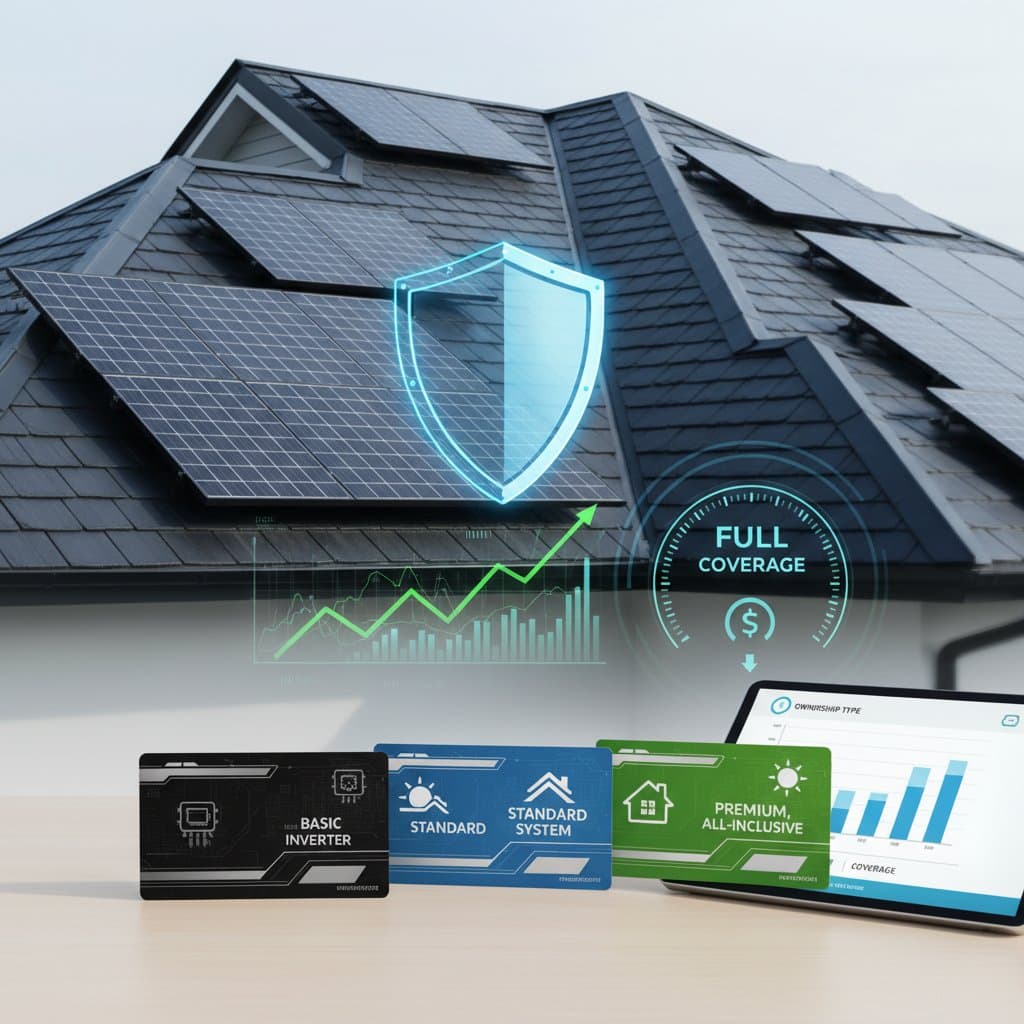
Solar Panel Coverage: A Comprehensive Home Warranty Guide
Solar panels revolutionize energy production for homeowners, cutting utility expenses and boosting property values. Installation for a standard system typically ranges from $15,000 to $30,000, with an average expenditure of $22,500. Many homeowners question whether home warranties extend to solar panels. Coverage differs considerably based on provider, system configuration, and installation approach.
Three primary elements dictate eligibility for warranty protection: ownership of the system, type of warranty selected, and details of the installation. Systems owned outright and installed by certified professionals frequently receive partial coverage, whereas leased or third-party owned systems rarely qualify. Maintaining thorough documentation and service records proves essential for approval. Data from the Solar Energy Industries Association indicates that superior solar installations can lower energy costs by as much as 70 percent over their operational life, underscoring the value of warranty safeguards for this substantial investment.
Key Aspects of Solar Panel Warranty Coverage
Standard home warranties prioritize essential systems like plumbing, heating, ventilation, air conditioning, and electrical infrastructure. Certain providers extend optional riders specifically for solar components. Such coverage often encompasses inverter maintenance, mounting hardware, and select electrical elements. Solar panels themselves benefit from manufacturer warranties extending up to 25 years, positioning home warranties as complementary rather than primary protection.
Core Pricing Framework
Add-on warranties for solar panels range from $15 to $50 monthly, varying with the provider and extent of protection. The nationwide average stands at approximately $30 per month, equating to $360 yearly. Service call fees typically fall between $75 and $125 per incident. At the lower end, basic electrical safeguards cost around $180 annually, whereas full-spectrum plans including inverters surpass $500 per year.
Influential Coverage Variables
System Dimensions and Output
Larger solar arrays demand higher premiums due to increased components and vulnerability. Each additional kilowatt raises monthly costs by roughly $5. A 6-kilowatt setup might incur a $25 premium, while a 10-kilowatt array could climb to $45.
Component Standards and Manufacturers
High-end brands like SunPower or REC provide strong built-in warranties, lessening reliance on supplemental coverage. Lower-tier panels with reduced durability warrant extra protection. Manufacturer policies address performance output, whereas home warranties handle labor and auxiliary parts.
Installation Demands
Factors such as roof configuration, mounting angle, and access difficulty affect pricing. Ground-based installations simplify servicing and lower insurance rates. Roof setups on taller structures elevate labor expenses by up to 20 percent. Areas prone to severe weather face elevated premiums from heightened repair probabilities.
Home Warranty Options Featuring Solar Protection
Providers including American Home Shield, Choice Home Warranty, and Liberty Home Guard provide elective solar riders. While base plans address general electrical systems, these add-ons target inverters, support structures, and monitoring devices.
Essential Coverage Packages
Fundamental solar plans usually cover the following:
- Inverter repairs or replacements capped at $1,000
- Wiring linked to the solar setup
- Adjustments to mounting hardware
- Labor for approved fixes
These options average $20 to $35 monthly, ideal for owners of recent installations backed by solid manufacturer terms seeking assurance against routine electrical concerns.
Advanced Coverage Packages
Upper-tier plans incorporate production tracking, battery integration, and higher repair caps. They command 25 to 40 percent more than basics yet offset major failures costing thousands. Battery add-ons, for instance, add $10 to $15 monthly but shield assets valued over $5,000.
Complementary Add-Ons
Pair solar protection with these enhancements:
- Roof leak safeguards ($10 to $20 monthly)
- Electrical enhancement coverage ($15 to $25 monthly)
- Smart home device protection ($5 to $10 monthly)
Bundling frequently yields 10 to 15 percent savings, particularly via aggregator sites like HomeAdvisor or Angi.
Weighing Professional Service Against Self-Management
Certain homeowners opt for independent solar upkeep, though this approach incurs overlooked expenses.
Expenses of Independent Maintenance
Inverter replacements range from $1,000 to $2,500. Diagnostic tools and safety gear add $200 to $400. Inspections demand 10 to 15 hours, and mishaps risk nullifying original warranties. A single significant repair may total over $2,000, excluding lost time.
Benefits of Expert Involvement
Licensed technicians uphold warranty terms and prioritize safety. They resolve issues swiftly, often in fewer than two hours. Their liability coverage and quality assurances provide $500 to $1,000 in added value per event. Long-term, professional input reduces recurring fixes and sustains eligibility.
Effective Tactics for Lowering Warranty Expenses
Strategic Enrollment Timing
Enroll during quieter installation seasons to capture up to 15 percent discounts. Providers reward bundling add-ons with fresh contracts.
Quote Comparison Practices
Obtain at least three estimates from national and local firms. Scrutinizing limits and fees uncovers up to 40 percent variances in identical coverage.
System Preparation Steps
Regular cleaning, serial number logging, and invoice retention expedite claims, trimming $100 per incident via prompt processing and dispute avoidance.
Emerging Patterns in Solar Protection
The solar warranty landscape evolves with rising adoption rates. Providers increasingly integrate battery and smart monitoring into standard offerings, driven by federal incentives and technological advances. Homeowners in sunny regions report 20 to 30 percent higher claim frequencies for weather-related wear, prompting tailored regional plans.
Securing Long-Term Solar Benefits
Home warranties fill critical voids in solar protection, mitigating unforeseen expenses and upholding efficiency. Select plans by assessing system maturity, part reliability, and nearby technician access. This targeted approach preserves your investment, ensures reliable output, and amplifies energy independence for years ahead.