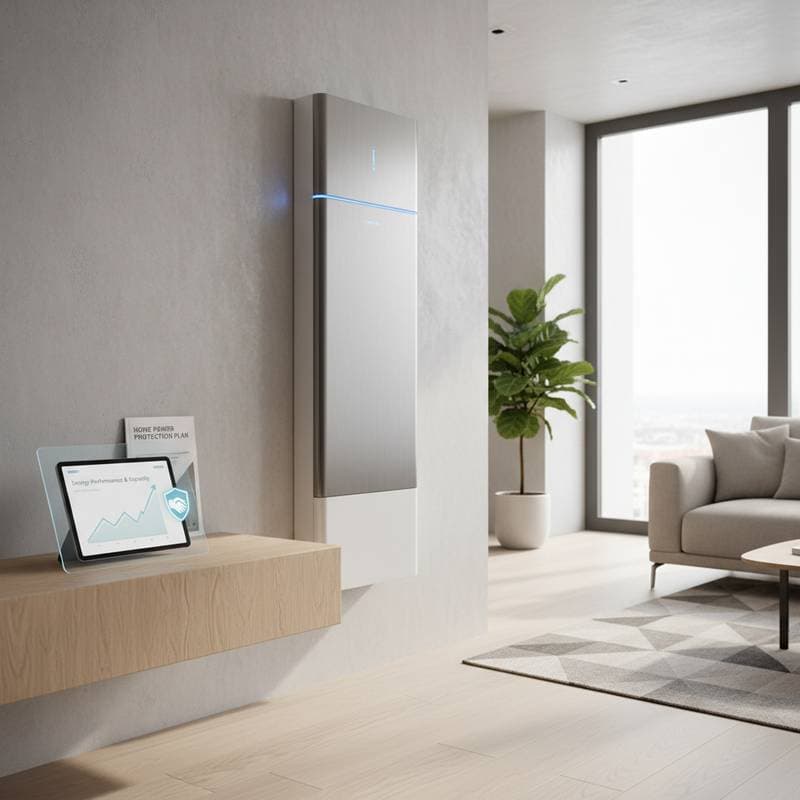
Home Battery Warranties: Key Coverage Revealed
Summary Box
What it is: A home battery warranty provides coverage for repair or replacement of an energy storage system if it fails within a specified period or usage threshold.
Why it matters: Energy storage systems represent a significant investment that experiences gradual degradation. A comprehensive warranty safeguards this investment and maintains reliable backup power.
Typical cost and what changes it: Installed home batteries range from 8,000 to 16,000 dollars. Extended or broader warranties typically increase the total cost by 500 to 1,000 dollars.
When to hire a pro: Engage a licensed electrician or certified solar installer for diagnostics, replacements, or disputes over capacity.
How long it takes: Processing a warranty claim generally requires 2 to 6 weeks, including evaluation and service execution.
Maintenance interval: Conduct annual inspections and apply software updates to sustain warranty validity.
Anatomy of Coverage
A complete warranty for home batteries encompasses multiple components that address different aspects of system reliability.
- Product warranty: This protects against manufacturing defects and unexpected failures of individual components, such as cells or controllers.
- Performance warranty: Manufacturers guarantee that the battery retains at least 60 to 80 percent of its initial storage capacity after a defined number of years or cycles.
- Cycle limit: Coverage applies up to a certain number of full charge-discharge cycles, often ranging from 6,000 to 10,000, depending on the model.
- Throughput limit: The warranty specifies the total energy throughput in kilowatt-hours, typically 10 to 20 times the battery's capacity, after which performance guarantees may end.
- Installer or workmanship warranty: This covers issues arising from improper installation, including faulty wiring, insecure mounting, or integration problems with solar panels.
- Transfer policy: Provisions detail if the warranty remains attached to the property or transfers to a subsequent owner, often requiring notification within 30 days of sale.
Degradation occurs due to factors like usage patterns, environmental temperatures, and charging frequencies. Understanding these elements enables homeowners to identify coverage triggers and avoid unexpected repair expenses that could reach several thousand dollars.
How to File a Claim
Filing a warranty claim follows a structured process, provided documentation remains organized and accessible.
- Gather documentation: Compile the original purchase receipt, installation certificate, and ongoing performance logs from the system's monitoring software.
- Notify the installer: Reach out to the certified professional who handled installation; they verify initial functionality and initiate the formal claim with the manufacturer.
- Provide test results: Expect requests for remote data analysis or a professional on-site evaluation to confirm the issue, such as reduced capacity or component malfunction.
- Await approval: Upon verification, the manufacturer arranges for a replacement module shipment or coordinates repair services through an authorized technician.
- Verify warranty terms post-resolution: Replacement units may carry over the remaining original warranty period, or in some cases, initiate a fresh warranty term based on the manufacturer's policy.
Maintaining thorough records and prompt communication minimizes processing delays and resolves potential disputes efficiently.
DIY vs Pro
Homeowners must weigh skill levels against risks when considering maintenance tasks. The following table outlines key considerations for common activities.
| Skill Level | Safety Risk | Tools Required | Permit or Code | Time Required | Warranty Impact |
|---|---|---|---|---|---|
| Basic monitoring or cleaning | Low | Multimeter, soft brush | None | 30 minutes | None |
| Capacity testing | Medium | Energy meter, diagnostic software | Local electrical code may apply | 1 to 2 hours | Possible invalidation if equipment damage occurs |
| Module replacement | High | Specialized electrical tools, personal protective equipment | Requires licensed electrician | 1 day | Warranty voided unless performed by authorized professional |
Interventions involving the primary battery unit or inverter demand certified expertise. Unauthorized modifications not only nullify warranty protections but also contravene electrical safety regulations.
Maintenance and Lifespan
Lithium-ion home batteries typically endure 10 to 15 years with standard usage cycles. To uphold warranty conditions and extend operational life:
- Update firmware regularly via the dedicated monitoring application to address performance optimizations and security vulnerabilities.
- Prevent discharges below 10 percent of total capacity to reduce stress on internal cells.
- Ensure operating temperatures stay within 50 to 90 degrees Fahrenheit to avoid accelerated degradation from heat or cold.
- Arrange professional inspections annually to detect early signs of wear, such as corrosion or connection issues.
Consistent adherence to these practices mitigates premature capacity loss and ensures the system qualifies for full warranty benefits.
FAQs
What happens if my battery loses capacity faster than expected? Manufacturers often include prorated replacement options under performance warranties, where diminished output triggers partial or full coverage based on retained percentage.
Do warranties cover batteries installed with solar systems? Yes, but integration-specific terms apply; workmanship warranties address compatibility issues between the battery and photovoltaic components.
Can extreme weather void my warranty? Coverage remains intact for weather-related failures unless neglect, such as improper enclosure, contributes to the damage.
How do I know if my installer warranty applies? Review the contract for labor coverage duration, typically 1 to 5 years, separate from the product warranty.
What if I move before the warranty expires? Transferable warranties require documentation submission; non-transferable ones end with the sale, potentially reducing property value.
Securing Long-Term Reliability
Prior to purchasing a home battery system, examine the warranty documentation in detail. Evaluate guarantees on capacity retention, inclusion of labor costs, and provisions for ownership changes. Retain all installation paperwork and review system performance on a monthly basis through integrated apps. This proactive approach guarantees that your energy storage solution delivers dependable, secure power throughout its service life.