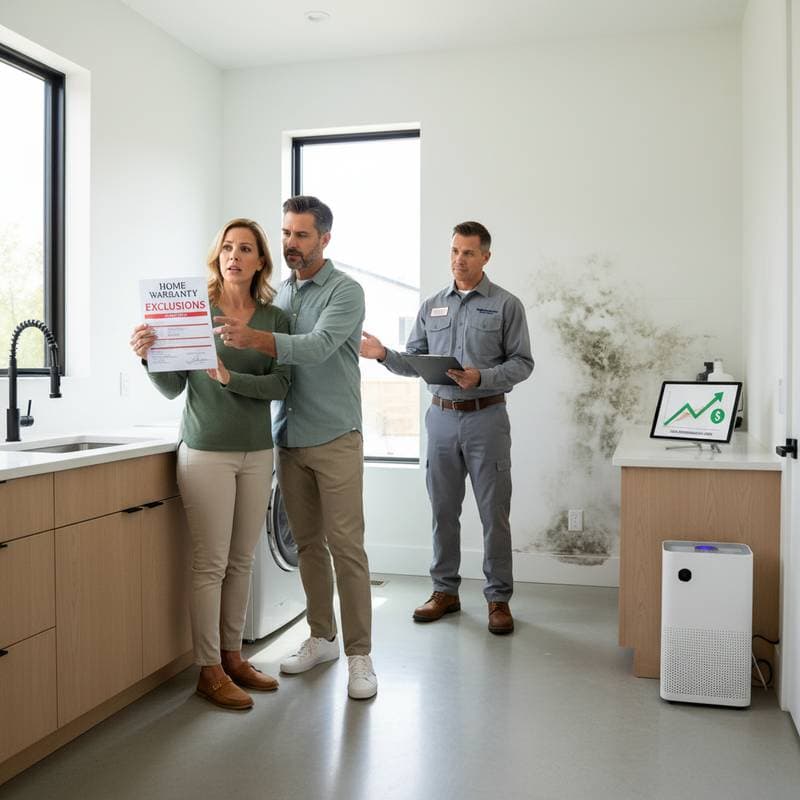
Why Home Warranties Typically Exclude Mold Damage in 2025
Mold represents a common yet elusive challenge in home maintenance. It develops silently within walls, beneath floors, or inside heating, ventilation, and air conditioning systems. By the time visible signs emerge, the infestation has progressed significantly. Homeowners often assume that a home warranty will address mold removal, yet such coverage proves scarce. A clear grasp of warranty inclusions and exclusions prevents unexpected financial burdens.
This article delineates the handling of mold under home warranties, identifies prevalent coverage shortcomings, and outlines protective measures for your residence and resources.
Essential Considerations Before Filing a Claim
Examine these factors prior to depending on a warranty for mold-related issues:
- Moisture origin: Coverage may extend to the malfunctioning component, such as a leaking appliance, but excludes subsequent mold growth.
- Warranty category: Standard home warranties differ from those focused on structural elements or provided by builders.
- Infestation scale: Minor surface mold may qualify as routine upkeep, whereas extensive spread is classified as environmental harm.
- Evidence requirements: Claims demand documentation proving mold arose from a warrantied system breakdown.
- Cleanup obligations: Even when the root cause falls under coverage, the homeowner bears responsibility for mold eradication.
These distinctions highlight the need for thorough policy review to align expectations with actual protections.
Reasons for Limited Mold Coverage
Mold flourishes in areas with persistent dampness. Home warranties target abrupt failures in mechanical systems or appliances, rather than consequences of ongoing neglect. Providers regard mold as avoidable through diligent ventilation and maintenance practices. Consequently, standard contracts explicitly omit such coverage.
Certain providers extend optional endorsements for mold, though these impose strict payout caps, often ranging from $200 to $500 per incident. These provisions typically fund initial assessments or superficial treatments, not comprehensive eradication efforts. In contrast, a complete mold remediation undertaking frequently exceeds $5,000, depending on the affected area and material types.
Policy language reinforces these boundaries by defining covered perils as sudden breakdowns, while categorizing mold as a secondary, preventable condition. Homeowners benefit from scrutinizing contract fine print to identify any nuanced inclusions, such as coverage tied directly to a warrantied leak repair.
Standard Mold Remediation Process and Timeline
Professional mold remediation adheres to a structured sequence to ensure safety and thoroughness:
- Initial assessment and air sampling – 1 to 2 days.
Experts evaluate the moisture source, map the infestation, and test air quality to gauge spore levels. - Isolation measures – 1 day.
Technicians erect physical barriers and deploy negative-pressure equipment to contain airborne particles. - Extraction and decontamination – 2 to 5 days.
Contaminated items receive removal, followed by antimicrobial treatments and HEPA vacuuming. - Drying and clearance testing – 2 to 3 days.
Dehumidifiers restore optimal moisture balance, with post-treatment sampling confirming spore reduction. - Restoration work – Variable duration.
Reconstruction involves replacing structural elements like drywall or insulation as required.
Surface-level issues in accessible areas may resolve within one week. Extensive cases, such as those involving HVAC ducts or hidden cavities, extend timelines to several weeks, factoring in drying periods and regulatory inspections.
Supplies for Minor Mold Treatment
For contained, non-structural mold spots under 10 square feet, assemble these items:
- N95-rated respirator mask
- Disposable nitrile gloves
- Protective eyewear
- Heavy-duty plastic sheets and sealing tape
- Stiff-bristle brush and absorbent wipes
- Mild detergent or EPA-approved mold remover
- Pump sprayer for applying solutions
- High-capacity fans or dehumidifiers
- Sealed disposal bags
Steer clear of bleach on absorbent surfaces, as it penetrates without fully neutralizing roots. Opt for hydrogen peroxide-based solutions for safer, effective penetration on such materials.
Climate-Specific Mold Risks and Precautions
Mold proliferation accelerates in environments with elevated humidity and warmth. Residents in moisture-prone areas encounter elevated threats and should prioritize enhanced safeguards.
Tailored Regional Strategies
- Southeastern and coastal zones: Maintain constant airflow with exhaust fans and operate whole-home dehumidifiers to counter seasonal humidity spikes.
- Northern climates: Monitor for ice dam-induced leaks and attic vapor buildup during winter, using insulation barriers to prevent condensation.
- Arid western regions: Risks diminish overall, yet plumbing failures or airtight building designs can foster hidden growth; schedule annual ventilation audits.
Local codes often mandate certified professionals for projects surpassing 10 square feet. Consult municipal guidelines to ensure compliance and avoid fines.
Financial Implications and Protective Investments
Direct mold endorsements seldom boost property resale prices, yet swift intervention preserves structural integrity and appeal. Clearance certificates from remediation specialists provide assurance to prospective buyers and appraisers. Neglect invites legal disclosure mandates, potentially slashing sale values by 10 to 20 percent.
Annual premiums for warranties with basic mold riders range from $50 to $150 above standard rates. These offset diagnostic fees but fall short against full-scale remediation bills, which average $1,500 to $10,000. Evaluate add-ons against personal risk profiles, such as home age or location, to determine value.
Alternative layers, like homeowners insurance riders for sudden water events, complement warranties by addressing mold tied to covered perils. Integrating these creates a robust defense without redundant spending.
Common Questions on Mold and Home Warranties
Do certain home warranties include mold remediation?
Limited add-ons exist from select providers, focusing on evaluations or small-scale cleanups rather than extensive overhauls.
Will a warranty repair mold if it stems from a covered leak?
Repairs target the originating system, like plumbing fixtures, but exclude mold treatment as a separate maintenance duty.
Is standalone mold insurance available?
Affirmative; specialized policies or endorsements from insurers cover assessments and extractions up to predefined limits, often $10,000 annually.
Does standard homeowners insurance handle mold removal?
Coverage applies to abrupt incidents, such as burst pipes, but omits gradual seepage or neglect-related growth.
What steps reduce household mold development?
Control indoor humidity below 50 percent, address water intrusions promptly, perform routine cleanings, and ensure adequate airflow in high-moisture zones.
Steps to Secure Your Home Against Mold Risks
Assess your existing home warranty and insurance documents to pinpoint protections and vulnerabilities. In damp climates or older properties prone to leaks, pursue mold-specific riders or dedicated environmental coverage. Implement preventive routines, such as quarterly HVAC servicing and humidity monitoring, to minimize threats. These proactive choices yield long-term savings and peace of mind.