Hidden Solar Panel Costs That Home Warranties Will Not Cover
Home solar systems deliver lower energy bills and clean power. Yet many homeowners find that warranty coverage falls short of real world expenses. The details in the contract determine what receives protection. Home warranties typically safeguard only select components rather than the complete cost of ownership and upkeep.
This guide examines common exclusions, explains each expense, and shows how to prepare for them in advance.
What Home Solar Warranties Actually Cover
A home warranty functions as a service contract for repair or replacement of selected household systems. When solar coverage appears, it usually addresses only panels or inverters. Installation problems, roof leaks, and monitoring equipment remain outside standard terms.
Manufacturer warranties differ from home warranties. The former addresses defects in the equipment itself. The latter pays for approved repairs inside the home. Most providers list solar protection as an optional add on rather than a standard inclusion.
Common Exclusions and Their Costs
Roof Repairs and Re sealing
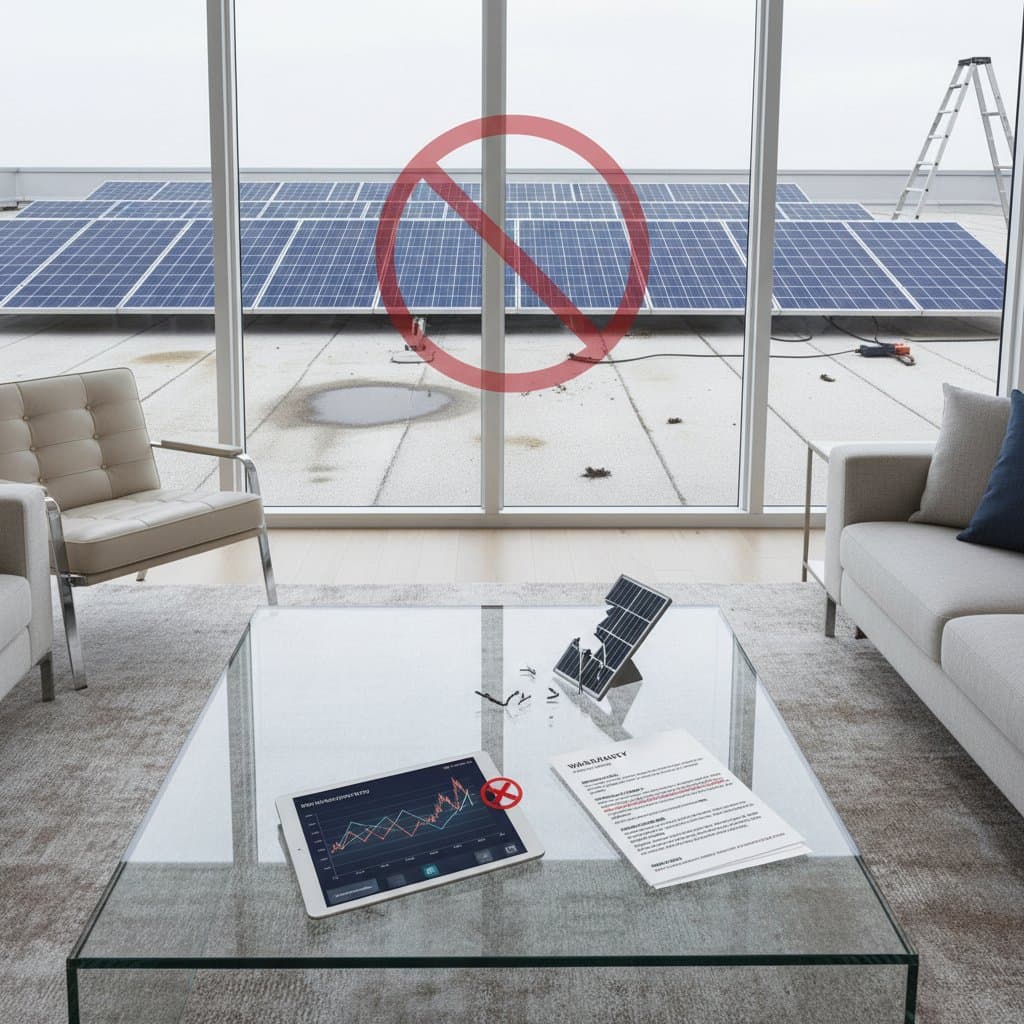
Solar arrays require roof penetrations for mounting and wiring. A leak near the array typically receives no payment from home warranties for roofing work. Coverage may extend only to the panel mechanism, leaving roof restoration as the owner responsibility.
Roof patch or flashing repair ranges from 300 to 1200 dollars. Full re roofing around panels often exceeds 3000 dollars. A small leak left unattended can damage the roof deck and invalidate both roof and solar warranties.
Inverter Labor and Replacement
Manufacturer warranties cover the inverter unit but exclude labor for removal and reinstallation. Home warranties rarely include this service either. Access to the inverter location and system shutdown procedures add to the total expense.
Labor charges average 500 to 1500 dollars depending on system size and roof height.
Solar Monitoring and Smart Components
Energy monitoring hardware and software occupy a coverage gray area. Warranties frequently exclude smart devices and sensors. Failure of the monitoring gateway interrupts performance data and alert functions.
Replacement costs run from 150 to 600 dollars plus any reprogramming fees. Production losses may go unnoticed until utility bills rise.
Rodent and Pest Damage
Squirrels and birds commonly nest beneath panels and damage wiring. Home warranties exclude pest related repairs because they classify the issue as preventable through routine care.
Wire replacement or guard installation ranges from 200 to 1000 dollars. Screening installed during initial setup reduces future risk.
Battery Storage Maintenance
Battery equipped systems incur additional upkeep expenses. Warranties seldom cover batteries or their control systems. Temperature changes and repeated discharge cycles reduce service life.
Full battery replacement costs between 5000 and 12000 dollars. Routine inspection and balancing services average 200 to 400 dollars.
System Performance Loss
Some warranties guarantee panel output levels yet omit diagnostic labor. When output falls but panels remain within tolerance, troubleshooting becomes an owner expense.
Hourly diagnostic rates average 100 to 150 dollars.
Cost Overview Table
| Line Item | Typical Range | Notes and Variables |
| Roof repair under panels | 300 to 3000 | Depends on roof type and access |
| Inverter labor | 500 to 1500 | Not covered by most warranties |
| Monitoring replacement | 150 to 600 | Often excluded as smart tech |
| Cleaning | 150 to 350 | Frequency depends on region |
| Pest damage repair | 200 to 1000 | Preventable issue, excluded |
| Panel removal and reinstall | 1000 to 4000 | Needed for roof work |
| Battery service | 200 to 400 | Excluded in most plans |
| Permit fees | 100 to 500 | Local code dependent |
| Diagnostic service | 100 to 150 per hour | Not covered by performance warranty |
| Travel fees | 50 to 200 | Contractor minimums |
Safety and Code Requirements
Solar work involves live circuits and roof access. Disconnect the system before any inspection. Apply fall protection at height. Local codes govern grid connections and often require certified electricians for modifications. Unauthorized changes can void interconnection agreements and insurance policies.
Required safety practices include insulated gloves and tools, avoidance of direct panel stepping, lockout procedures before inverter access, stable ladder placement, and suspension of work in wet or windy conditions.
Regional and Climate Factors
Hot humid climates promote corrosion and mold beneath panels. Arid zones accumulate dust that lowers output and demands more frequent cleaning. Cold regions encounter ice expansion around mounts and snow load issues. Marine settings accelerate rust on metal components.
High wind and coastal areas may require extra racking reinforcement. Stainless or anodized hardware performs better in humid or salt air environments. Schedule inspections before rainy seasons or winter freezes. Spring and late summer provide optimal cleaning windows.
Frequently Asked Questions
-
Does a home warranty cover panel cleaning? No. Cleaning counts as preventive maintenance rather than repair.
-
Is squirrel damage to solar wiring covered? No. Pest damage falls under standard exclusions.
-
Are roof leaks under panels covered? Only when an installer warranty explicitly lists the cause. Home warranty plans rarely address roofing.
-
Will the warranty pay for inverter labor? Usually not. Manufacturer coverage addresses the part alone.
-
Are permits required to replace a solar inverter? Yes in most jurisdictions. Electrical work requires permits and inspections.
-
How often should panels receive cleaning? Once or twice annually based on local dust, pollen, and rainfall.
-
Can panels be removed without professional help? No. Licensed contractors preserve electrical safety and warranty validity.
-
What occurs if the monitoring system fails? Production tracking stops. Replacement or repair costs fall to the owner unless extended installer coverage applies.
Planning Your Solar Maintenance Budget
Review your warranty documents to identify every exclusion. Set aside funds for roof work, inverter labor, and pest prevention before problems appear. Schedule annual inspections with a qualified contractor. These steps protect long term savings and system performance.