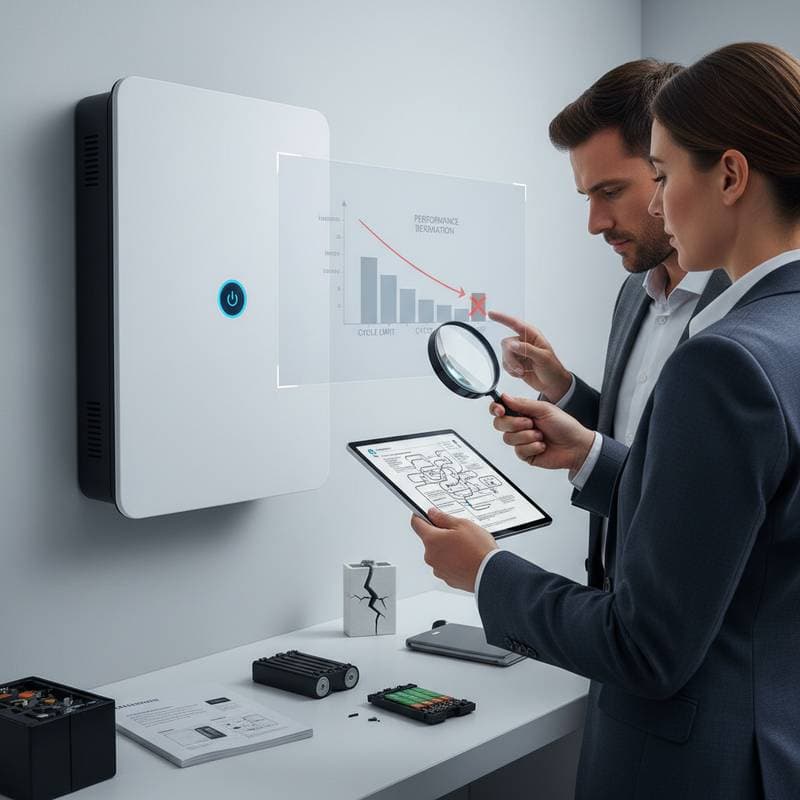
Understanding the Fine Print in Home Battery Warranties
Home battery systems deliver independence from grid disruptions and escalating energy costs. The enduring benefits, however, hinge on the warranty's scope as much as the hardware itself. Homeowners frequently encounter unexpected restrictions in what appears to be a comprehensive 10-year guarantee, leading to unforeseen expenses for repairs or replacements. Reviewing these elements prior to investment prevents such setbacks and secures reliable operation.
A standard home battery warranty addresses manufacturing flaws and gradual capacity reduction over designated periods or usage cycles. Optimal policies combine robust guarantees on energy retention with straightforward provisions for repairs, including accessible service networks.
Key Warranty Categories Compared
Warranties vary by focus, from initial defects to long-term output. The table below outlines primary types, highlighting coverage, advantages, and drawbacks to guide selection.
| Warranty Type | Coverage Details | Advantages | Drawbacks |
|---|---|---|---|
| Product Warranty | Defects in materials and assembly quality | Shields against initial failures | Ignores performance degradation over time |
| Performance Warranty | Maintains at least 70 percent of initial capacity after specified years or cycles | Preserves practical storage utility | Terminates if usage thresholds are exceeded |
| Installer Warranty | Errors in setup, wiring, or integration with existing electrical systems | Handles post-installation fixes | Typically limited to 1-2 years |
| Extended or Third-Party | Supplemental years, labor, and transport via add-on plans | Broadens protection beyond basics | Involves additional fees and potential exclusions |
Select batteries where the manufacturer provides unified product and performance warranties. This approach streamlines claim processes and upholds uniform quality expectations.
Essential Steps for Warranty Activation and Maintenance
Effective warranty management begins with preparation and continues through ongoing oversight. Follow this sequence to establish and preserve coverage.
- Identify certified installers. Verify that the professional or company appears on the manufacturer's approved list to validate all warranty aspects.
- Complete registration promptly. Submit details online or via forms within 30 days of setup, as many policies mandate this for activation.
- Organize records meticulously. Retain invoices, model and serial numbers, along with certification documents from the installer.
- Monitor system metrics regularly. Use the provided app or dashboard to log cycles, throughput, and capacity levels quarterly.
- Arrange routine inspections. Adhere to manufacturer-recommended checkups, often annually, to avoid lapses in coverage due to oversight.
- Review terms annually. Reassess policy updates or changes in usage that might affect remaining guarantees.
Claims fail most often from incomplete paperwork or skipped registrations. Proactive habits ensure smooth resolutions when issues emerge.
Preparation Tools and Materials
Proper installation supports warranty integrity. For tasks homeowners can handle under guidance, gather these items.
- Stud finder and bubble level for secure mounting
- Heavy-duty lag bolts supporting 100 to 150 pounds per unit
- Torque wrench calibrated to manufacturer torque specifications
- PVC or metal conduit with appropriate fittings for data cables
- Reliable Wi-Fi router or signal booster for remote diagnostics
- Non-combustible backing material compliant with local building codes
Professionals require specialized components for safe integration.
- Disconnect switches and conduits rated for 48-volt DC systems
- Circuit breakers and fuses aligned with 100-200 amp ratings
- Compliance labels and warning signs for electrical panels
These elements not only facilitate setup but also demonstrate adherence to guidelines, bolstering claim validity.
Adapting to Local Conditions
Environmental factors influence warranty effectiveness. Extreme heat in arid zones accelerates degradation, while humidity in coastal areas risks corrosion unless mitigated. In colder climates, sub-zero temperatures reduce efficiency, necessitating insulated housings.
For regions with temperature fluctuations exceeding 50 degrees Fahrenheit daily, confirm if outdoor placement qualifies under the policy. Manufacturers may stipulate climate-controlled enclosures, priced from $600 to $1,200, to shield against exposure-related denials. Indoor alternatives, such as garage or utility room installations, often extend usable life without extra costs.
Consult local codes alongside warranty clauses. For instance, seismic zones might require additional anchoring, which unsupported setups could invalidate.
Frequently Asked Questions
How do manufacturers calculate capacity retention?
They measure against the original rated storage, typically promising 60 to 80 percent retention by the warranty's end. Testing involves full charge-discharge cycles under controlled conditions.
Which actions invalidate a warranty?
Modifications without approval, attempts to alter firmware, failure to perform required upkeep, or exposure to flooding nullify protection. Strict adherence to the user manual preserves eligibility.
Is warranty transfer possible upon selling the home?
Certain manufacturers permit a single transfer, requiring sale documentation and a fee of $50 to $200. Verify specifics in the original agreement to avoid surprises during real estate transactions.
What if performance falls short mid-warranty?
Contact the provider immediately with logged data. They may offer diagnostics, replacements, or prorated credits, provided thresholds like 10,000 cycles remain unmet.
Strategies to Extend and Leverage Warranty Benefits
Integrate warranty oversight into your energy routine for maximum return. Activate registration without delay, log performance trends, and retain all service proofs. Address capacity shortfalls swiftly to stay within active periods. When evaluating systems, prioritize transparent terms and responsive support alongside technical specs. This holistic view transforms the warranty from a mere safeguard into a cornerstone of sustained energy reliability.