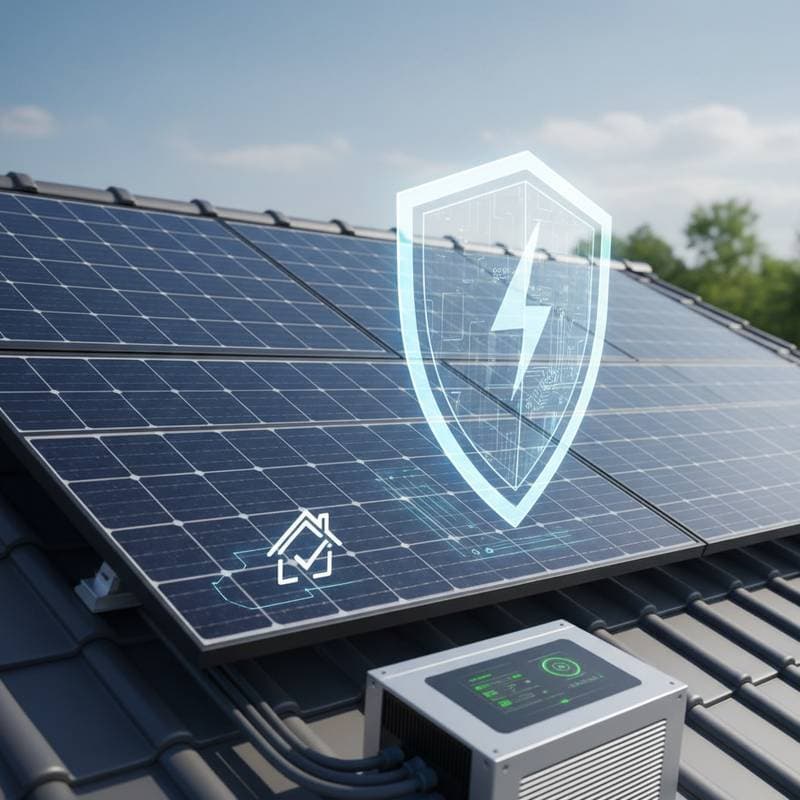
Understanding Solar Warranties: Coverage Essentials Through 2026
Solar warranties form the backbone of long-term protection for residential solar systems. These agreements shield homeowners from manufacturing flaws, installation errors, and gradual performance erosion. As solar adoption grows, understanding warranty specifics becomes vital for maximizing return on investment through 2026 and beyond.
Key Coverage Overview
Solar warranties typically address three core components: photovoltaic panels, inverters, and workmanship. Panel warranties often span 10 to 25 years, guaranteeing material integrity and output levels. Inverter coverage ranges from 5 to 12 years, while labor protections last 1 to 10 years, depending on the provider.
Examine each warranty clause meticulously. Variations exist in provisions for performance guarantees, repair labor, and ancillary costs like shipping or panel removal. Selecting comprehensive coverage minimizes financial exposure over the system's lifespan.
Benefits and Limitations of Solar Warranties
Advantages
- Risk Mitigation: Warranties cap out-of-pocket expenses for premature failures in panels or inverters, preserving budget stability.
- Enhanced Resale Appeal: Active warranties signal reliability to prospective buyers, potentially increasing home value by 3 to 4 percent.
- Quality Assurance: They incentivize installers to use durable components and adhere to best practices during setup.
- Transferability: Many warranties transfer to new owners upon sale, provided documentation confirms the ownership change.
Drawbacks
- Partial Coverage: Certain plans reimburse only parts, excluding labor, transportation, or deinstallation fees that can exceed $500 per incident.
- Claim Delays: Processing often requires coordination between installers and manufacturers, extending resolution times to several months.
- Voiding Conditions: Alterations without approval, such as roof modifications, or inadequate upkeep can nullify protections.
- Specific Exclusions: Weather-related damages, like hail impacts, typically require separate homeowner insurance claims rather than warranty intervention.
Types of Solar Warranties
Product Warranty
This warranty addresses manufacturing defects in materials and assembly. If a panel exhibits internal faults leading to total failure, the manufacturer supplies a replacement or repair. Standard durations reach 10 to 25 years, with prorated value adjustments for older units.
Performance Warranty
Manufacturers commit to a baseline energy output over the warranty period. Panels, for instance, must retain at least 80 to 90 percent of initial capacity after 25 years. Should output fall below this threshold prematurely, claimants receive compensation or new equipment based on lost production value.
Inverter Warranty
Inverters transform direct current from panels into alternating current for home use. String inverters warrant 5 to 12 years, whereas microinverters, attached per panel, often extend to 15 to 25 years. Opting for extensions averts production halts, which can reduce daily output by up to 100 percent during failures.
Workmanship Warranty
Installers provide this coverage for mounting, wiring, and integration quality. It safeguards against issues like mounting bracket failures or electrical faults arising from improper setup. Terms vary from 1 to 10 years, emphasizing the installer's role in system durability.
Extended and Third-Party Options
Homeowners may purchase supplemental plans that consolidate parts, labor, and performance under a single administrator. These streamline claims but involve premium costs of $200 to $500 annually. Verify the provider's financial stability and transfer provisions to ensure ongoing value.
Step-by-Step Guide to Reviewing and Claiming on Your Solar Warranty
Reviewing warranty status requires organized preparation and physical inspection. Allocate 1 to 2 hours for this moderate-difficulty task. Essential tools include a flashlight, stable ladder, camera-equipped smartphone, and access to warranty documents or digital portals.
- Compile Documentation: Assemble manufacturer, installer, and any extended warranty papers. Note serial numbers, installation dates, and initial performance specs.
- Analyze Core Provisions: Focus on "Product," "Performance," and "Workmanship" sections. Highlight coverage scopes, exclusions, and claim procedures.
- Conduct Physical Inspection: Ascend to the roof safely to examine panels for cracks, corrosion, or discoloration. Inspect racking for secure attachments and wiring for frays.
- Evaluate System Output: Access monitoring software to compare recent production against rated capacity. Identify drops exceeding 5 percent as potential red flags.
- Record Anomalies: Capture timestamped photographs of issues, including inverter displays showing error codes.
- Initiate Contact: Approach the installer first for guidance. If defunct, proceed directly to the manufacturer with purchase proofs.
- Submit the Claim: Furnish installation records, performance data, and visual evidence via the designated portal or form.
- Monitor Progress: Log all interactions and request status updates weekly until resolution.
Practical Advice: Secure written consent for any panel removal, such as during roofing work, to preserve warranty validity.
Essential Maintenance Practices for Warranty Compliance
Routine care sustains warranty eligibility and optimizes efficiency. Perform inspections biannually or post-storm events. Neglect can accelerate degradation, voiding claims for related failures.
- Clear debris like dust, leaves, or avian waste from panel surfaces using a soft brush and low-pressure hose.
- Tighten mounting hardware and verify seal integrity around penetrations to prevent water ingress.
- Monitor inverter indicators for faults and reset minor errors per manual instructions.
- Update warranty files with service logs, including technician visits or part replacements.
Consistent maintenance boosts energy yield by 5 to 20 percent annually. Early detection of issues facilitates proactive claims, extending system life toward the full 25-year horizon.
Frequently Asked Questions
How long do solar warranties typically endure?
Panel protections extend 10 to 25 years. Inverter terms cover 5 to 12 years. Workmanship guarantees range from 1 to 10 years.
Do warranties transfer upon home sale?
Manufacturer warranties generally transfer once with ownership verification. Submit transfer requests immediately to avoid lapses.
What actions void a solar warranty?
Proceed with caution around unapproved alterations, electrical tweaks, or skipped cleanings, as these terminate coverage.
Are weather damages included in warranties?
Standard policies exclude acts of nature like storms or hail. Rely on homeowner insurance for such incidents.
Is warranty extension possible post-installation?
Certain manufacturers permit add-ons within initial years. Review terms proactively to align with expiration timelines.
What recourse exists if the installer ceases operations?
Prioritize manufacturer-direct warranties. Some workmanship clauses persist independently of installer status.
Navigating Warranty Fine Print and Claims
Scrutinize contract details before commitment. Definitions of "defect" or "degradation" differ across providers; a 90 percent output guarantee after 10 years may underperform against actual 0.5 percent annual decline rates. Ensure inclusions for labor, freight, and access costs, which often total $300 to $1,000 otherwise.
Claim handling varies: direct manufacturer access accelerates resolutions compared to installer intermediaries. Favor systems with user-friendly portals for uploading evidence and tracking progress.
For active claims, document output shortfalls via app data. Submit promptly with proofs to initiate technician dispatch within 2 to 4 weeks. Replacements typically inherit remaining original terms rather than restarting the clock.
Securing Long-Term Solar Reliability
Warranties transform solar investments into dependable assets. By dissecting terms, upholding maintenance, and acting decisively on issues, homeowners lock in decades of clean energy benefits. Begin today: audit your documents, schedule an inspection, and explore extensions where gaps appear. This diligence ensures your system delivers through 2026 and far beyond.