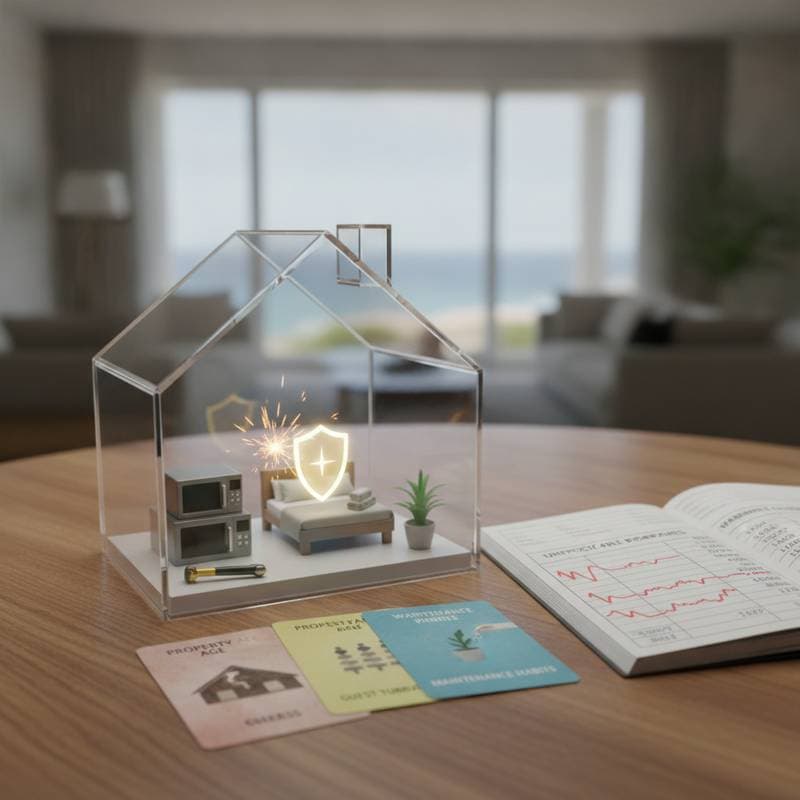
Are Home Warranties Worthwhile for Vacation Rentals?
Owners of vacation rentals encounter distinct challenges compared with primary residence owners. Frequent guest turnover accelerates wear on appliances and systems. Emergency repairs often arise during peak booking periods when response times matter most.
A home warranty can offset these variables under specific conditions. The decision hinges on property location, usage intensity, and owner preferences for cost predictability.
When a Warranty Makes Sense
A warranty delivers value in these situations:
- The property sits far from the owner, complicating direct coordination with local technicians.
- High guest volume drives above-average appliance cycles and system stress.
- The owner seeks fixed annual expenses instead of variable repair invoices.
Warranties seldom cover damage caused by guests. Newer properties still protected by builder warranties or those with dedicated maintenance staff rarely benefit from additional coverage.
Cost Breakdown and Price Drivers
Annual premiums for vacation rental plans range from 600 to 1200 dollars. Add-ons such as pool and spa coverage increase the total.
| Scope item | Material cost range | Labor cost range | Total range | Notes on drivers |
|---|---|---|---|---|
| Basic home warranty | N/A | N/A | 600 - 800 | Covers main systems and appliances |
| Expanded coverage (HVAC, plumbing, electrical) | N/A | N/A | 800 - 1000 | Adds higher cap per repair |
| Premium plan with pool and spa | N/A | N/A | 1000 - 1200 | Includes outdoor systems |
| Service call fee per visit | 75 - 125 | N/A | 75 - 125 | Paid each time a technician visits |
Property size, equipment age, appliance count, and regional labor rates determine final pricing. Remote locations often incur longer wait times and elevated service fees.
Safety, Permits, and Code Implications
Warranty service does not replace compliance with local building codes. Electrical, gas, and venting work must satisfy current standards regardless of the warranty provider.
Confirm these points before any repair begins:
- The assigned technician holds the proper license for the work required.
- Electrical upgrades follow correct breaker sizing and GFCI requirements.
- Gas lines receive leak testing after appliance replacement.
- Plumbing installations include proper traps and venting.
Code violations can nullify insurance protection and create liability exposure.
Maintenance Plan and Lifespan Considerations
Routine upkeep preserves equipment life and supports successful warranty claims. Follow this schedule:
After install
- Register every appliance for manufacturer warranties.
- Log serial numbers and installation dates.
Seasonal
- Replace HVAC filters every quarter.
- Flush sediment from water heaters.
- Clear exterior drains and gutters ahead of heavy rain.
Annual
- Arrange professional HVAC inspections.
- Test all GFCI outlets.
- Examine roof flashing, caulk, and window seals.
End of life
- Plan replacements at typical service intervals: water heaters last 8 to 12 years, HVAC systems 12 to 18 years, and major appliances 8 to 10 years.
Consistent maintenance reduces claim rejections and prevents guest disruptions.
Comparing Contractor Bids
Owners who handle repairs directly benefit from structured bid reviews.
| Line item | Spec or scope | Contractor A | Contractor B | Contractor C | Variance notes |
|---|---|---|---|---|---|
| HVAC compressor replacement | 3-ton, 14 SEER unit | 3800 | 4200 | 3950 | Includes refrigerant recovery |
| Water heater replacement | 50-gallon gas, vented | 1450 | 1600 | 1520 | Includes permit and disposal |
| Electrical panel upgrade | 200-amp main | 2800 | 3100 | 2950 | Labor and breaker count vary |
Verify labor details, part grades, and permit costs before awarding work.
Protecting Rental Income Through Coverage Decisions
A well-matched warranty stabilizes expenses and simplifies logistics for qualifying properties. Owners should match coverage limits to actual equipment age and usage patterns before purchase.