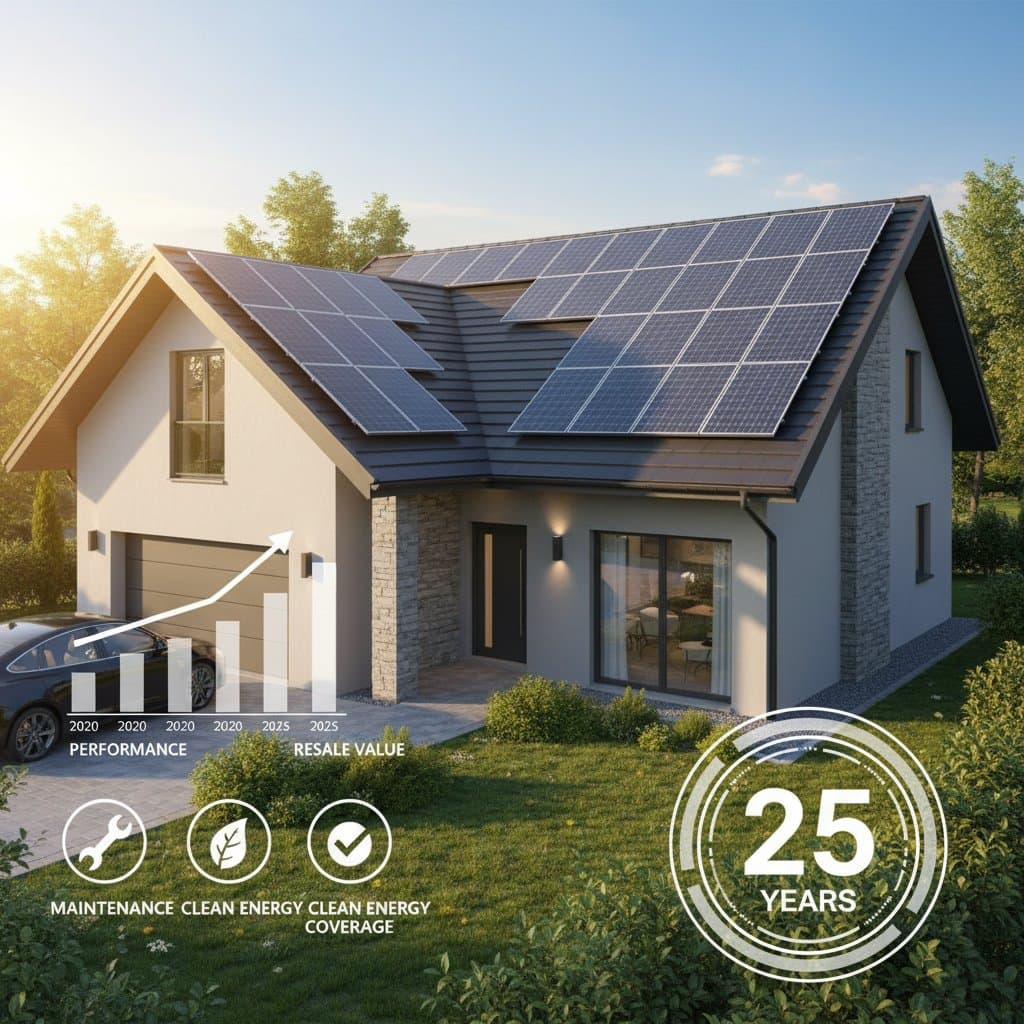
Understanding 25-Year Solar Panel Warranties in 2025
Summary Box
National average cost: Included in panel purchase price, no separate fee
Typical range: 10 to 25 years for product and performance coverage
Low end and high end: Basic models provide 10-year product and 20-year performance guarantees; high-end options deliver comprehensive 25-year protection
Time to complete: Warranty registration requires less than one hour
DIY or Pro: Homeowners handle registration; professional technicians manage service claims
ROI or resale impact: Robust warranties build buyer trust and elevate home market value
Updated: March 2025
Cost Breakdown
Solar panel warranties integrate seamlessly into the overall system expense. Their primary benefit emerges through provisions for replacements and performance assurances that mitigate future outlays.
| Item | Unit cost | Typical quantity | Line total | Notes |
|---|---|---|---|---|
| Solar panels (with warranty) | $0.80 to $1.50 per watt | 6,000 watts | $4,800 to $9,000 | Warranty embedded in base pricing |
| Inverter warranty extension | $200 to $600 | 1 unit | $200 to $600 | Optional add-on for extended replacement coverage |
| Labor for panel replacement | $300 to $700 | 1 visit | $300 to $700 | Coverage varies; often excluded from standard terms |
| Monitoring system | $100 to $300 | 1 system | $100 to $300 | Essential for verifying performance warranty adherence |
| Permit and inspection fees | $100 to $500 | 1 project | $100 to $500 | Required during panel or inverter replacements |
Add-ons and allowances:
- Extended labor guarantees range from $300 to $800 and provide additional peace of mind.
- Roof penetration protections may incur extra charges via installers.
- Disposal costs for faulty panels average $50 to $100 each.
Cost Factors
Multiple variables determine the true worth of a warranty and potential downstream expenses. System scale plays a key role, as larger installations demand higher replacement investments, underscoring the need for solid safeguards. Material quality influences warranty duration, with superior panels securing extended terms.
Site-specific challenges, such as roof pitch or elevation, escalate labor fees for repairs. Seasonal demands in the solar sector drive up technician availability and rates. Customized installations, including specialized mounting or roof-integrated designs, often necessitate manufacturer-approved servicing, adding complexity to claims.
DIY vs Pro
What You Can Do
Homeowners manage warranty registration effortlessly and organize installation documents for quick access. Track system performance via dedicated applications to spot issues early. Maintain panels by rinsing them periodically with soft water and a gentle brush, adhering strictly to manufacturer guidelines.
What Requires a Pro
Licensed solar professionals address electrical disconnections, inverter maintenance, or any roof-related tasks. Unauthorized interventions risk nullifying coverage entirely. Confirm that all service providers hold certifications from the panel producer to preserve warranty validity.
Safety Risks and Code Issues
Handling energized direct current lines poses risks of electrocution or ignition. Roof activities introduce fall dangers that demand professional equipment and training. Cease operations immediately and engage experts for panel removals, wiring assessments, or insulation evaluations.
Warranty Impacts
Amateur repair efforts jeopardize product and labor protections alike. Manufacturers frequently mandate evidence of certified installation and periodic professional reviews to sustain active status. Neglect these requirements, and claims may face denial during critical moments.
How To Save Without Regret
Evaluate panel manufacturers thoroughly to identify superior options. A 25-year product guarantee typically increases upfront costs by merely 5 to 10 percent, yet it shields against substantial repair bills down the line. Prioritize inquiries into labor inclusions, as many policies cover components but omit service hours; aim for at least five years of bundled technician support.
Implement yearly professional inspections to detect subtle issues like hairline fractures or connection looseness, preventing escalation and claim complications. Register every element of the system, from panels to inverters and monitors, to ensure comprehensive protection. Secure quotes from at least three installers, probing specifics such as dual coverage for defects and output, claim filing responsibilities, inclusion of shipping and labor, voiding conditions, and transfer protocols for home sales.
Step By Step: Registering and Managing Solar Warranties
Required Tools
Access to the internet or a manufacturer app suffices for most tasks. Gather the complete system documentation, including serial numbers from panel labels and proof of purchase with installation dates.
Steps
- Locate serial numbers. Inspect the rear of each panel and review invoices for these identifiers.
- Register online. Navigate to the manufacturer website or installer platform, input system specifications, and attach purchase receipts.
- Store all records. Archive confirmation messages and warranty documents in both digital folders and physical files for redundancy.
- Set reminders. Calendar annual cleaning and inspection dates to uphold compliance.
- Monitor performance. Review application metrics regularly; initiate contact with your installer if output falls below 90 percent of expected levels absent external factors like shade or accumulation.
Checkpoints
Validate that terms encompass both defect repairs and energy production thresholds. Ascertain separate guarantees for inverters and mounting hardware. Prepare files for seamless transfer during property transactions.
Timeline and Scheduling
Replacement panels generally ship within two to four weeks of claim approval. Service crews dedicate about one full day to on-site diagnostics and swaps. Certain producers stipulate biennial or triennial expert evaluations to validate ongoing warranty eligibility.
Anticipate brief delays during high-demand periods, such as spring installation surges. Coordinate claims promptly to align with these windows and minimize production interruptions.
Maintenance and Lifespan
Solar panels demand little routine attention, yet diligent practices safeguard warranty integrity and extend operational life. Annual or biannual rinses eliminate dust, pollen, and droppings that impair efficiency. Monthly inverter checks reveal inconsistencies in energy generation, flagging potential anomalies.
Prevalent issues include microscopic cracks from thermal stress, delamination of protective layers, and moisture infiltration at seals. Thermal imaging during inspections uncovers hot spots indicative of internal faults. When defects affect over 20 percent of the array, full replacement under warranty proves more economical than piecemeal fixes.
Securing Your Solar Investment
A well-chosen warranty transcends mere documentation; it forms the backbone of sustained system performance and financial security. Select terms that align with your installation's scale, local service landscape, and personal upkeep routine. Scrutinize every provision in the installation agreement to fortify your position against unforeseen challenges.