Solar Panel Maintenance Costs in 2026: Warranty and Service Insights
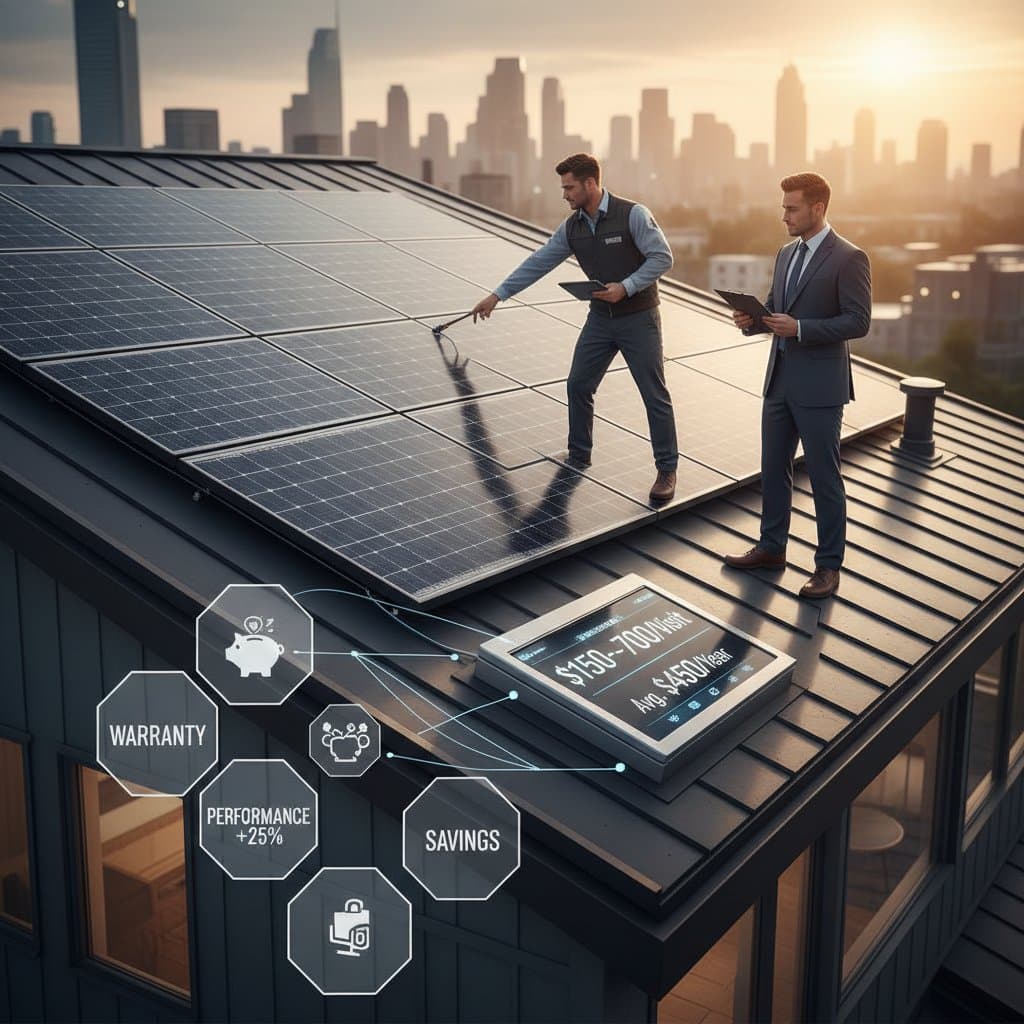
Solar panels generate long-term energy savings from sunlight, yet they demand regular maintenance and solid warranty support to sustain efficiency. Professional services for solar systems range from $150 to $700 per visit. Most homeowners allocate about $450 for a routine inspection and cleaning. Annual maintenance plans fall between $250 and $600, varying by array size, location, and warranty terms.
Three key elements shape solar maintenance expenses: system size, warranty coverage, and component quality. Larger installations need more thorough cleaning and evaluations. High-end components from manufacturers such as LG Solar or SunPower come with extended warranties that minimize future costs. Data from the Solar Energy Industries Association indicates that diligent maintenance enhances system output by as much as 25 percent. This approach prolongs panel durability and amplifies energy yields. Those who commit to expert care and full warranty protection achieve quicker investment recovery and reduced repair bills.
Cost Components in Detail
Pricing for solar maintenance hinges on service format and required tasks. Providers may apply flat rates for checks or charge based on panels or kilowatts. The following outlines typical models and influencing factors.
Core Pricing Models
- Per-panel rates: $10 to $25 per panel for cleaning and basic checks
- Per-kilowatt rates: $25 to $60 per kW for performance assessments
- Flat-rate calls: $150 minimum for on-site diagnostics
- Full annual packages: $250 to $600, covering inspections, cleaning, and inverter tests
Nationwide, median costs hover at $450 per service. The lower quartile reaches $300, while the upper quartile nears $700. Areas with intense dust, pollen, or bird presence see expenses rise 10 to 20 percent from added cleaning needs.
Impact of System Scale
Bigger solar setups incur higher maintenance fees due to increased panels, connections, and wiring. A 5 kW home system might demand $250 yearly, whereas a 10 kW array surpasses $500. Each extra 100 square feet of panel area adds $15 to $25 in cleaning and labor.
EnergySage reports show owners of 20 to 25 panels budgeting $300 to $600 annually. Compact rooftop arrays below 4 kW stay at the lower spectrum, particularly with straightforward roof access that shortens preparation.
Component Quality Levels
Basic systems with polycrystalline panels install affordably but demand frequent attention. These often feature 10- to 15-year warranties and quicker degradation, prompting more visits. Individual panel replacements average $150 to $250, plus labor.
Mid-tier options using monocrystalline panels from Canadian Solar or Q Cells involve modest upfront premiums. They deliver superior efficiency and extended warranties, trimming lifetime service needs. Users in this group face 10 to 15 percent higher initial costs yet save up to 20 percent on maintenance across the system life.
Top-tier lines like SunPower Maxeon or REC Alpha offer 25-year performance and equipment guarantees. Initial investments run 30 to 40 percent above average. Robust materials, reinforced frames, and protective coatings lessen cleaning cycles and failures. Warranties here yield $1,000 to $2,000 in savings over the system's duration.
Installation and Access Factors
Complex setups elevate costs. Steep or elevated roofs necessitate safety gear, adding $50 to $150 per visit. Ground arrays prove simpler and less expensive to service.
Legacy systems might need compliance upgrades or inverter rewiring, costing $200 to $1,000 based on codes. Location plays a role: coastal zones battle corrosion, deserts face sand accumulation. Residents there encounter 15 to 25 percent higher fees.
Maintenance Service Options
Providers divide services into standard and premium categories, balancing expense, ease, and protection.
Standard Packages
Basic plans encompass:
- Panel and mount visual reviews
- Output electrical tests
- Module cleaning
- Inverter function checks
For average systems, these cost $300 to $500 yearly and last two to three hours. They suit out-of-warranty arrays or routine prevention. Platforms like Angi and Thumbtack connect users to contractors with short-term guarantees post-service.
Premium Packages
Advanced options incorporate:
- Thermal scans for hidden cracks
- Inverter firmware enhancements
- Labor for replacements
- In-depth output reports
These range from $600 to $950 annually, a 25 to 40 percent increase over basics. Benefits include warranty labor handling and early issue detection via monitoring. Such plans offset costs by averting monthly energy shortfalls of $100 or greater.
Optional Add-Ons and Bundles
| Service Add-On | Cost Range | Savings from Bundling | Ideal Schedule |
|---|---|---|---|
| Battery checks | $150–$300 | 10% with annual plan | Yearly |
| Inverter swap/upgrade | $800–$1,500 | 5% alongside cleaning | Decennially |
| Roof mount review | $100–$200 | 15% in tune-ups | Biennially |
| Monitoring setup | $100 | Free in premiums | Once |
Combining services with one provider cuts totals by up to 20 percent. Off-season bookings yield further reductions in variable-demand areas.
Weighing Professional and Self-Maintenance
Self-Maintenance Expenses
DIY approaches cut labor but introduce tool and effort demands. Essential items include:
- Cleaning kit: Brush, cloths, eco-soap ($30 to $50)
- Safety equipment: Harness, ladder, helmet ($150 to $300 buy or $50 rent)
- Diagnostic devices: Meter, tester ($100 to $200)
- Effort: 3 to 5 hours each time
Sessions might total $50 to $150, yet risks like damage or warranty invalidation add up. Surveys from solar communities reveal over 40 percent of self-managers turn professional after efficiency drops or coverage issues.
Benefits of Experts
Certified technicians deliver secure, effective care with $10,000-plus in specialized tools like cameras and testers. Expert cleanings recover up to 15 percent efficiency lost to grime.
Warranties often mandate professional proof for claims. An inverter fix alone hits $1,200 to $2,000. Pros complete a 6 kW inspection in under two hours, versus weekend DIY spans. Over time, this efficiency often proves cost-effective.
Selection Guide
Opt for professionals when:
- Warranties remain active
- Access proves challenging or roofs slope sharply
- Output consistently declines
Self-care fits small ground systems or non-essential off-grid setups. Errors, however, carry high penalties, potentially shortening system life.
Strategies to Lower Costs
Schedule Wisely
Demand surges in peak sun periods, so winter slots save 10 to 20 percent. Weekdays avoid overtime fees. Annual contracts secure rates and track performance reliably.
Shop Effectively
Secure three quotes via EnergySage or HomeAdvisor to shave 15 percent off averages. Inquire on prepay perks, like 5 percent reductions. Refurbished inverters or direct panels offer 20 to 30 percent savings with warranties intact.
Prepare Ahead
Trim branches, clear paths, and gather records to shorten visits by 30 minutes, saving $50 to $100. Detail recent concerns to speed diagnostics.
Regional and Market Factors
Costs differ by area. Coastal spots in California or Florida add 15 to 25 percent for salt mitigation. Mountains incur $100 to $200 snow fees. Rural zones tack on $50 to $100 travel.
Supply chains drive fluctuations: high demand lifts parts 10 percent. Labor gaps affect fees in renewable-heavy states. Multi-year plans shield against rises.
Upkept systems boost home values 3 to 5 percent. Efficiency gains shorten paybacks. Over 25 years, maintenance saves $4,000 in energy and defers repairs.
Comprehensive warranties guard against surprises, yielding over 15 percent annual returns via savings and reliability.
Securing Long-Term Solar Value
Preventive care and warranty oversight keep arrays productive. Routine cleanings, inspections, and monitoring sustain output and coverage. Strategic planning, provider comparisons, and extended protections yield optimal results.
Proper support ensures solar delivers enduring performance. Select plans that align with needs to safeguard energy flow and enhance property appeal. Grasp costs and warranty roles to prolong system life and sustain gains.