Understanding Saltwater Pool Warranties: Key Insights
Quick Reference Guide
System Overview:
A saltwater pool warranty protects the components responsible for converting salt into chlorine, such as the electrolytic cell, control unit, and associated plumbing elements.
Importance of Compliance:
These systems minimize the need for traditional chlorine additives, but failure to adhere to installation and maintenance protocols can invalidate warranties on the entire pool equipment suite.
Cost Variations:
Expect to pay between $500 and $2,000 for replacement parts, with warranty terms influenced by manufacturer policies, installer qualifications, and consistent water quality monitoring.
Professional Involvement:
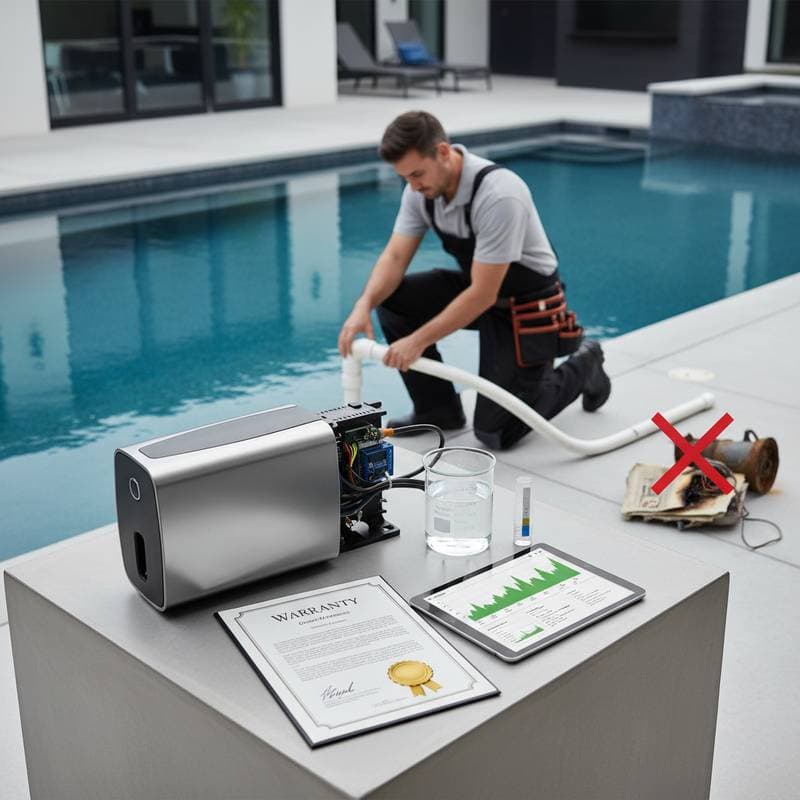
Engage a certified pool specialist for setup, electrical integration, and initial warranty activation to ensure full compliance.
Installation Timeline:
The process typically spans one to two days, followed by several days of water testing and balancing to achieve optimal conditions.
Ongoing Maintenance Schedule:
Conduct visual inspections of the salt cell every three months; plan for replacement every three to seven years based on operational hours and local water hardness.
Components of a Saltwater Chlorination System
Every saltwater chlorination system comprises essential elements that work together to sanitize pool water efficiently. Here is a breakdown of the primary parts:
- Control Panel: This unit manages electrical input and adjusts chlorine production levels to match pool demands.
- Salt Cell: As the central element, it uses electrolysis to transform dissolved salt into active chlorine gas.
- Flow Sensor: This device monitors water circulation and prevents operation during low flow, avoiding damage to the cell.
- Power Supply and Connections: These link the system to the pool pump, providing stable voltage and secure wiring.
Common failures stem from mineral scale accumulation or electrolytic corrosion within the cell, often resulting from imbalanced pH or excessive calcium levels. Manufacturers report that a significant portion of warranty denials trace back to these preventable issues. To mitigate risks, integrate routine testing into your pool care routine from the outset.
Navigating Warranty Coverage Structures
Warranty programs from saltwater system manufacturers feature structured tiers that evolve over time. In the initial year, full equipment replacement often applies without cost to the owner. Subsequent years typically limit coverage to parts only, with prorated deductions based on usage.
Labor expenses remain the responsibility of the owner in most cases, underscoring the value of preventive care. Essential requirements for valid claims include:
- Documentation verifying installation by a qualified professional
- Detailed records of water chemistry parameters over time
- Product registration completed within the stipulated timeframe post-purchase
- Exclusive use of recommended salts and proprietary cleaning agents
Absence of any requirement can prompt outright rejection of a claim. Consider supplemental extended warranties from authorized dealers, which may extend protection by one to three years while enforcing identical documentation standards. Before committing, review multiple options to align with your pool's specific needs and local service availability.
Weighing DIY Installation Against Professional Services
Deciding between self-installation and hiring experts involves evaluating several practical factors. The table below compares key aspects to inform your choice:
| Factor | DIY Approach | Professional Approach |
|---|---|---|
| Required Expertise | Basic knowledge of electrical and plumbing systems | Certification in pool technology and safety standards |
| Potential Hazards | Risks of electrical shock or improper chemical handling | Coverage under professional liability insurance |
| Necessary Tools | Basic multimeter, wrenches, and water testing kits | Comprehensive diagnostic equipment and calibration devices |
| Regulatory Compliance | Possible need for personal permit applications for electrical modifications | Handling of all permits and code inspections by the service provider |
| Time Investment | 2-3 days, including troubleshooting delays | Typically completed in one efficient day |
| Effect on Warranty | High likelihood of nullifying manufacturer guarantees | Preservation of full warranty terms through certified execution |
While DIY methods offer initial savings on labor fees, they frequently compromise warranty integrity unless the individual holds relevant certifications. For long-term reliability, professional installation proves superior, particularly in complex setups involving automation or variable-speed pumps.
Strategies for Maintenance and Extending Equipment Life
The electrolytic cell represents the most vulnerable and costly component, with a service life ranging from three to seven years. Influencing factors include daily runtime, source water mineral content, and adherence to cleaning protocols. Perform cleaning only upon visible scale formation, using a diluted acid solution specified by the manufacturer to avoid surface erosion.
Target salt concentrations between 2,700 and 3,500 parts per million for efficient operation without excessive wear. Weekly pH assessments ensure levels stay within 7.2 to 7.8, while monthly checks on calcium hardness prevent scaling. Manage total dissolved solids by draining and refilling 10-20% of the pool volume annually, especially in hard water areas. These practices not only sustain warranty eligibility but also reduce energy consumption and chemical dependencies.
Advanced users may benefit from automated monitoring devices that alert to deviations in real time, integrating seamlessly with smart home systems for effortless oversight.
Accounting for Regional and Environmental Influences
Local conditions play a critical role in system performance and warranty considerations. In regions with high temperatures and humidity, corrosion rates increase, necessitating more frequent cell inspections and protective coatings on exposed metal parts.
Winter preparation in cooler climates involves complete drainage of the cell, thorough rinsing, and indoor storage to prevent freeze damage. Municipal regulations vary; some areas mandate electrical inspections for saltwater generators as Class II appliances, potentially delaying activation.
Select materials wisely: Opt for titanium-based cells in coastal environments to withstand saline air exposure. Reserve marine-grade stainless steel for fittings in direct contact with chlorinated water, as standard alloys degrade rapidly.
Securing and Claiming Your Warranty Effectively
To safeguard your saltwater pool investment, prioritize thorough preparation at every stage. Scrutinize warranty documents prior to purchase, confirming alignment with your usage patterns and local water profile. Activate registration promptly upon installation, and maintain a digital log of all chemistry tests and service events.
Partner with a licensed technician not only for setup but also for annual audits, which can preempt issues and strengthen claim validity. By embedding these habits into your routine, you ensure uninterrupted enjoyment of a pristine pool, free from the setbacks of coverage disputes or premature repairs.