AI Home Warranties Now Predict Failures Before They Happen
Homeowners face unexpected repair bills that disrupt budgets and daily life. Traditional warranties respond after problems occur, often leading to higher costs and inconvenience. AI-powered home warranties shift this approach by predicting failures before they happen, using advanced technology to maintain systems proactively.
This innovation integrates sensors, data analytics, and machine learning to monitor home appliances and infrastructure in real time. Homeowners gain peace of mind knowing potential issues receive attention early, preventing breakdowns and extending equipment longevity. The result is a more reliable living environment with reduced financial strain.
How Predictive AI Works in Home Warranties
Predictive home warranties rely on a network of smart sensors installed in key systems such as heating, ventilation, air conditioning units, plumbing, and electrical setups. These sensors collect data on performance metrics like temperature fluctuations, vibration patterns, and usage cycles. The information feeds into machine learning algorithms that analyze historical data and current trends to identify early warning signs of failure.
For instance, an air conditioning unit might show subtle efficiency drops undetectable to the human eye. The AI detects these patterns and alerts the warranty provider, who schedules preventive maintenance. This process differs from reactive models, where repairs follow visible damage or complete breakdowns.
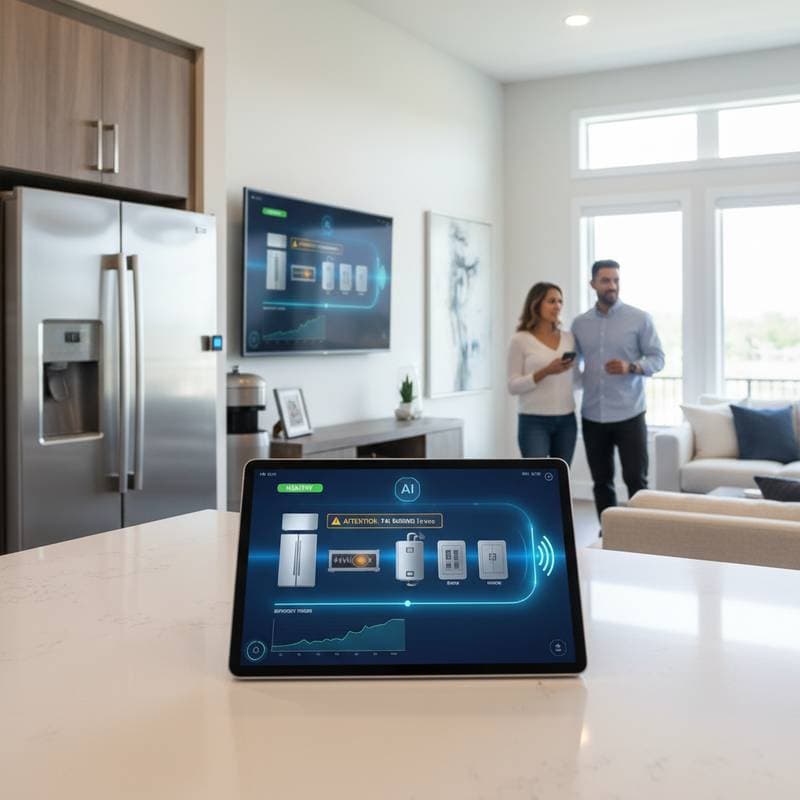
Integration with home automation platforms enhances accuracy. Devices like smart thermostats and water leak detectors contribute additional data points, creating a comprehensive picture of home health. Over time, the system refines predictions based on learned behaviors, becoming more precise for individual households.
Key Technologies Driving Predictions
- Sensors and IoT Devices: These monitor real-time conditions and transmit data to central hubs.
- Machine Learning Models: Algorithms process vast datasets to forecast issues with high accuracy, often up to 90 percent in controlled tests.
- Cloud-Based Analytics: Secure servers handle computations, ensuring quick responses without overwhelming home networks.
Homeowners receive notifications through apps or emails, detailing potential risks and recommended actions. This transparency empowers users to make informed decisions about their property maintenance.
Benefits of Switching to AI Predictive Coverage
Adopting AI-driven warranties offers tangible advantages over conventional plans. Foremost, it minimizes downtime; systems operate smoothly without sudden interruptions. For families, this means consistent comfort, especially during extreme weather when heating or cooling failures prove most disruptive.
Cost savings emerge as a primary benefit. Preventive interventions cost less than emergency repairs. Studies indicate that predictive maintenance reduces overall expenses by 20 to 30 percent annually. Homeowners avoid the escalation of minor issues into major overhauls, preserving warranty coverage limits.
Safety improves significantly with early detection. Electrical faults or gas leaks, if predicted, prevent hazardous situations. Efficiency gains follow as optimized systems consume less energy, lowering utility bills. Environmentally, this approach supports sustainability by extending the life of appliances and reducing waste from premature replacements.
Understanding the Costs Involved
AI predictive home warranties vary in price based on coverage scope and home size. Basic plans start at around 400 dollars per year, covering essential appliances like refrigerators and washers. Comprehensive options, including HVAC and plumbing, range from 600 to 1,200 dollars annually.
Installation of sensors adds an initial fee of 200 to 500 dollars, often offset by the first year's premium. Providers bundle these costs into service contracts, with financing available for upfront expenses. Monthly payment plans make adoption accessible, spreading costs over 12 months.
Factors influencing premiums include home age, location, and existing smart home setups. Newer homes with pre-installed IoT devices qualify for discounts. Comparing quotes from multiple providers reveals the best value, considering service response times and coverage exclusions.
Comparing Traditional vs. Predictive Plans
- Response Time: Traditional plans activate post-failure; predictive ones intervene preemptively.
- Cost Structure: Reactive repairs lead to variable, higher bills; predictive models offer fixed premiums with predictable savings.
- Coverage Limits: AI plans often include higher caps due to reduced claim frequency.
- Long-Term Value: Predictive coverage extends system life by years, enhancing property resale value.
Traditional warranties suit budget-conscious owners with newer homes, while AI options benefit those in older properties prone to wear.
Steps to Upgrade Your Home Warranty
Transitioning to a predictive plan requires straightforward steps. First, assess current home systems for compatibility with sensor technology. Consult a provider representative to evaluate needs and recommend suitable coverage.
Next, schedule sensor installation, typically completed in one day by certified technicians. The process involves minimal disruption, with devices placed in accessible areas. Once set up, connect the system to the provider's app for monitoring.
Test the setup by simulating minor issues or reviewing initial reports. Providers offer training sessions to familiarize users with alerts and dashboard features. Annual reviews ensure the plan adapts to changing home conditions.
Realizing Long-Term Home Value
Investing in AI predictive warranties transforms home maintenance into a strategic asset. Homeowners experience fewer surprises, greater efficiency, and enhanced safety. Properties equipped with this technology appeal to future buyers, potentially increasing market value.
Providers continue to innovate, incorporating advancements like AI-driven energy optimization. This forward-looking approach positions your home for resilience against aging infrastructure challenges. Ultimately, the switch delivers sustained benefits, safeguarding investments for years ahead.