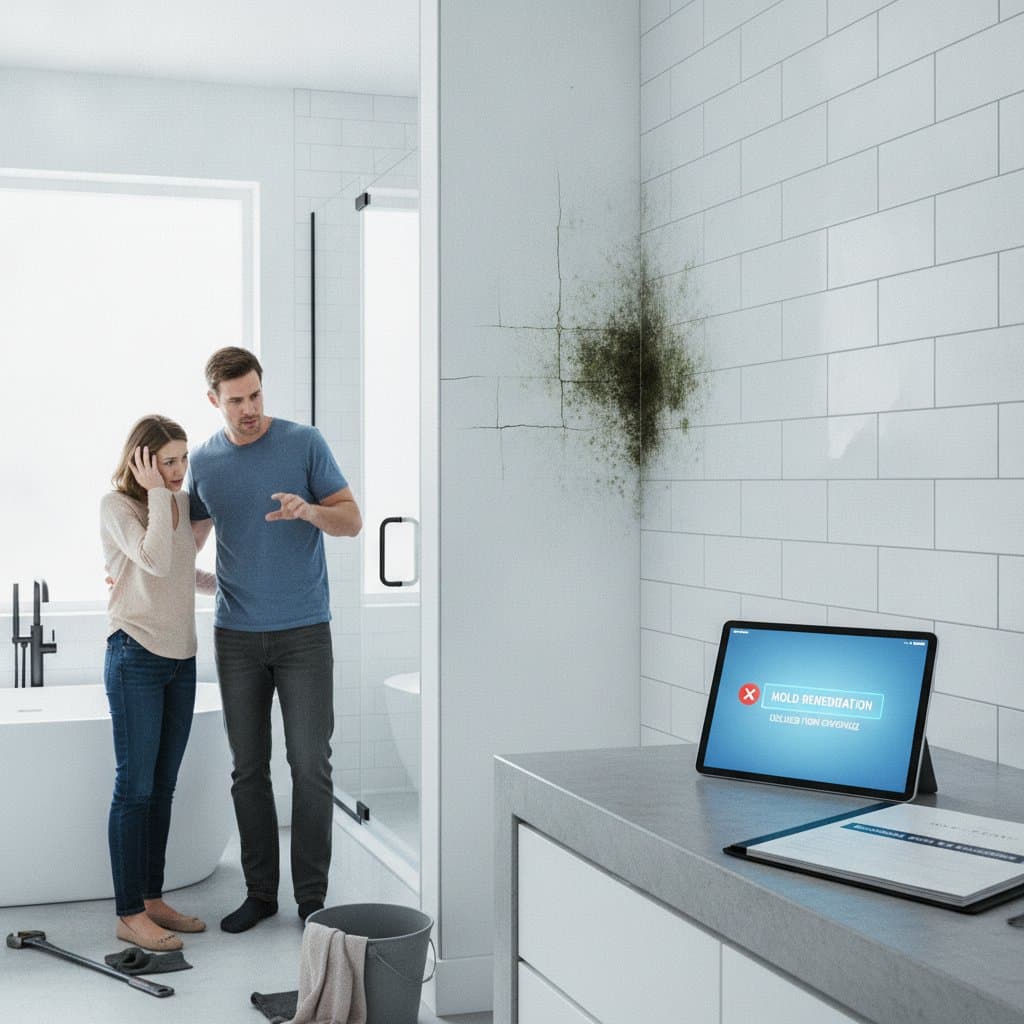
Why Most Warranties Exclude Mold Remediation
Mold growth inside a home signals underlying moisture issues that may lead to structural problems and health concerns. Homeowners often assume that a home warranty or insurance policy will cover cleaning and repairs. In practice, mold claims rank among the most frequently denied requests. A close examination of contract terms, cost structures, and service definitions reveals the reasons behind these denials.
Scope of Mold Remediation Work
Professional mold remediation requires several coordinated steps. Technicians identify contaminated zones, contain the affected areas, remove damaged materials, clean ventilation systems, and restore surfaces. The process demands specialized equipment, certified personnel, and laboratory verification. Warranty providers classify these activities as maintenance or environmental management rather than mechanical repair.
Standard home warranty plans cover specific systems and appliances, including plumbing, electrical components, and HVAC equipment. When mold appears after a leak or humidity spike, coverage extends only to the malfunctioning component. Resulting biological growth falls outside the defined scope.
Pricing Structures and Coverage Limits
Advertised monthly rates often mask significant restrictions. Mold remediation typically requires an add-on that carries narrow limits. The table below illustrates common plan structures.
- Basic plans charge 35 to 50 dollars monthly with a 75 dollar service fee and cap repairs at 500 dollars while excluding mold entirely.
- Premium plans charge 60 to 80 dollars monthly with a 100 dollar service fee and raise the cap to 1500 dollars yet still exclude environmental contaminants.
- Optional environmental coverage adds 20 to 30 dollars monthly with a 100 dollar service fee and a 2000 dollar limit that applies only to visible surface mold.
Actual remediation projects that involve multiple rooms, drywall removal, and air scrubbing frequently exceed several thousand dollars. Coverage caps therefore offset only a portion of total expenses.
Typical Remediation Expenses
Costs vary with the size and location of contamination. Isolated patches may require only a few hundred dollars, whereas growth inside walls or ductwork can reach five figures. Warranties reimburse repairs to the leaking component but leave secondary mold damage to the homeowner. Partial approvals usually cover inspection alone, shifting demolition, cleaning, and reconstruction costs to the property owner.
Claim Review Sequence
The following sequence shows how providers evaluate requests.
- Homeowners contact the warranty company to report a leak or visible mold.
- A technician inspects the property and attributes moisture to maintenance lapses or environmental conditions.
- The provider reviews findings against contract language that excludes mold except in cases of sudden mechanical failure.
- Approved repairs address only the originating leak while mold cleanup remains the homeowner responsibility.
- Future claims require documented proof that remediation occurred.
This sequence allows broad interpretation of exclusions and places the burden of proof on the homeowner.
Frequent Contract Exclusions
Policies contain several overlapping exclusions that remove mold from coverage.
- Pre existing conditions void protection when mold predates the policy start date.
- Neglected maintenance disqualifies claims when humidity control or leak repairs were delayed.
- Secondary damage clauses cover the broken pipe but not mold affected drywall or flooring.
- Environmental factors such as high humidity or poor ventilation fall outside provider responsibility.
Broad wording permits flexible application that effectively excludes nearly all mold scenarios.
Budget Impact Over Time
Denied remediation forces homeowners to fund cleanup from personal resources. Untreated growth can spread through insulation and framing, increasing future repair frequency and reducing property value. An annual warranty premium of 600 dollars offers limited protection against a 5000 dollar remediation project. Maintaining a dedicated reserve or separate environmental policy often provides greater control over contractor selection and timing.
Contract Language Review
Before purchase or renewal, examine the exclusions section for terms such as microbial growth, fungal contamination, or environmental hazards. Phrases that reference damage resulting from rather than damage caused by shift responsibility away from the provider. Request written confirmation of any mold related provisions, because verbal assurances carry no weight during disputes.
Practical Prevention Steps
Consistent habits reduce the likelihood of mold and strengthen future claims.
- Repair leaks promptly and retain dated photographs of each repair.
- Operate dehumidifiers in basements, bathrooms, and laundry rooms.
- Replace HVAC filters on schedule and arrange seasonal system inspections.
- Run exhaust fans during and after cooking or showering.
- Check roofs and foundations for water intrusion each season.
These measures limit moisture accumulation and demonstrate responsible upkeep.
Selecting Appropriate Protection
Home warranties function best as limited repair instruments rather than comprehensive safeguards. Property owners achieve stronger outcomes by combining documented maintenance, targeted environmental insurance, and careful contract review. This integrated approach preserves both structural integrity and household finances when moisture issues arise.