What Your Solar Warranty Actually Pays For
Solar energy systems represent a significant investment for homeowners and businesses alike. Warranties associated with these installations offer crucial safeguards, yet many owners misunderstand their scope. This article clarifies what a typical 2025 solar warranty covers, highlights common exclusions, and provides practical steps to maintain coverage.
Understanding these details empowers you to avoid unexpected expenses and extend the life of your system. By the end, you will know how to interpret warranty terms and when professional intervention becomes necessary.
Understanding Solar Warranties
A solar warranty serves as a contractual promise from manufacturers and installers regarding the quality and durability of your system. These agreements typically span 10 to 25 years, depending on the components involved. They address potential failures in panels, inverters, and installation work.
In 2025, warranties have evolved to include more robust protections against environmental factors like extreme weather. However, coverage varies by provider, so reviewing your specific document remains essential. This foundational knowledge sets the stage for examining warranty types.
Types of Solar Warranties
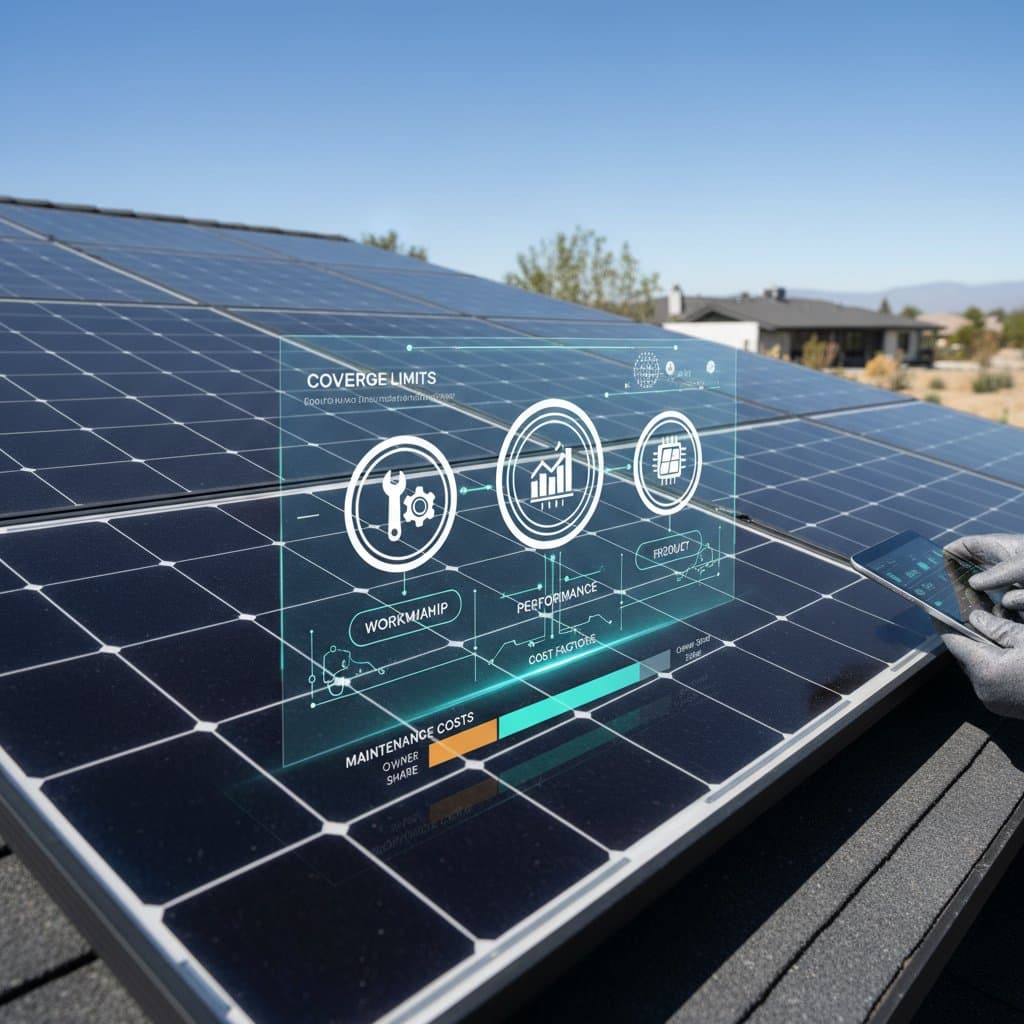
Solar warranties fall into three primary categories: product, performance, and workmanship. Each targets different aspects of your system, ensuring comprehensive protection when properly understood.
Product Warranties
Product warranties focus on the physical components, such as solar panels and inverters. Manufacturers guarantee these items against defects in materials and manufacturing for periods often exceeding 10 years. If a panel cracks due to a factory flaw, the warranty covers replacement or repair at no cost to you.
These warranties do not extend to damage from improper handling during shipping or installation. Always retain receipts and serial numbers to facilitate claims under this category.
Performance Warranties
Performance warranties assure that your system maintains a specified output level over time. For instance, many providers promise that panels will produce at least 80 percent of their original capacity after 25 years. This protection addresses gradual degradation from sun exposure or aging.
Claims under performance warranties require professional testing to verify output levels. If degradation exceeds guaranteed thresholds, compensation or replacements follow, preserving your expected energy savings.
Workmanship Warranties
Workmanship warranties cover the installation process and labor quality, typically lasting 5 to 10 years. Installers promise that their work meets industry standards, protecting against issues like faulty wiring or mounting errors. If leaks or structural failures arise from poor installation, repairs fall under this coverage.
These warranties often transfer with property sales, adding value to your home. Select certified installers to ensure strong workmanship protections align with manufacturer guarantees.
What Your Warranty Covers
Warranties provide targeted coverage for defects and failures, but specifics depend on your policy. Product warranties handle manufacturing issues, while performance ones address efficiency losses. Workmanship protections resolve installation-related problems.
In 2025, many policies include coverage for labor and shipping costs associated with approved repairs. This comprehensive approach minimizes out-of-pocket expenses for covered events. Review your warranty booklet for exact terms, as regional variations may apply.
Common covered scenarios include inverter malfunctions, panel delamination, and mounting system corrosion. These protections ensure your system operates reliably, supporting consistent energy production and financial returns.
Common Exclusions and Limits
No warranty covers everything, and understanding exclusions prevents surprises. Routine maintenance, such as cleaning panels or inspecting connections, remains your responsibility. Neglecting these tasks can void coverage if issues stem from poor upkeep.
Warranties exclude damage from natural disasters, vandalism, or animal interference unless additional riders are purchased. Performance guarantees often cap compensation at the system's depreciated value, reflecting age and wear.
Cost factors influence coverage limits; higher-end systems may offer broader protections. Always document maintenance to demonstrate compliance during claims, avoiding denials based on neglect.
Maintenance Costs and Responsibilities
Solar systems require periodic maintenance to sustain performance, yet warranties do not cover these routine expenses. Cleaning removes dust and debris, while inspections check for wear on cables and mounts. Budget approximately 1 to 2 percent of your system's cost annually for these tasks.
Professional services become necessary for complex issues, such as inverter diagnostics or roof repairs. Delaying intervention can lead to warranty voids if problems worsen. Establish a maintenance schedule to divide costs effectively between DIY efforts and expert help.
When to Call a Professional
Contact a professional when you notice reduced output, unusual noises, or visible damage. Early detection prevents escalation and preserves warranty eligibility. Certified technicians can diagnose issues covered under workmanship or product guarantees.
For performance concerns, request output measurements against warranty benchmarks. Installers often provide priority service for their clients, expediting repairs. Acting promptly protects your investment and maintains energy independence.
Strategies for Smart Upkeep
Implement proactive measures to maximize warranty benefits and system efficiency. Schedule biannual inspections to catch issues early, and use monitoring apps to track performance in real time. These tools alert you to deviations, enabling timely responses.
Protect your system with surge protectors and grounding enhancements, reducing risks from electrical surges. Document all maintenance activities with photos and logs, strengthening future claims. These habits ensure long-term reliability without excessive costs.
Educate household members on basic care, such as avoiding panel shading from new landscaping. Combining these strategies with regular professional checkups sustains coverage and performance.
Safeguarding Your Solar Investment
A well-managed solar warranty translates to decades of reliable energy and cost savings. By grasping coverage details and committing to upkeep, you avoid pitfalls that erode returns. Your system becomes a durable asset, contributing to sustainability goals.
Prioritize policies from reputable providers when planning upgrades. This forward-thinking approach secures peace of mind and financial stability. Embrace these insights to fully realize the value of your solar investment.