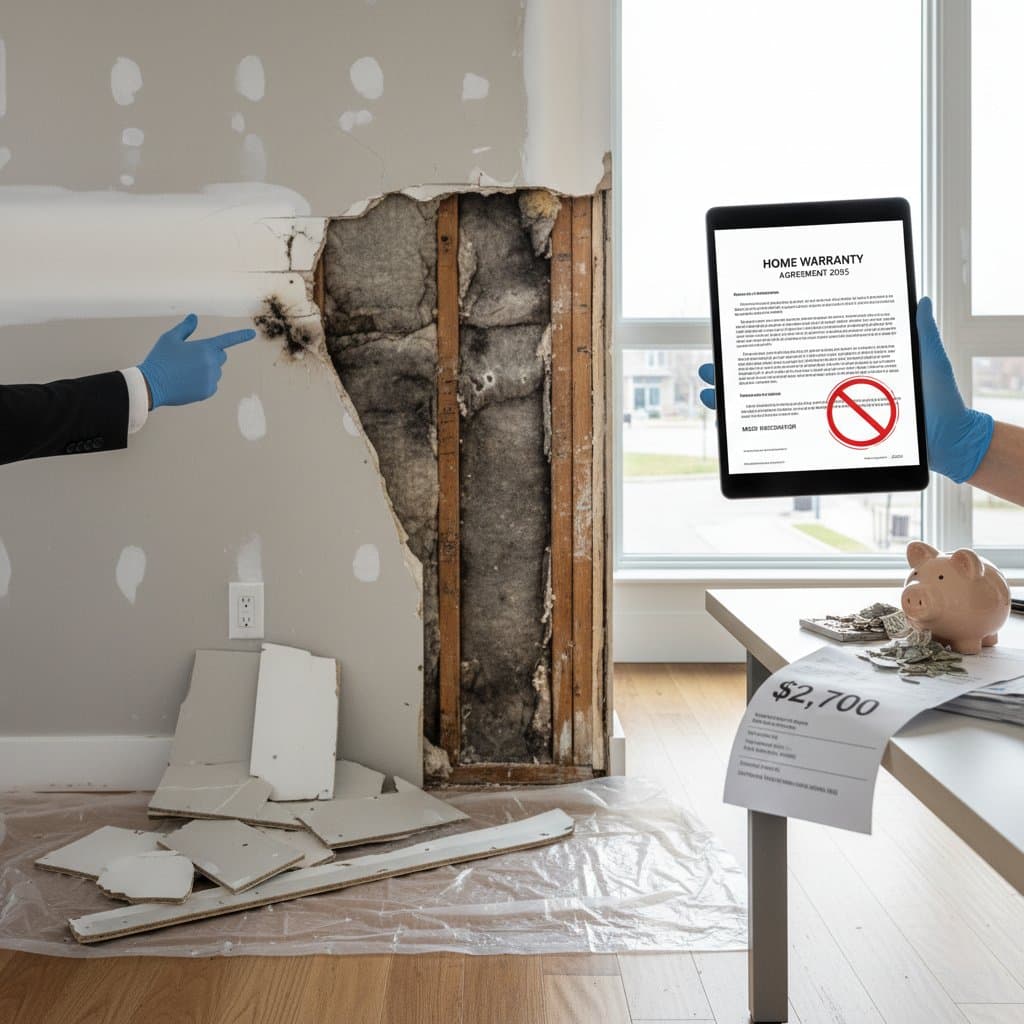
Mold Damage: Home Warranty Coverage Truth for 2025
Summary Box
National average cost: $2,700
Typical range: $1,200 to $6,500
Low end and high end: $500 for small surface cleanup to $15,000 for full remediation with structural repairs
Time to complete: One to seven days, depending on scope
DIY or Pro: DIY for surface cleaning, Pro for hidden or widespread damage
ROI or resale impact: Prevents serious loss of home value and potential health risks
Updated: March 2025
Mold growth thrives in damp environments and can compromise indoor air quality while weakening building materials. Homeowners often discover that standard warranties cover underlying issues like plumbing failures but rarely extend to the mold itself. This guide outlines essential costs, coverage realities, and preventive measures to address mold effectively.
Cost Factors
Several elements influence the total expense of mold remediation, ensuring that budgets align with the project's complexity.
-
Scope and size
Mold behind walls or under flooring raises labor costs because of demolition and rebuild work. Larger infestations require extensive removal, testing, and restoration, multiplying expenses by the square footage affected. -
Material grade and finish
Replacing drywall or trim with moisture-resistant materials increases upfront cost but reduces recurrence risk. Opt for products certified for mold resistance, such as those with antimicrobial additives, to enhance long-term durability. -
Site conditions and accessibility
Crawl spaces and attics cost more due to limited access. Expect surcharges of 15 to 25 percent for specialized equipment like scaffolding or ventilation systems needed in confined areas. -
Labor market and season
In humid or storm-prone regions, remediation companies book out quickly. High demand raises labor rates, particularly during peak wet seasons when calls surge by up to 40 percent. -
Custom work and change orders
If hidden plumbing leaks or insulation failures appear mid-job, costs jump for extra repairs or code upgrades. Contractors often charge hourly rates of $75 to $150 for unforeseen discoveries, emphasizing the value of initial thorough inspections.
How To Save Without Regret
Strategic planning minimizes expenses while maintaining safety and compliance standards.
-
Control moisture first
Fix leaks, improve ventilation, and run a dehumidifier. Stopping moisture ends mold growth and limits the affected area, potentially reducing remediation needs by half. -
Shop testing labs
Independent air and surface test kits cost less than on-site inspections. Use them for early detection, with results available in 48 hours to guide timely interventions. -
Bundle repairs
If drywall replacement or plumbing repair is needed, schedule both trades together to avoid repeat visits. This approach can lower overall fees by 10 to 20 percent through consolidated labor. -
Compare at least three quotes
Use this checklist:
- Scope is itemized
- Materials and brand listed
- Surface prep and cleanup included
- Permit and disposal fees included
- Warranty terms and timeline stated
- Payment schedule tied to milestones
- Ask about containment method
Clear plastic barriers and HEPA air scrubbers prevent cross-contamination. Companies that skip this step risk spreading spores, leading to larger problems and higher future costs.
Step By Step: Filing a Mold-Related Warranty Claim
Navigating claims requires prompt action and detailed documentation to secure potential reimbursements.
-
Document the problem
Take photos of visible mold, water stains, and damaged materials. Include timestamps and notes on affected locations to build a comprehensive record. -
Shut off the water source
Stop further damage by closing valves or turning off appliances. This immediate step limits escalation and demonstrates responsible handling to insurers. -
Contact your warranty provider
Report the issue immediately and request claim authorization. Provide initial photos and a description to expedite the process. -
Schedule inspection
A technician will confirm if the cause is a covered system failure. Expect this visit within 48 to 72 hours in most cases. -
Get written approval before cleanup
If the leak is covered, ask for written authorization to fix it. Proceed only after approval to avoid claim denials. -
Hire a remediator for mold removal
Use a licensed contractor to handle the contaminated area safely. Verify certifications from organizations like the Institute of Inspection Cleaning and Restoration Certification. -
Keep receipts and lab results
These records support any reimbursement request or future resale disclosure. Organize them chronologically for easy submission.
Maintenance and Lifespan
Preventing mold recurrence saves thousands in future repairs. Regular upkeep extends the lifespan of remediation efforts by addressing root causes proactively.
- Keep indoor humidity under 50 percent using hygrometers and dehumidifiers in vulnerable areas.
- Change HVAC filters every 60 days to maintain airflow and trap airborne spores.
- Clean gutters and downspouts to divert water away from the foundation, scheduling professional cleaning biannually in rainy climates.
- Inspect plumbing fixtures twice a year for leaks or condensation, tightening connections and replacing worn seals as needed.
- Seal grout and caulk in bathrooms annually with silicone-based products designed for high-moisture environments.
If mold returns within months, recheck ventilation and insulation. Persistent moisture often hides behind walls or under flooring, requiring advanced diagnostic tools like infrared cameras for detection.
Safeguarding Your Home from Mold Risks
Implementing these practices not only controls costs but also protects health and property integrity. Homeowners who prioritize moisture management and timely interventions report fewer recurring issues and maintain higher resale values. Consult local experts for tailored advice, ensuring your living space remains safe and resilient year-round.