Understanding Home Warranties and Solar Systems
Home warranties provide essential protection for residential systems and appliances. These plans typically address repairs or replacements for covered items when they fail due to normal wear. For solar energy systems, coverage varies significantly by provider and policy details.
Solar installations consist of multiple components, each with distinct functions and maintenance needs. Panels capture sunlight and convert it to direct current electricity. Inverters transform that electricity into usable alternating current for household appliances. Wiring and mounting hardware connect these elements to the home's electrical grid.
Homeowners increasingly adopt solar power for energy savings and environmental benefits. However, the complexity of these systems raises questions about insurance and warranty protections. Clear knowledge of coverage boundaries prevents financial surprises during system failures.
What Home Warranties Typically Cover in Solar Setups
Most home warranty providers exclude solar panels from standard coverage. Panels represent the core investment in a solar array, often backed by long-term manufacturer warranties spanning 20 to 25 years. These warranties focus on defects in materials and workmanship rather than everyday wear.
In contrast, inverters receive coverage under many home warranty plans. Inverters operate under high electrical loads and may fail after 10 to 15 years. Policies often classify inverters as electrical systems or appliances, making them eligible for repair or replacement up to a set service fee, typically between 75 and 125 dollars per claim.
Wiring and certain mounting components may also qualify for coverage if they integrate with the home's overall electrical infrastructure. Providers view these as extensions of covered home systems. However, exclusions apply to roof-mounted elements or those exposed to outdoor conditions, as they fall under structural or roofing categories not always included in base plans.
Key Exclusions and Limitations
Solar panels remain a common exclusion in home warranties. Their high cost, averaging 2.50 to 3.50 dollars per watt installed, prompts providers to defer responsibility to manufacturers. Damage from hail, wind, or improper installation typically requires separate homeowner insurance claims.
Not all inverters receive automatic inclusion. Older models or those integrated into custom solar designs might necessitate add-on endorsements. Policy fine print often limits coverage to systems under 10 kilowatts or those installed post-policy activation.
Service caps represent another limitation. Annual coverage maximums range from 1,500 to 5,000 dollars per item. Exclusions for pre-existing conditions or neglect further restrict claims. Homeowners must review policy documents carefully to identify these boundaries.
Overlaps with Manufacturer Warranties and Homeowner Insurance
Manufacturer warranties provide robust protection for solar panels and often extend to inverters for 10 to 12 years. These warranties activate upon installation and cover labor costs for defects. They complement home warranties by addressing issues outside normal wear, such as faulty components.
Homeowner insurance policies safeguard against perils like fire, theft, or storms. Solar panels qualify as attached structures or personal property, depending on mounting type. Inverters may fall under equipment coverage if damaged by covered events. However, gradual degradation or mechanical breakdowns do not trigger insurance payouts.
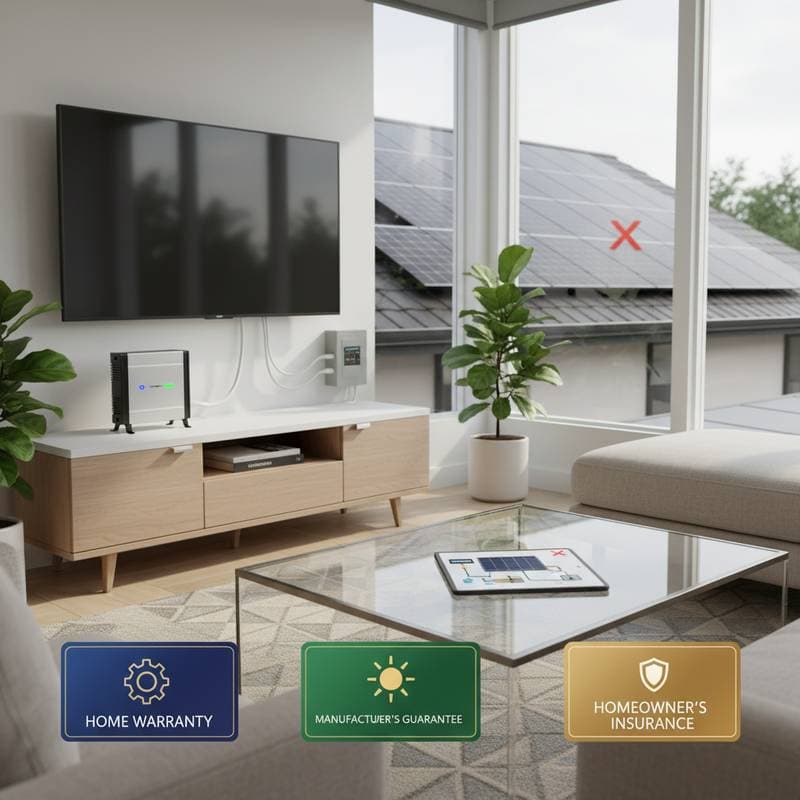
Coordinating these protections creates comprehensive coverage. For instance, a failed inverter due to a power surge might involve homeowner insurance, while routine malfunction falls to the home warranty. Manufacturer support handles panel cracks from factory errors. This layered approach minimizes out-of-pocket expenses.
Typical Costs Associated with Solar Repairs
Repairing a solar inverter costs 1,000 to 3,000 dollars, depending on model and capacity. Replacement units range from 800 to 2,500 dollars, plus 500 to 1,000 dollars in labor. Home warranties offset these by covering parts and labor after the service fee.
Panel repairs prove more expensive, with individual unit replacements at 200 to 500 dollars each. Full array overhauls exceed 10,000 dollars. Maintenance contracts, separate from warranties, cost 150 to 300 dollars annually and include inspections to prevent major issues.
Homeowners benefit from comparing provider rates. Basic plans start at 400 to 600 dollars yearly, with solar endorsements adding 50 to 100 dollars. Selecting coverage aligned with system age and condition optimizes value.
Maintenance Strategies to Extend Solar System Life
Regular upkeep preserves warranty eligibility and reduces failure risks. Inspect panels quarterly for debris, shading, or physical damage. Clean surfaces with soft brushes and water to maintain efficiency, avoiding harsh chemicals that void protections.
Monitor inverter performance through system apps or displays. Log error codes and address them promptly to prevent cascading failures. Schedule professional annual checkups to verify electrical connections and grounding.
Store documentation meticulously, including installation dates, serial numbers, and warranty certificates. This information streamlines claims processes. Adopting these habits extends component longevity and upholds coverage terms.
When to Consult Professionals for Solar Issues
Contact a certified solar technician for any performance drops exceeding 10 percent. Unusual noises from inverters or visible panel cracks demand immediate attention. Professionals diagnose root causes, from loose wiring to component degradation.
During warranty claims, providers often require licensed contractors for repairs. This ensures compliance with safety standards and policy terms. Homeowners should verify technician credentials through organizations like the North American Board of Certified Energy Practitioners.
For complex overlaps between warranties and insurance, insurance agents or warranty specialists offer guidance. They clarify claim priorities and documentation needs. Proactive consultation resolves uncertainties before minor issues escalate.
Protecting Your Solar Investment Long-Term
Integrating home warranties with manufacturer and insurance protections forms a solid defense for solar systems. Focus on inverters for warranty benefits while relying on extended panel guarantees. Routine maintenance and timely professional interventions further secure returns on this investment.
Homeowners who understand these dynamics enjoy peace of mind and sustained energy independence. Evaluate policies annually to match evolving system needs. This strategic approach maximizes efficiency and minimizes disruptions.