Supplementary items: Nail gun, miter saw, portable workbench
Protective equipment: Gloves, safety glasses, N95 mask, hearing protection
Sequential Process
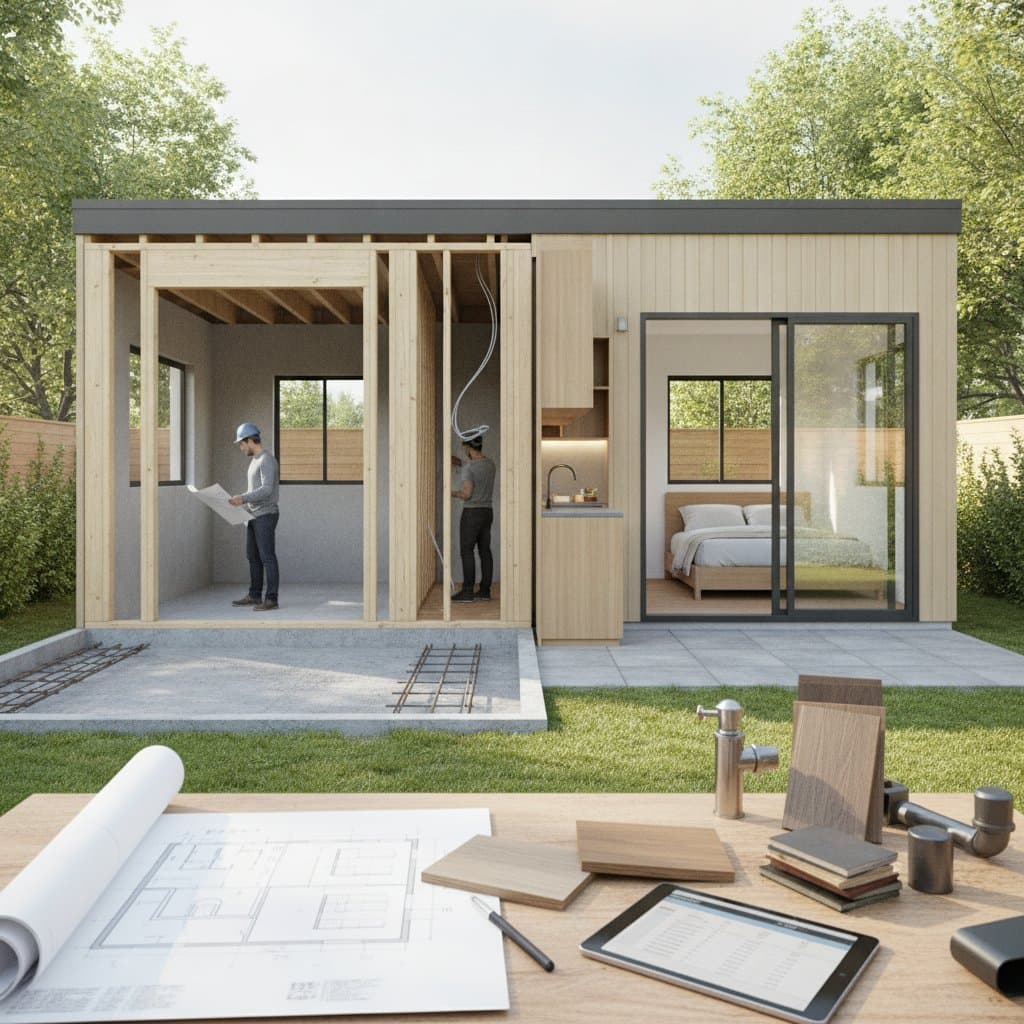
- Clear and level the site to establish a stable base.
- Install a concrete slab or support piers as specified in the design.
- For prefab models, coordinate delivery and crane-assisted positioning.
- Link utilities to primary service lines.
- Complete interior wall treatments, flooring, and trim details.
- Mount cabinets, appliances, and fixtures.
- Undergo final inspection for occupancy certification.
Engage a licensed expert immediately for any electrical or plumbing tasks. Errors in these areas often lead to inspection failures or safety violations.
Selecting and Managing a Contractor
Contractor Evaluation Criteria
- Confirm active state licensing and comprehensive insurance coverage
- Review photographs of completed ADU projects from the past year
- Verify familiarity with the local building authority's procedures
- Obtain a minimum of three client references
- Examine the detailed contract, ensuring payments align with project milestones
Defining Project Scope
Encompass all site preparation, utility integrations, and interior completions within the agreement. Specify responsibilities for permit applications and inspection coordination.
Standard Payment Structure
Steer clear of substantial initial payments. A balanced approach includes 10 percent deposit, 40 percent following foundation completion, 40 percent after rough-in stages, and 10 percent upon final approval.
Project Timeline and Coordination
Material Procurement Delays
Prefab shells arrive within four to eight weeks of ordering. Custom elements such as windows, doors, and cabinetry may extend lead times by an additional two weeks.
On-Site Construction Duration
Prefab installations require three to five days for assembly. Traditional stick-built ADUs involve crew presence for eight to twelve weeks.
Inspection Milestones
Anticipate reviews for foundation, framing, electrical rough-in, plumbing rough-in, insulation, and overall completion. Book each inspection at least two days in advance to prevent scheduling bottlenecks.
Ongoing Maintenance and Durability
Routine Upkeep Practices
Examine the roof and gutters biannually. Replace HVAC filters quarterly. Inspect and refresh exterior caulking and paint each year.
Identifying Early Problem Indicators
Monitor for ceiling water marks, sluggish drainage, or frequent circuit interruptions. These signs typically indicate minor concerns that, if addressed promptly, avert extensive repairs.
Repair Versus Replacement Decisions
Substitute asphalt shingles after 20 years or earlier if significant granule loss occurs. Refresh siding paint every seven to ten years to mitigate moisture intrusion. Update appliances when efficiency declines or components require frequent servicing.
Location-Specific Considerations
Urban Environments
Metropolitan areas with elevated housing prices frequently offer expedited ADU permitting, though elevated fees for permits and utilities apply. Budget for the upper spectrum of costs in these settings.
Suburban Settings
Balanced expenses and improved site access render these areas optimal. Certain counties eliminate impact fees for granny pods intended for family members.
Rural Locations
Approval processes tend to simplify, yet utility extensions prove costlier. Extended trenching for sewer or power connections increases expenses.
Securing Approvals and Building Value
Constructing a granny pod represents a blend of familial support and investment strategy. Initiate with zoning verification rather than preliminary designs. Validate lot eligibility prior to investing in architectural plans.
Select a contractor proficient in ADUs beyond general remodeling expertise. Through precise budgeting, proactive permitting, and controlled project scope, this backyard addition provides comfort, autonomy for seniors, and enduring enhancement to property worth.